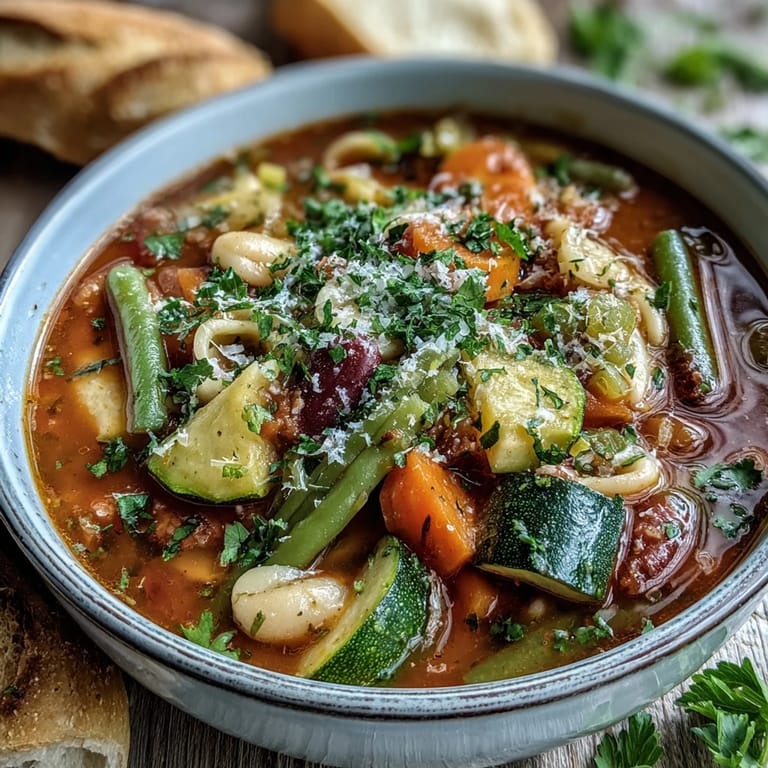
 Save to Pinterest
 I used to think minestrone was just a way to clean out the fridge until a rainy afternoon in Tuscany changed everything. We huddled in a tiny kitchen where the steam from the pot fogged up the windows and filled the air with the scent of simmering bay leaves. It was not about a strict recipe but about the rhythm of chopping whatever looked best at the market. That bowl of soup felt like a warm hug from the inside out. I have been chasing that specific feeling of comfort ever since.
One winter I substituted butternut squash for zucchini and realized how much more heartiness it added. My kids usually pick around green things but the sweetness of the squash won them over completely. We sat on the floor by the fireplace dipping crusty bread into our bowls while the snow piled up outside. Now every time I peel a squash I think of that quiet cozy evening. It is a dish that grows with your family.
Ingredients
- Olive oil: High quality oil adds a silky richness that anchors the lighter vegetable flavors.
- Onion, carrots, and celery: This classic trio creates the aromatic foundation that makes the whole house smell like a home.
- Zucchini or Butternut Squash: Choosing based on the season ensures the textures are always spot on and never mushy.
- Garlic: Freshly minced cloves provide a sharp punch that balances the earthy beans and sweet tomatoes.
- Vegetable Broth: A low sodium version lets you control the final seasoning without it becoming overly salty.
- Cannellini or Borlotti Beans: These offer a creamy contrast to the bite of the pasta and vegetables.
- Small Pasta: Ditalini or shells are perfect because they catch little pockets of broth in every spoonful.
- Parmesan Rind: If you have one dropping it in adds a savory depth that salt alone cannot replicate.
Tired of Takeout? 🥡
Get 10 meals you can make faster than delivery arrives. Seriously.
One email. No spam. Unsubscribe anytime.
Instructions
- Sauté the base:
- Swirl the oil into your pot and watch the onions turn translucent as they mingle with the carrots and celery. Give them enough time to soften and release their natural sweetness into the oil.
- Layer the greens:
- Stir in the garlic and your seasonal choices like zucchini or squash to let them soften slightly. This quick toss helps the vegetables hold their shape during the longer simmer.
- Build the broth:
- Pour in the tomatoes and broth then let the bay leaf bob on the surface while everything comes to a boil. The kitchen will start to smell incredible as the liquid begins to bubble.
- Simmer and soften:
- Turn the heat down to a low bubble allowing the vegetables to mingle and the potato to become tender. This gentle heat prevents the vegetables from breaking apart too quickly.
- Cook the pasta:
- Toss in the beans and pasta keeping an eye on the clock so the noodles stay perfectly al dente. Remember that the pasta will continue to soften slightly even after you turn off the heat.
- Final seasoning:
- Whisk in the dried herbs and give it a taste adding salt and pepper until the flavors pop. This is the moment where you can really customize the saltiness to your liking.
- Garnish and serve:
- Remove the bay leaf stir in the fresh parsley and don't forget that dusting of cheese on top. Ladle it high into deep bowls and serve it while it is steaming hot.
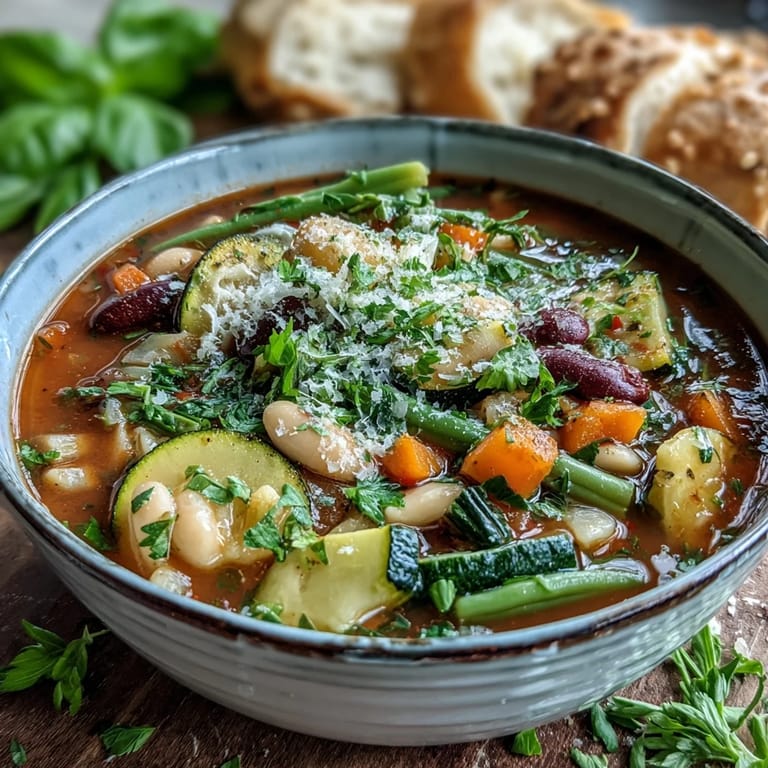 Save to Pinterest
 There was a summer garden party where I made a massive batch using only peas and leeks. Everyone crowded around the stove wine glasses in hand waiting for the first ladleful. It was messy and loud but the soup brought everyone together in a way a fancy roast never could. Seeing people scrape their bowls clean is the highest compliment a cook can get.
Seasonal Swaps that Work
Sometimes the best version of this soup is the one you did not plan for at all. If spring has arrived I love swapping the heavy potatoes for snap peas and fresh leeks for a lighter touch. In the depths of winter kale or savoy cabbage provides a robust texture that stands up to the coldest nights.
Building the Best Broth
The secret to a truly memorable minestrone lies in the patience of the simmer. Rushing the vegetables means you miss out on that complex sweetness that only develops with a bit of time. I always make sure to scrape the bottom of the pot after adding the tomatoes to catch every bit of caramelized flavor.
Serving it Up Right
A bowl of soup is only as good as what you serve alongside it to soak up the broth. I always keep a loaf of sourdough or some garlic knots ready for dipping into the remaining liquid.
- Drizzle a little extra virgin olive oil over each bowl for a peppery finish.
- Grating the cheese fresh makes a world of difference in how it melts into the liquid.
- Store any leftovers in airtight containers for a quick and healthy lunch the next day.
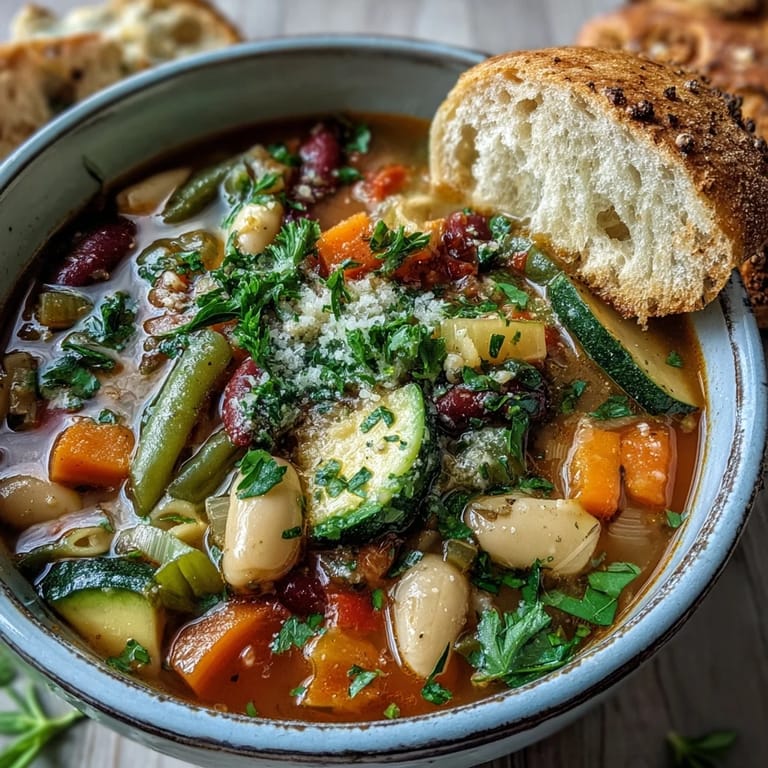 Save to Pinterest
 This minestrone is a living recipe that changes with you and your pantry. I hope it brings as much warmth to your table as it has to mine over the years.
Recipe FAQs
- → What vegetables work best in minestrone?
Classic combinations include onions, carrots, celery, zucchini, and green beans. For winter versions, swap in butternut squash, kale, or spinach. Spring additions like peas and leeks work beautifully too.
- → Can I make this vegan?
Absolutely. Simply omit the Parmesan cheese or use a dairy-free alternative. The soup is naturally plant-based and packed with protein from beans and carbohydrates from pasta.
- → What pasta shapes work best?
Small pasta shapes like ditalini, elbow macaroni, or small shells are ideal. They cook evenly and fit perfectly on a spoon. Gluten-free pasta works great too.
- → How long does minestrone keep?
Stored in an airtight container, it keeps 4-5 days in the refrigerator. The flavors actually develop and improve over time. It also freezes well for up to 3 months.
- → What's the secret to richer flavor?
Adding a Parmesan rind while simmering infuses deep umami flavor. Just remember to remove it before serving. A final drizzle of extra virgin olive oil also elevates the dish.