 Save to Pinterest
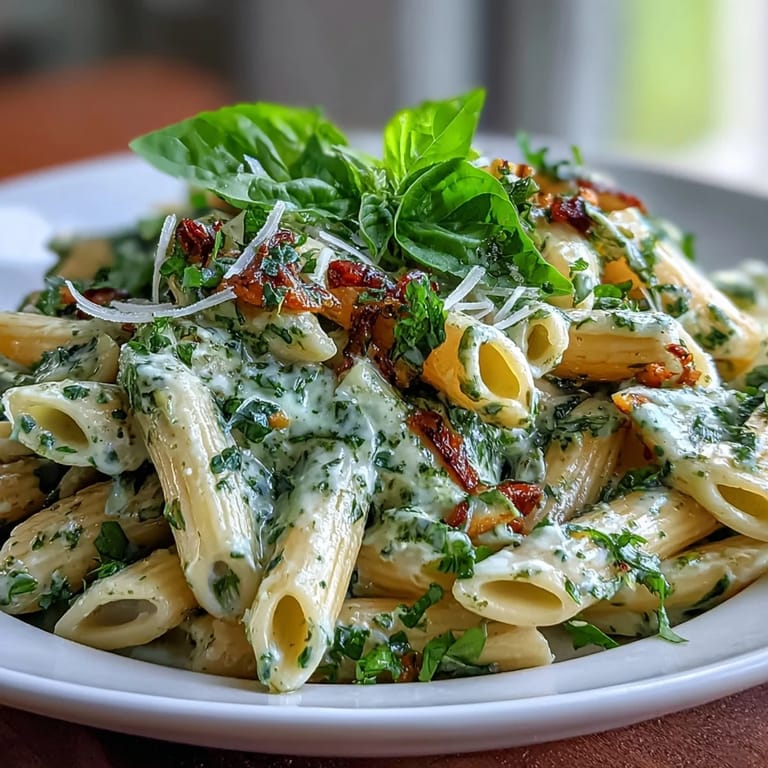
 My neighbor knocked on my kitchen door one Wednesday evening holding a handful of basil from her garden, asking if I could use it before it went to seed. I had cream cheese softening on the counter and suddenly realized I could build something entirely different from the traditional pesto I'd always made. That first bowl of creamy, bright pasta changed how I thought about what pesto could be, and now whenever basil appears, I reach for it with this exact idea in mind.
I made this for my sister when she was visiting and recovering from a cold, something that felt nourishing but not boring. She had seconds and asked for the recipe right there at the table, which is always the moment I know something's genuinely good. It became her go-to dish when she wanted to feel better about life in general.
Ingredients
- Penne or fusilli, 350 g: The ridges and curves catch the creamy sauce, but any pasta shape you love will work beautifully.
- Light cream cheese, 120 g: Make sure it's soft before you start, or your sauce will be lumpy and frustrating instead of silky.
- Freshly grated Parmesan, 40 g: Pre-grated has anti-caking agents that make the sauce grainy, so take the thirty seconds to grate it yourself.
- Fresh basil leaves, 40 g: Tear them gently by hand rather than cutting if you have the patience, it bruises them less and keeps the flavor brighter.
- Pine nuts, 2 tablespoons plus extra: Toast them dry in a skillet first and you'll taste the difference between this and every pesto you've made before.
- Garlic cloves, 2: Fresh is essential here since the garlic isn't cooked, and one small clove is often better than two large ones.
- Extra-virgin olive oil, 3 tablespoons: The quality matters because it's front and center in every bite, so use something you'd actually taste on bread.
- Lemon juice and black pepper: These bring brightness and bite that stops the cream cheese from feeling too rich.
Tired of Takeout? 🥡
Get 10 meals you can make faster than delivery arrives. Seriously.
One email. No spam. Unsubscribe anytime.
Instructions
- Start your pasta water:
- Fill a large pot with water, salt it generously like seawater, and bring it to a rolling boil. You want enough water so the pasta has room to move around and cook evenly.
- Cook the pasta to al dente:
- Add the pasta and stir once to prevent sticking, then cook according to package directions but start tasting a minute before it says it's done. The moment it has a slight bite in the center, fish out half a cup of the starchy cooking water and set it aside, then drain everything else.
- Build your sauce base:
- While pasta cooks, add basil, pine nuts, garlic, and Parmesan to your food processor and pulse until finely chopped but not quite paste. You want texture, little flecks of green and nut throughout.
- Smooth in the cream cheese:
- Add softened cream cheese, olive oil, lemon juice, salt, and pepper, then process until completely smooth and creamy, scraping down the sides once or twice. If it's too thick to move, add a splash of that reserved pasta water and pulse again.
- Marry pasta and sauce together:
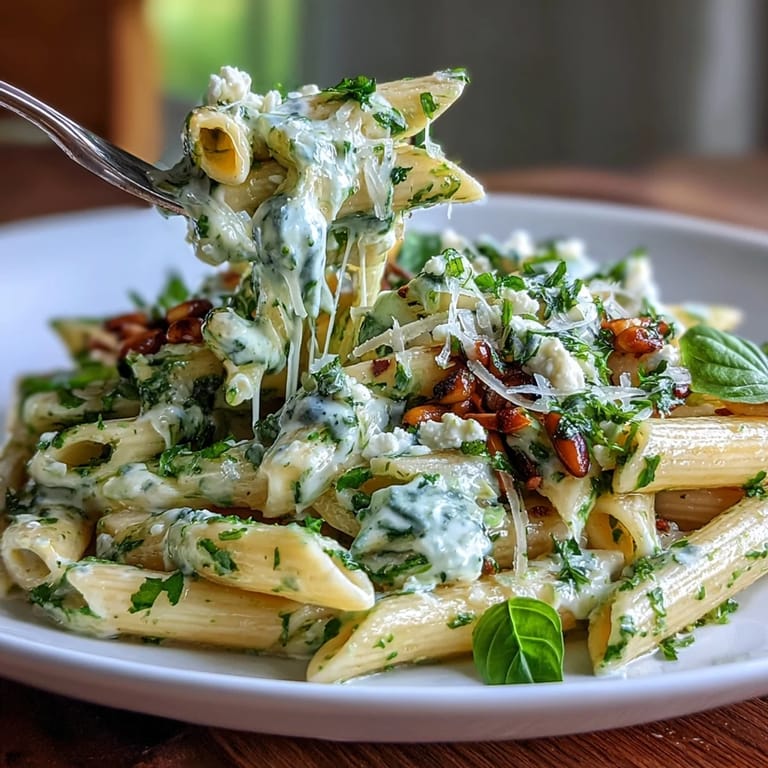
- Return drained pasta to the warm pot, pour in your cream cheese pesto, and toss gently but thoroughly to coat every strand. Add reserved pasta water a little at a time, stirring between additions, until the sauce is silky and clings to the pasta without being soupy.
- Plate and celebrate:
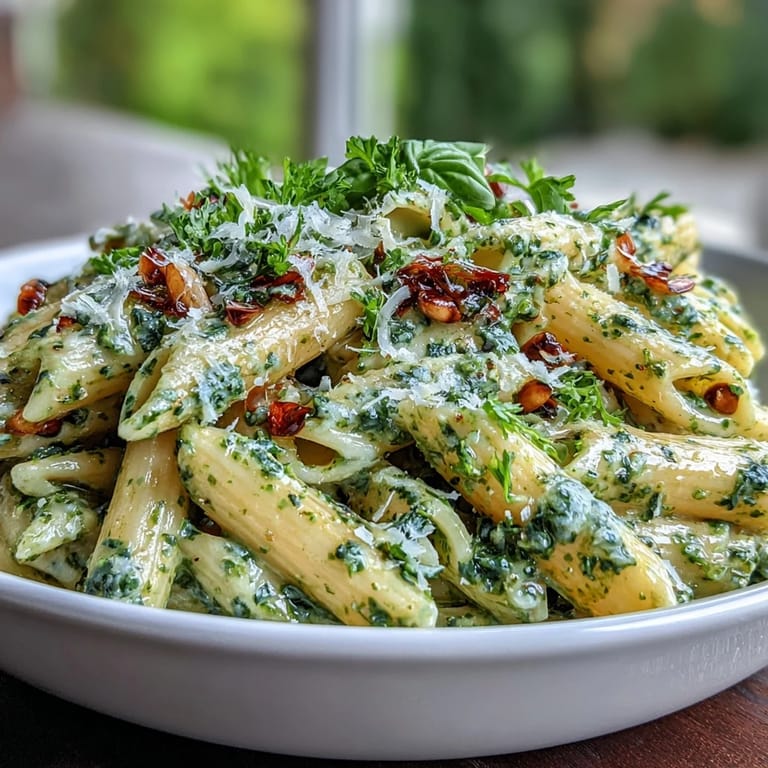
- Divide among bowls while everything's still warm, then top with extra pine nuts, torn basil leaves, and a final scatter of Parmesan if your mood calls for it.
 Save to Pinterest
 There's something about serving this dish that makes people pause and actually taste what they're eating instead of just eating. That moment when someone looks down at their bowl with surprise, having expected something heavy but finding something that feels both luxurious and light, is exactly why this recipe lives in my regular rotation.
The Toasting Moment
Dry toasting your pine nuts in a skillet for just two or three minutes changes everything about this dish. The warmth brings out an almost buttery sweetness that raw pine nuts simply don't have, and honestly, it's worth the thirty seconds of attention it takes. I learned this the hard way by tasting them side by side and suddenly understanding why expensive restaurants always seem to have better texture in their food.
Cream Cheese Over Oil
Traditional basil pesto is gorgeous and I love it, but cream cheese as your base opens up something different entirely. It naturally emulsifies with the pasta water, creating a sauce that's thicker and more clinging without needing a ton of oil, and somehow it lets the basil taste even brighter because it's not competing with so much olive oil. The richness comes from dairy instead of fat, which sounds small but changes the entire eating experience.
Variations and Additions
This sauce is forgiving enough to build on without falling apart. Cherry tomatoes sautéed until they soften add little bursts of acidity, grilled chicken makes it more substantial for people with bigger appetites, and even crispy breadcrumbs scattered on top bring a texture that some evenings call for. The base stays solid while you customize around it.
- Toast walnuts or almonds as a swap if pine nuts aren't in your pantry or budget.
- Add a handful of sun-dried tomatoes or a small splash of balsamic if you want deeper, darker notes.
- Try it with gluten-free pasta or even rice noodles if you're feeding different dietary needs at the same table.
 Save to Pinterest
 This is the kind of recipe that proves you don't need hours of effort or a long ingredient list to make yourself something that feels special. It's honest, it's quick, and it tastes like someone who actually cares made it.
Recipe FAQs
- → How do you achieve a creamy pesto sauce?
Blending softened cream cheese with Parmesan, fresh basil, pine nuts, olive oil, and lemon juice creates a smooth, creamy texture that coats the pasta evenly.
- → Can I use different nuts for the pesto?
Yes, walnuts or almonds can be substituted for pine nuts, offering a slightly different flavor and texture profile while maintaining richness.
- → What pasta works best with this sauce?
Twirly shapes like penne or fusilli are ideal as they hold the creamy sauce well between their curves and ridges.
- → How to enhance the nutty flavor in the dish?
Lightly toasting pine nuts in a dry pan before adding them intensifies their aroma and adds a subtle crunch to the dish.
- → Can this dish be adapted for gluten-free diets?
Yes, use certified gluten-free pasta varieties to maintain the same flavors without gluten.
- → Is it necessary to reserve pasta water?
Reserving some pasta cooking water helps loosen the sauce and makes it cling smoothly to the pasta.