 Save to Pinterest
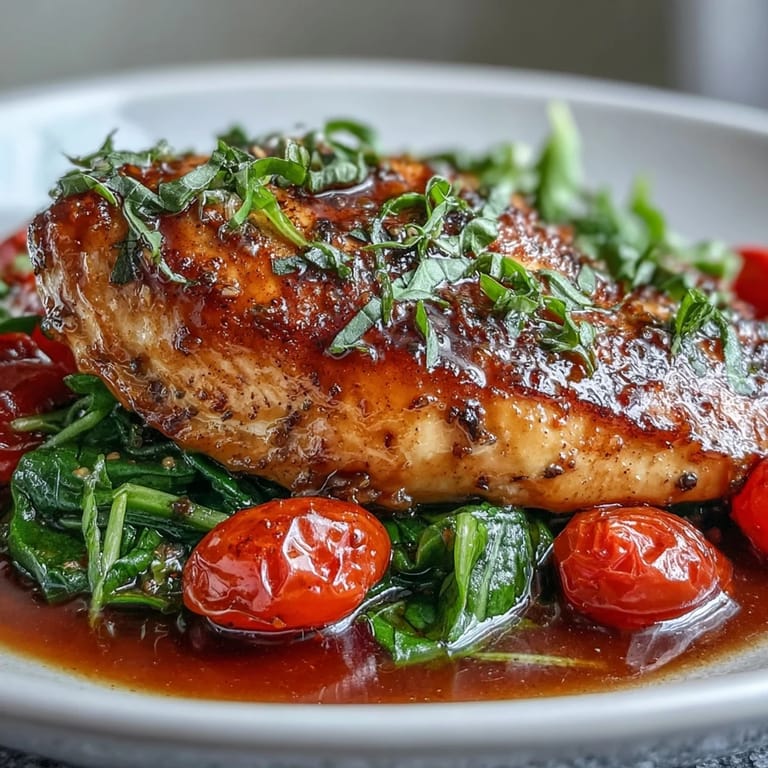
 There's something about the smell of balsamic vinegar hitting a hot pan that makes you stop what you're doing. My sister called while I was testing this recipe on a Tuesday night, and by the time we hung up, the whole kitchen was perfumed with caramelized tomatoes and herbs—she demanded the recipe before I'd even plated it. What started as an experiment in weeknight efficiency turned into one of those dishes I find myself making whenever I want to feel like I've actually cooked something worthwhile, even when I'm too tired for fuss.
I made this for my mom last spring when she was recovering from surgery and tired of everything tasting like nothing. She sat at the counter while I cooked, and I watched her lean forward when the spinach went in—that moment when a dish stops being ingredients and becomes something alive. She asked for seconds, which, if you know my mother, is basically a standing ovation.
Ingredients
- Boneless, skinless chicken breasts (4, about 150 g each): Pat them completely dry before seasoning—moisture is the enemy of a good golden crust, something I learned the hard way the first dozen times I made this.
- Cherry tomatoes (2 cups, halved): The smaller ones burst more readily and release their juice into the sauce, creating the glossy finish that makes people think you actually know what you're doing.
- Fresh baby spinach (4 cups): Buy it loose or in a container, not frozen, because you want it to wilt delicately rather than break down into mush.
- Garlic (3 cloves, minced): Slice it thin enough that it softens into almost nothing, becoming part of the sauce rather than a chunky distraction.
- Red onion (1 medium, thinly sliced): The thin slicing matters because it needs to cook down in roughly the same time as the tomatoes.
- Balsamic vinegar (1/3 cup): The quality of this ingredient carries the whole dish, so don't grab the cheapest bottle at the store—a good one tastes almost syrupy and complex.
- Extra-virgin olive oil (2 tbsp): Use one tablespoon for searing the chicken and one in the balsamic mixture; it rounds everything out without making the dish feel heavy.
- Honey (1 tbsp): This balances the sharpness of the vinegar and helps the glaze catch and caramelize on the chicken.
- Dried Italian herbs (1 tsp): If you have fresh herbs, use about three times the amount, but the dried version holds up better through the cooking.
- Salt and freshly ground black pepper: Season in layers—at the beginning and again after the glaze goes in—because the vinegar can sometimes mute the flavors if you're not paying attention.
- Fresh basil (2 tbsp, chopped) and cheese (optional): A scatter of bright basil at the end tastes like you actually finished cooking instead of just reheating, and feta brings a salty tang that makes people ask what you did differently.
Tired of Takeout? 🥡
Get 10 meals you can make faster than delivery arrives. Seriously.
One email. No spam. Unsubscribe anytime.
Instructions
- Make the balsamic glaze:
- Whisk together the vinegar, honey, olive oil, Italian herbs, salt, and pepper in a small bowl—this is your moment to taste and adjust before everything hits the pan. If it tastes too sharp, add a touch more honey; if it's too sweet, add a pinch more salt.
- Prepare the chicken:
- Pat the breasts dry with paper towels until they're genuinely dry, then season both sides generously with salt and pepper. Dry chicken browns; wet chicken steams, and there's a real difference.
- Get that golden crust:
- Heat olive oil in a large skillet over medium-high heat until it shimmers slightly, then add the chicken breasts and don't touch them for 3 to 4 minutes—you want that burnished, golden-brown color that signals flavor. Flip and repeat on the other side, then set them aside on a plate.
- Build the flavor base:
- Lower the heat to medium, add the sliced red onion and minced garlic to the same pan, and let them soften for about 2 minutes until your kitchen smells like something's actually happening. You're not trying to caramelize them—just soften them enough that they become part of the sauce.
- Add the tomatoes:
- Toss in the halved cherry tomatoes and cook for 3 to 4 minutes, stirring occasionally, until they start to blister and collapse slightly. This is when they release their juice and begin thickening into something sauce-like.
- Bring it all together:
- Return the chicken breasts to the pan, pour the balsamic mixture over everything, cover with a lid, and let it cook for 8 to 10 minutes until the chicken is cooked through (165°F at the thickest part). The steam from the pan will finish cooking the chicken gently while the sauce reduces slightly.
- Finish with spinach:
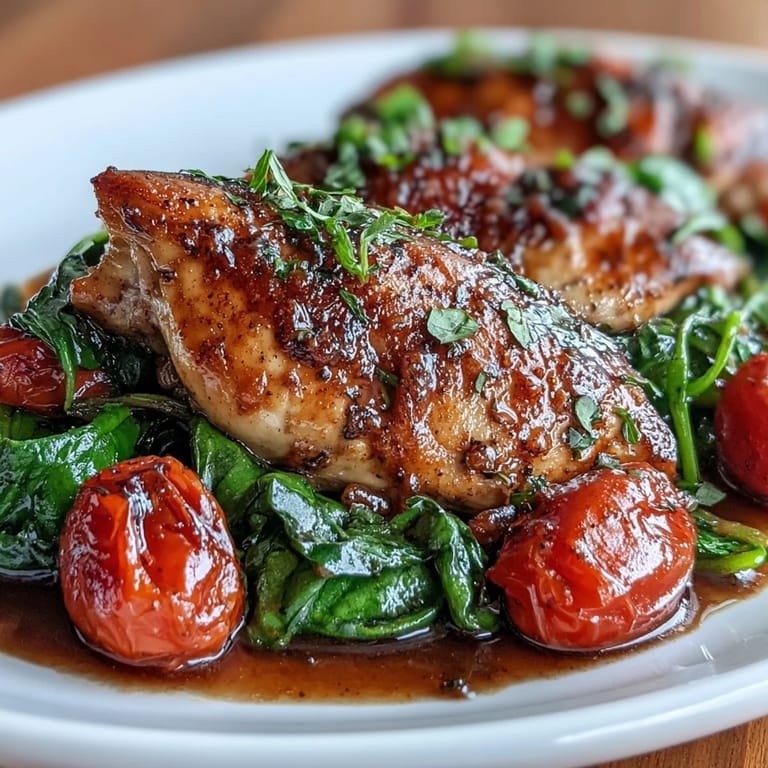
- Uncover the pan, scatter the fresh spinach over the top, and stir gently for 1 to 2 minutes until it's completely wilted and bright green. It seems like a lot of spinach, but it collapses dramatically once it hits the heat.
 Save to Pinterest
 My neighbor came over one evening while I was making this, and she stood in my kitchen breathing in the smell of balsamic and herbs like she was at a spa instead of my somewhat messy stovetop. She left with the recipe written on the back of a grocery receipt, and now we text about it whenever one of us makes it—which, if you'd asked me a year ago, would've seemed like a wild thing to bond over.
Why This Works as a Weeknight Dinner
The genius of this dish is that it collapses the usual cooking timeline—instead of doing five separate things on different burners, you're managing one pan and a single bowl of glaze. Start to finish in 35 minutes means you can have something that tastes deliberately made without the usual Wednesday-night exhaustion setting in. The spinach at the end is also a low-key way to get greens on the plate without anyone noticing or complaining.
Variations That Actually Work
If you swap chicken thighs for breasts, they'll stay juicier and more forgiving if you accidentally overcook them slightly—I learned that watching my dad make this when he visited. A scatter of red pepper flakes during the last minute of cooking adds a subtle heat that plays beautifully against the sweet balsamic and tangy cheese. The sauce is also forgiving enough that you can add a splash of white wine during the glaze phase if you have it open, which brings a subtle brightness that makes the whole thing feel a touch more refined.
Serving Suggestions
Serve this over something that can soak up the pan sauce—rice, quinoa, or crusty bread all work, and honestly the sauce is good enough that it deserves a vehicle. A crisp Sauvignon Blanc or light Pinot Noir sits next to this without competing, which is the kind of detail that made me realize I was becoming the kind of person who thinks about wine pairings. This also keeps beautifully for 3 or 4 days in the fridge, and reheats gently in a low oven, making it ideal for meal prep if you're into that kind of thinking.
- Serve over rice or quinoa to catch every drop of the balsamic glaze.
- Crumbled feta or shaved Parmesan scattered on top tastes intentional, not like an afterthought.
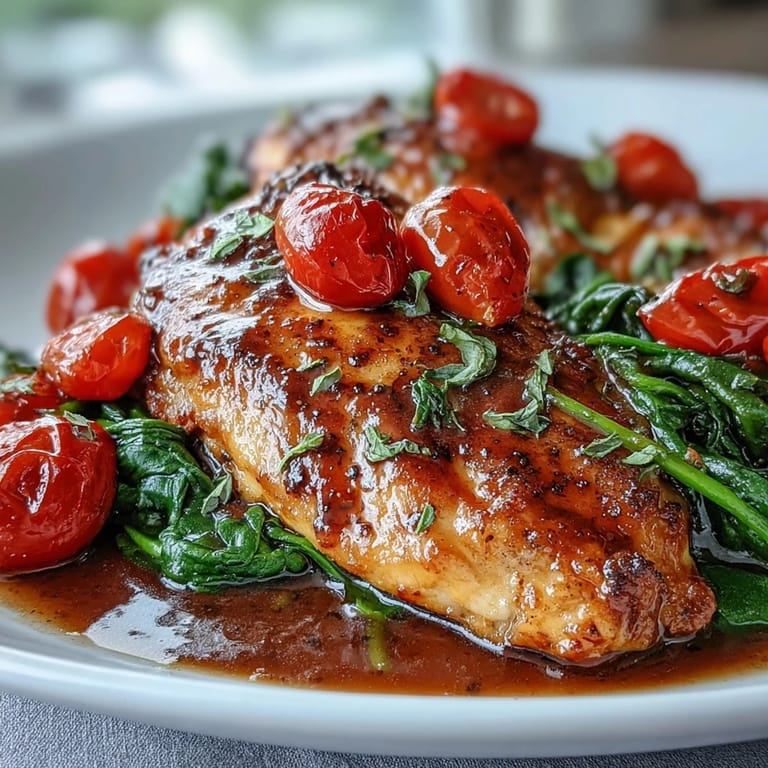
- If you're making this for people, plate it while everything's still warm so the spinach keeps its color.
 Save to Pinterest
 This is the kind of dish that reminds you why you bother cooking at all—it looks like you actually tried, tastes like you know something about flavor, and cleans up in about five minutes. That's worth something.
Recipe FAQs
- → Can I use chicken thighs instead of breasts?
Yes, chicken thighs can be substituted for a juicier, more flavorful outcome. Adjust cooking time accordingly to ensure thorough cooking.
- → How do I prevent the chicken from drying out?
Searing chicken breasts in olive oil before simmering helps lock in moisture. Covering the pan during simmering preserves juiciness.
- → What can I serve alongside this dish?
This dish pairs well with quinoa, rice, crusty bread, or a fresh green salad to complement its rich flavors.
- → Is it possible to make this dairy-free?
Yes, simply omit the optional cheese garnish to keep the dish dairy-free without compromising flavor.
- → Can I add heat to this dish?
Adding a pinch of red pepper flakes during cooking introduces a mild spicy kick without overpowering the balsamic glaze.
- → What wines complement this meal?
Light reds such as Pinot Noir or crisp whites like Sauvignon Blanc pair beautifully with the tangy and savory elements.