 Save to Pinterest
 The first time I made truffle risotto, I wasn't trying to impress anyone—I was simply chasing a flavor I couldn't stop thinking about. A friend had mentioned offhandedly how earthy and almost mysterious truffle oil made her kitchen smell, and that was enough. I stood at my stove on a quiet Tuesday evening, watching the rice transform from firm little pearls into something creamy and alive, and when that first spoonful of truffle oil hit the pan, I understood what she meant. It wasn't just luxury; it was a moment of quiet magic in an otherwise ordinary dinner.
I made this for my partner one winter afternoon when we were both tired of ordinary weeknight food. We sat down to steaming bowls, and watching his face when that earthy, luxurious flavor hit—that moment when good food stops being about hunger and becomes about connection—that's when I realized this wasn't just a recipe I loved, it was something I wanted to cook again and again.
Ingredients
- Arborio rice: This short-grain variety releases starch as it cooks, creating that signature creamy texture; don't use long-grain or the whole thing falls apart.
- Vegetable stock: Keeping it warm matters more than you'd think—cold stock shocks the rice and slows the cooking process, so heat it in a separate pot.
- Unsalted butter and olive oil: The butter gives richness, the olive oil adds flavor; using both instead of just one creates a more balanced, sophisticated base.
- Onion and garlic: Mince them finely so they dissolve into the rice almost invisibly, building a savory foundation you taste but don't identify.
- Dry white wine: It cuts through the richness and adds brightness; a cheap wine will make cheap-tasting risotto, so use something you'd actually drink.
- Parmesan and heavy cream: These arrive at the very end to create that glossy, luxurious finish without breaking the rice.
- Truffle oil: A little goes a long way—drizzle it in gently and let its earthy perfume distribute naturally through the heat.
- Fresh black truffle: If you can find it, shaving it thin means it stretches further and reveals itself in delicate curls; truffle paste works if you're on a budget and honestly, it's more forgiving.
- Pea shoots: These fresh, tender greens must go in at the last second—they're meant to stay bright and crisp, a textural surprise in every bite.
- Salt and pepper: Taste constantly as you build this dish; risotto needs more seasoning than you'd expect because all that creaminess mutes flavors.
Tired of Takeout? 🥡
Get 10 meals you can make faster than delivery arrives. Seriously.
One email. No spam. Unsubscribe anytime.
Instructions
- Begin with a warm foundation:
- Heat the butter and olive oil together in your heaviest saucepan over medium heat—you want it warm and fragrant but not sizzling aggressively. Add the chopped onion and let it soften slowly for 3 to 4 minutes until it turns translucent and sweet, then add the garlic for just one more minute so it releases its aroma without browning.
- Toast the rice into readiness:
- Stir the Arborio rice constantly for about 2 minutes until each grain is coated in the butter mixture and the edges turn translucent and slightly glassy—you're waking up the starches that will create your creamy sauce. This step can't be rushed; it's the difference between risotto and rice soup.
- Wake it up with wine:
- Pour in the white wine and stir until it's almost completely absorbed, about 2 to 3 minutes; you should hear it hiss slightly and smell the alcohol beginning to cook off.
- The patient dance of stock and stirring:
- Add your warm vegetable stock one ladle at a time, stirring frequently and waiting until each addition is mostly absorbed before adding the next—this takes about 18 to 20 minutes and requires your attention, but it's meditative, not stressful. The rice should always look creamy but not soupy; if it's sticking, add stock sooner; if it seems thin, wait longer before the next ladle.
- Finish with luxury and heat:
- Off the heat, fold in the heavy cream and grated Parmesan, stirring gently until everything is glossy and cohesive. The rice should move slowly when you tilt the pan, like lava.
- Drizzle the truffle magic:
- Pour the truffle oil over the surface and fold in half the pea shoots gently, letting the heat wilt them just slightly while keeping them mostly bright and crisp.
- Serve with intention:
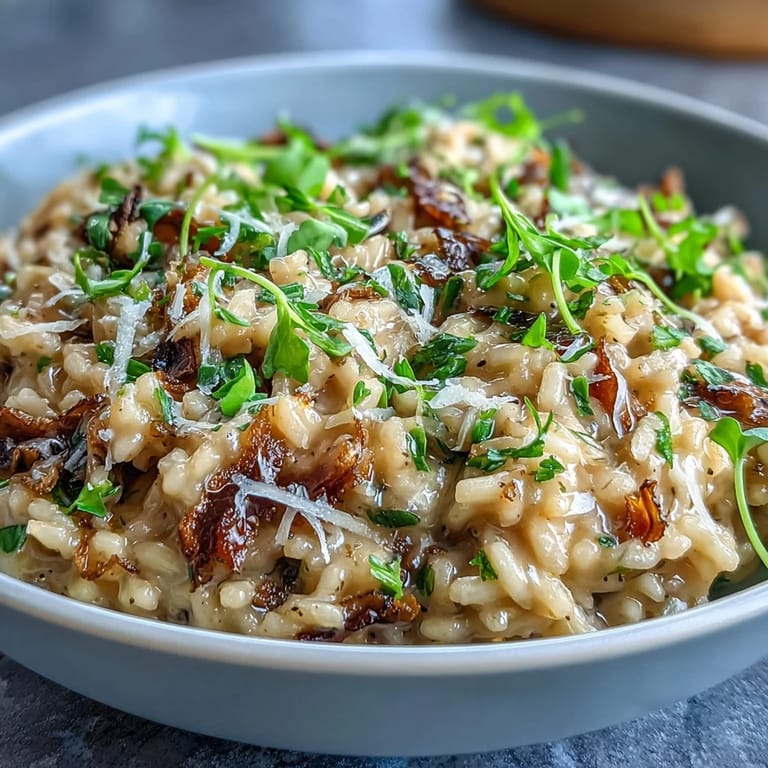
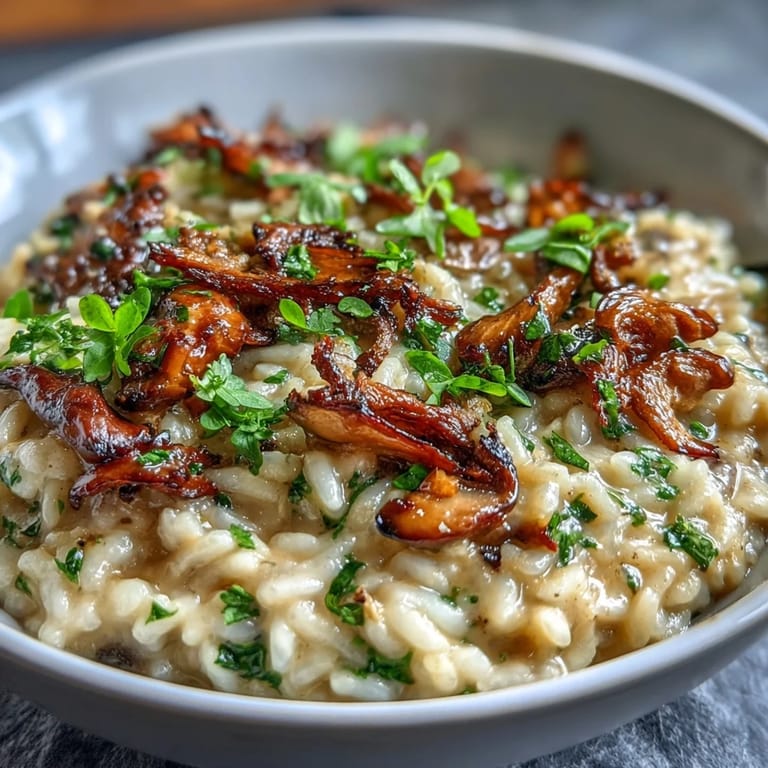
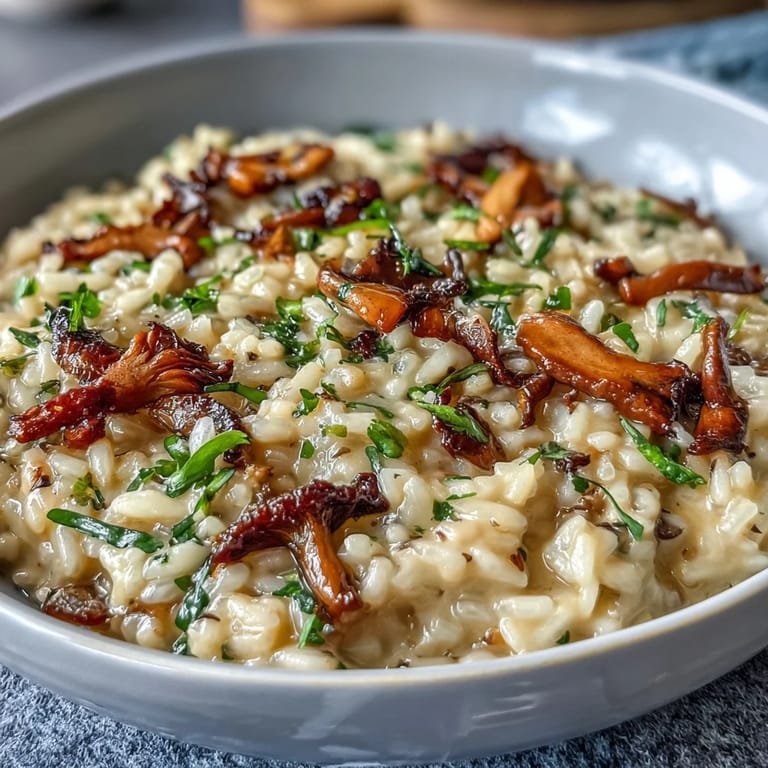
- Spoon the risotto into warm, shallow bowls and crown each one with the remaining pea shoots and those delicate shaved truffle curls; serve immediately because risotto waits for no one.
 Save to Pinterest
 There was a moment during that first batch when I questioned whether I was making something special or just stirring rice obsessively for no reason. Then the Parmesan went in, then the truffle oil, and suddenly all that patience made sense in a single breath. That's when cooking stops feeling like work and starts feeling like trust.
The Truffle Question: Fresh vs. Paste vs. Oil
Fresh black truffle is beautiful and absolutely worth it if you can find it, but it's not the only way to make this dish sing. I've made risotto successfully with truffle paste on nights when my budget didn't stretch that far, and honestly, the results were nearly indistinguishable. Truffle oil is your everyday option—it's reliable, accessible, and when you use quality, it delivers that unmistakable earthy perfume. The real trick is using truffle thoughtfully; a little goes further than you'd expect, and the magic lives in restraint, not excess.
Stock Matters More Than You Think
The quality of your vegetable stock quietly does all the heavy lifting in risotto. A good stock—whether homemade or store-bought—builds layers of flavor that risotto needs to taste sophisticated rather than one-dimensional. If you only have access to mediocre stock, taste it first, and if it's salty or thin, you can stretch it with water and add a pinch more Parmesan at the end. The stock stays warm the entire time because cold stock cools down the rice and interrupts the cooking rhythm; keep it in a separate pot on the back burner.
Timing, Texture, and When to Stop Stirring
Risotto teaches you to trust the rice more than the clock. Some batches finish in 18 minutes, others take 22, depending on your stove's personality and the rice's mood. You're looking for a grain that's tender but still has a subtle firmness at its center—that's al dente—and a surrounding creaminess that coats a spoon without being liquidy. The moment you hit that texture is the moment you stop adding stock and move toward finishing the dish, because risotto continues to cook slightly even after it leaves the heat.
- Stir almost constantly but not obsessively; gentle, intentional circles beat aggressive scraping.
- Taste a grain of rice around the 15-minute mark to gauge progress and adjust timing if needed.
- If you end up with extra stock, that's perfect—not every drop of liquid needs to go in, and a slightly less creamy risotto is better than a watery one.
 Save to Pinterest
 This risotto has become my go-to when I want to cook something that feels indulgent without being complicated. There's something deeply satisfying about transforming basic ingredients into something that tastes like you've been cooking all day.
Recipe FAQs
- → What type of rice is best for this dish?
Arborio rice is ideal due to its high starch content, which creates the creamy texture typical of risotto.
- → How does the truffle oil affect the flavor?
Truffle oil adds an earthy, luxurious aroma and depth that complements the creamy risotto beautifully.
- → Can I use vegetable stock instead of meat-based broth?
Yes, warm vegetable stock works perfectly here, especially for a vegetarian-friendly version.
- → What is the role of pea shoots in this dish?
Pea shoots provide a fresh, crisp contrast to the creamy risotto, adding vibrant color and subtle sweetness.
- → How should the rice be cooked for best texture?
Rice should be cooked slowly, adding broth gradually and stirring often to achieve a creamy yet al dente texture.
- → Is it possible to make this dish vegan?
Yes, substitute dairy ingredients with plant-based cream and cheese alternatives while keeping the other flavors intact.