 Save to Pinterest
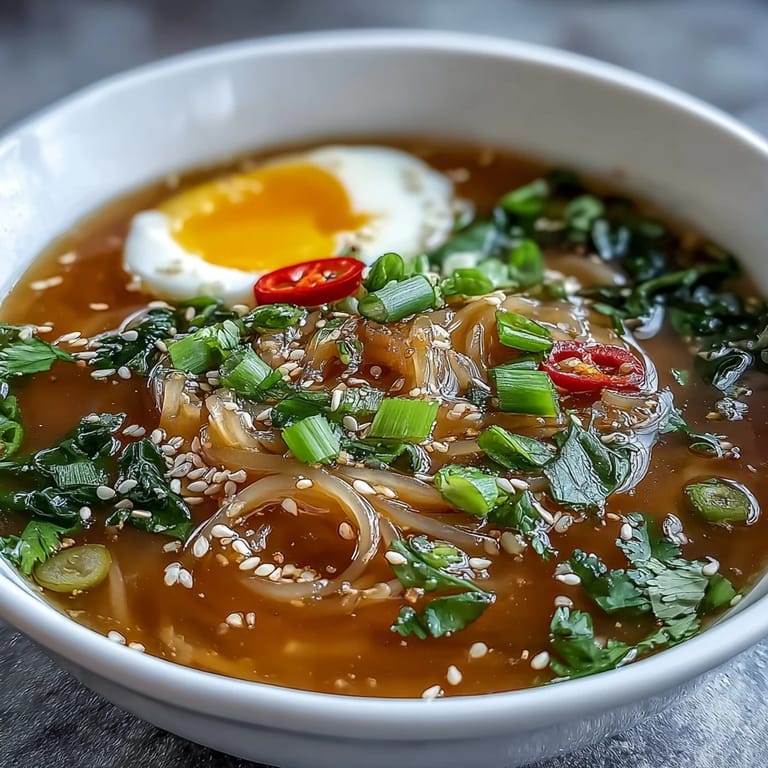
 There's something deeply settling about a bowl of shirataki noodles in bone broth, especially on those evenings when my body craves nourishment but my stomach wants gentleness. I discovered this combination almost by accident, rifling through my pantry one cold evening and finding myself fascinated by how such minimal ingredients could create something so satisfying. The broth does all the work—transforming simple noodles into something that feels both indulgent and restorative.
I made this for my partner on a day when we both felt run down, and watching him quietly finish the entire bowl told me everything I needed to know. He's not one for fuss, but he came back asking if I could make it again—and that's when I knew I'd stumbled onto something genuinely good.
Ingredients
- Bone broth (4 cups): The foundation of everything here; use the best quality you can find, whether homemade or from a reputable brand that skips the added sugars.
- Fresh ginger (thumb-sized piece): Slice it rather than grate it so you can fish out the pieces later and the broth gets kissed with warmth without becoming overwhelming.
- Garlic cloves (2): Smashing them rather than mincing lets them flavor the broth gently and stay easy to remove.
- Soy sauce or tamari (2 tablespoons): This is your seasoning backbone; tamari works perfectly if you're avoiding gluten.
- Rice vinegar (1 tablespoon): The secret sparkle that brightens everything and keeps the broth from tasting flat.
- Sesame oil (1 teaspoon): Just a touch; it adds a whisper of richness and that unmistakable Asian-inspired flavor.
- Shirataki noodles (400g): Drain and rinse these thoroughly, then pour boiling water over them to eliminate that ocean-like smell they can have straight from the package.
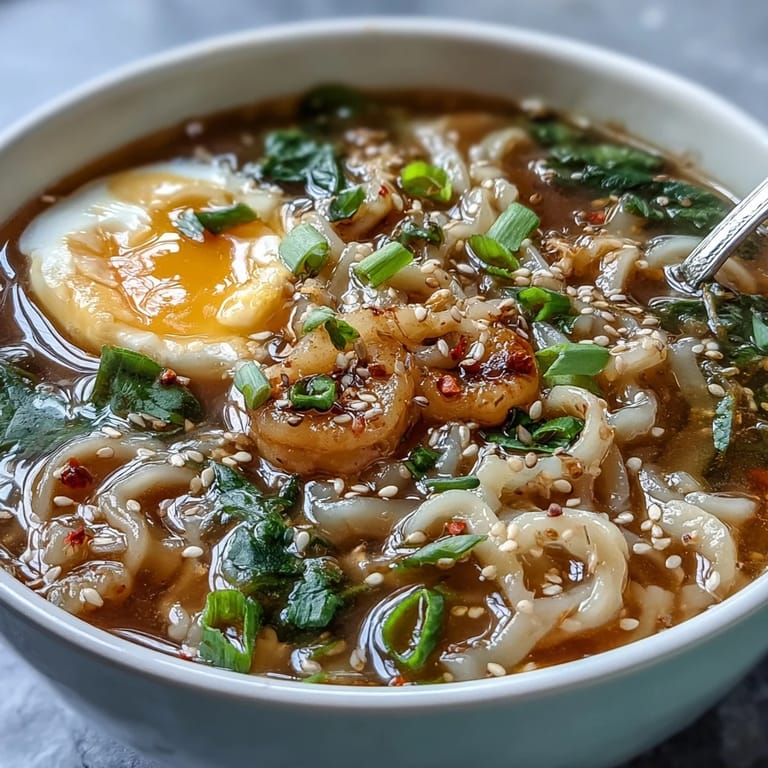
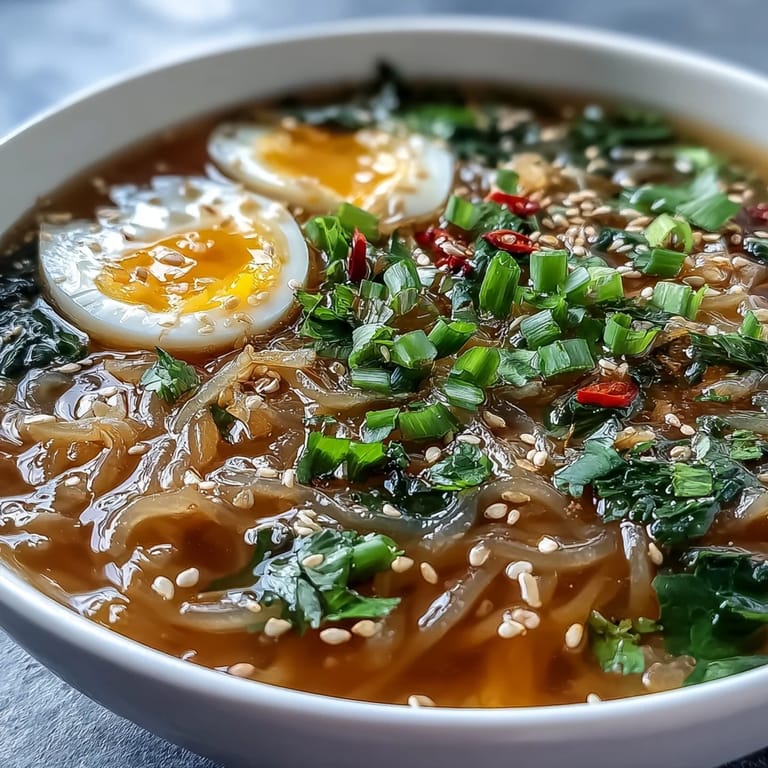
- Soft-boiled eggs (optional, 2): A 6-minute cook gives you that jammy yolk that breaks into the broth beautifully.
- Spring onion, red chili, fresh herbs, sesame seeds: These toppings are where you add personality and texture; don't skip them.
Tired of Takeout? 🥡
Get 10 meals you can make faster than delivery arrives. Seriously.
One email. No spam. Unsubscribe anytime.
Instructions
- Build your aromatic base:
- Pour your bone broth into a medium pot and add the smashed garlic, sliced ginger, soy sauce, rice vinegar, and sesame oil. Let it all come together over medium heat, watching for those first gentle bubbles that signal the flavors are waking up.
- Let it simmer and develop:
- Turn the heat down so it's just barely simmering and give it 10 minutes. You'll notice the broth becoming more fragrant and the ginger softening; this is where the magic happens, so don't rush it.
- Prepare the noodles properly:
- While the broth sings, drain your shirataki noodles and rinse them under cold water until the water runs clear. Place them in a sieve and pour freshly boiled water over them; this final step removes any residual odor and sets them up perfectly to absorb the broth.
- Warm the noodles through:
- Add the prepared noodles to your simmering broth and let them sit for just 2 to 3 minutes. They'll soften slightly and take on the warmth of the broth without losing their pleasant texture.
- Finish and serve:
- Fish out the ginger slices and garlic cloves with a small spoon, then divide everything between two bowls. Top each with whatever you're using—eggs, green onion, chili, herbs—and taste before you eat.
 Save to Pinterest
 There was a quiet moment one morning when I finished a bowl of this and realized I felt genuinely restored, not just fed. That's when cooking stopped being about following instructions and started being about understanding why certain things work, why certain people show up at your table for second bowls.
The Magic of Bone Broth
Bone broth isn't trendy in our house; it's fundamental. I learned early on that a truly good broth does most of the heavy lifting, so I never compromise on quality. When you simmer it with ginger and garlic, you're not just making a hot liquid—you're creating a vehicle for warmth and healing that tastes like it actually cares about you.
Why Shirataki Noodles Work Here
Shirataki noodles have a bad reputation from people who haven't treated them right. The key is understanding that these noodles are neutral vessels waiting to be shaped by their broth. In this dish, they don't compete; they cooperate, carrying every drop of your carefully made broth from spoon to mouth.
Making It Your Own
This recipe is a foundation, not a prison. I've made it with chicken shreds, with silken tofu, with leftover roasted vegetables. One night I added a raw egg yolk and watched it cook into silk in the hot broth. The structure stays the same, but the personality shifts with whatever you need it to be.
- Add shredded cooked chicken or crumbled tofu for extra protein without changing the flavor balance.
- Try coconut aminos instead of soy sauce if that works better for your body, and the broth will taste equally luminous.
- Don't be shy with the toppings; they turn a simple bowl into something that feels intentional and complete.
 Save to Pinterest
 This bowl exists for the evenings when you want something real and kind, something that takes 25 minutes but tastes like you actually spent time on it. Make it for yourself and discover what I did: that sometimes the simplest dishes become the ones we crave most.
Recipe FAQs
- → Do shirataki noodles have a distinct odor?
Yes, shirataki noodles naturally have a mild aroma when first opened. Rinsing thoroughly under cold water and pouring boiling water over them before cooking removes any odor completely.
- → Can I use vegetable broth instead of bone broth?
Absolutely. For a vegetarian version, substitute with a rich vegetable broth. Consider adding tofu or extra vegetables to maintain the protein content and heartiness of the bowl.
- → How long can I store leftover broth and noodles?
Store the broth and noodles separately in airtight containers in the refrigerator for up to 3 days. Reheat the broth gently and add freshly rinsed noodles when serving for the best texture.
- → What protein additions work well with this bowl?
Shredded cooked chicken, seared tofu slices, or poached eggs complement the delicate flavors beautifully. These additions transform the light bowl into a more substantial meal while maintaining the low-carb profile.
- → Can I make the broth in advance?
The infused broth keeps exceptionally well and actually develops deeper flavors when made ahead. Prepare it up to 3 days in advance, refrigerate, and simply reheat before adding the noodles and toppings.
- → Are shirataki noodles gluten-free?
Traditional shirataki noodles made from konjac yam are naturally gluten-free. Always check the packaging to ensure no gluten-containing additives have been included, and use tamari instead of soy sauce for a completely gluten-free bowl.