 Save to Pinterest
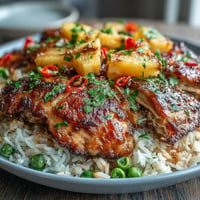
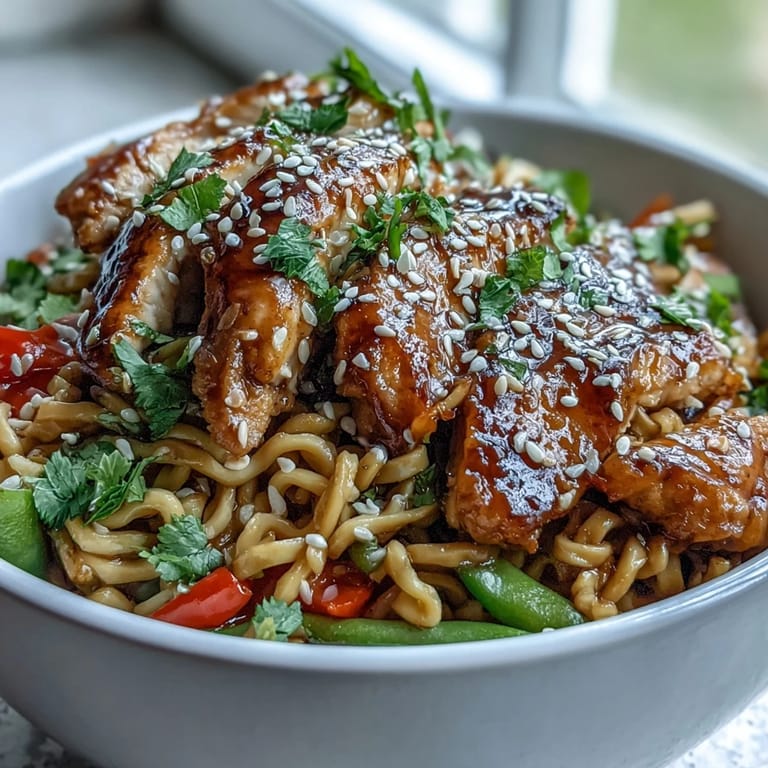
 There's something about the sizzle of chicken hitting a hot wok that makes you feel like you're cooking something special, even on a Tuesday night when you're not trying that hard. I stumbled onto this sesame chicken noodle bowl while rummaging through my pantry one evening, realizing I had everything except an excuse not to make dinner. The magic happens when that glossy, ginger-forward sauce coats warm noodles and tender chicken, and suddenly your kitchen smells like a place you'd actually want to linger. It became the bowl I crave when I want something that tastes impressive but doesn't demand hours of my time.
I made this for my partner last spring when they came home exhausted from a brutal week at work, and I watched their whole face change the moment they took that first bite. There's something about noodles and sesame that feels both comforting and exciting at the same time, and that night it was exactly what we both needed without any fanfare or fuss.
Ingredients
- Chicken breast or thighs: Thighs are more forgiving if you're nervous about drying them out, but breasts work beautifully when sliced thin—the key is not to crowd the pan.
- Udon, soba, or rice noodles: Pick whichever speaks to you; udon feels heartier, soba brings an earthier note, and rice noodles keep things light.
- Red bell pepper: The sweetness balances the savory sauce and adds a cheerful crunch that matters more than you'd think.
- Carrot: Julienned thin so it softens just enough but keeps its snap.
- Sugar snap peas: These stay crisp even with heat, which is exactly why they belong here.
- Spring onions: A fresh finishing touch that's worth the five seconds it takes to slice them.
- Soy sauce: Low-sodium gives you control over the saltiness and lets the other flavors breathe.
- Brown sugar: Creates that sweet-savory balance that makes people ask for the recipe.
- Toasted sesame oil: Non-negotiable—the toasted kind has character that regular sesame oil doesn't possess.
- Rice vinegar: A quiet addition that lifts everything with subtle brightness.
- Fresh ginger: Grated right before cooking so you get those little flecks of warmth and heat.
- Garlic: Minced fine so it mingles with the sauce rather than sitting in obvious chunks.
- Cornstarch: Optional, but it transforms the sauce from thin to glossy in about ninety seconds.
- Toasted sesame seeds: The final flourish that makes it feel finished and intentional.
- Fresh coriander or cilantro: Your choice between earthy and bright—either one works.
Tired of Takeout? 🥡
Get 10 meals you can make faster than delivery arrives. Seriously.
One email. No spam. Unsubscribe anytime.
Instructions
- Cook the noodles:
- Follow the package timing, then drain and rinse under cold water so they don't keep cooking from residual heat. This stops them from turning mushy while you finish everything else.
- Build your sauce:
- Whisk together the soy sauce, brown sugar, sesame oil, rice vinegar, ginger, garlic, and cornstarch in a small bowl. Taste it right now—this is your moment to adjust sweetness or saltiness before it hits the pan.
- Heat your cooking vessel:
- A large skillet or wok over medium-high heat with just a splash of oil means your chicken will get golden and develop real flavor rather than steam.
- Cook the chicken:
- Add sliced chicken to the hot pan and let it sit for a moment before stirring—this creates those caramelized edges that make a difference. Cook until it's no longer pink inside, about four to five minutes depending on thickness.
- Vegetables take their turn:
- Push the cooked chicken to the side, add a touch more oil if the pan looks dry, then add bell pepper, carrot, and snap peas. You want them softer than raw but still with enough bite to feel fresh, which happens in about two to three minutes of steady stirring.
- Bring it together:
- Return the chicken to the pan with the vegetables, pour in your sauce, and toss everything until it's coated in that gorgeous gloss. Simmer for just a minute or two so the flavors meld and the sauce thickens slightly.
- Add the noodles and spring onions:
- Fold in your cooked noodles and those fresh spring onions, tossing gently until everything is heated through and evenly distributed.
- Finish and serve:
- Divide among bowls and top with sesame seeds, cilantro, and lime wedges if you're using them. That lime juice is optional but it brightens everything at the last second.
 Save to Pinterest
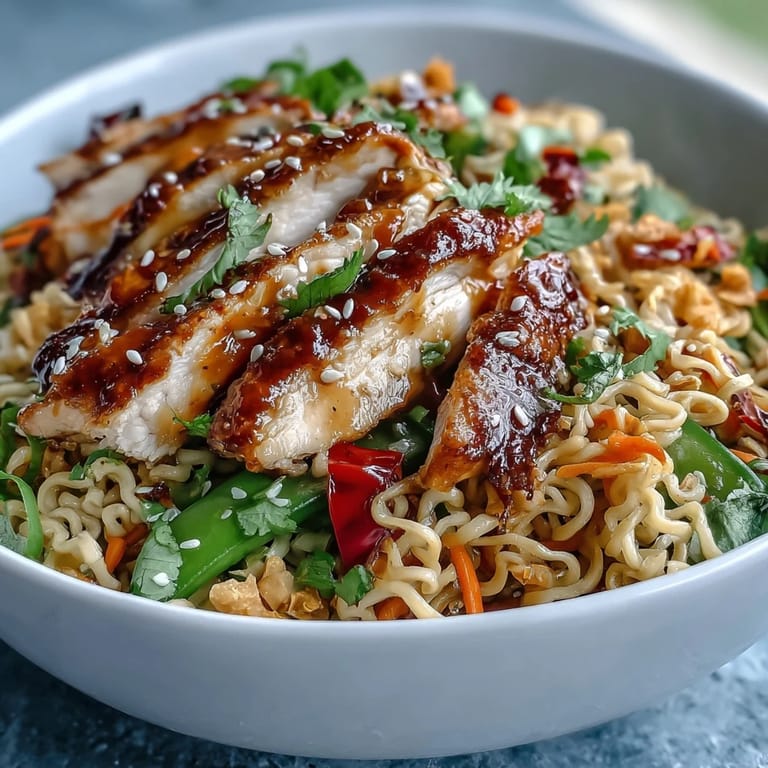
 There was a moment when my friend asked if I'd buy this exact bowl at a restaurant, and I realized that's when you know a recipe has actually landed—when it stops feeling like cooking and starts feeling like something worth remembering. That's what this bowl does.
Why This Works Every Time
The beauty of this bowl isn't some secret technique or ingredient you've never heard of—it's the balance of temperature, texture, and flavor all happening at once. You get heat from the chicken and sauce, crunch from the vegetables, chew from the noodles, and that toasted sesame warmth that makes you want another bite before you've even finished your first one. Nothing fights for attention; everything plays its part.
Making It Your Own
This bowl is endlessly flexible, which is part of why I keep coming back to it. The sauce is strong enough to carry whatever vegetables you have on hand, and the noodle choice changes the whole personality—udon feels more indulgent, soba feels more refined, and rice noodles let everything else shine. You can add mushrooms, broccoli, baby bok choy, or anything that sounds good to you without overthinking it.
The Sauce Is Where the Magic Lives
I learned the hard way that this sauce deserves your attention more than any other part of the recipe. It's what transforms sliced chicken and noodles from ordinary into something you'll think about later. The balance of salty, sweet, tangy, and nutty needs to taste right to you before you even apply heat, so taste it from the spoon and adjust if needed.
- If it tastes too sweet, add a splash more rice vinegar or soy sauce to sharpen it.
- If it feels flat, a little more ginger or garlic wakes everything up instantly.
- The cornstarch is optional but worth using if you love that glossy coating that clings to every noodle.
 Save to Pinterest
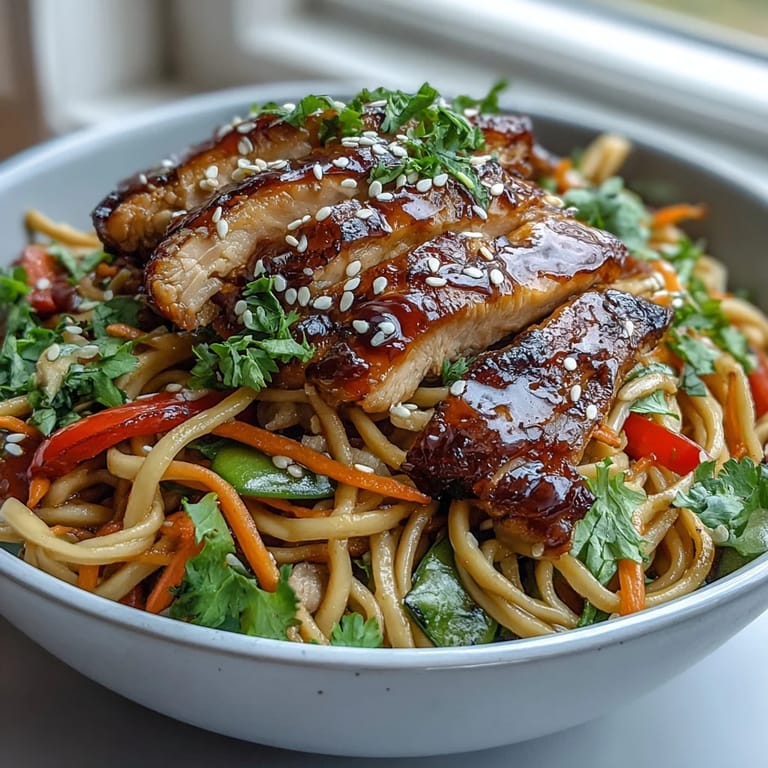
 This is the kind of recipe that feels like a small victory every time you make it, and that's worth something. Serve it warm, eat it straight from the bowl, and let that sesame warmth be exactly what you needed tonight.
Recipe FAQs
- → Can I use different noodles?
Yes, udon, soba, or rice noodles all work beautifully. Choose based on preference or what you have available. Rice noodles make the dish gluten-free when paired with tamari.
- → How do I store leftovers?
Store components separately in airtight containers for up to 3 days. Reheat noodles and chicken gently, adding a splash of water if needed. Keep garnishes fresh and add before serving.
- → Can I make it vegetarian?
Absolutely. Substitute chicken with firm tofu cubes, tempeh, or edamame. Press tofu first for better texture, then pan-fry until golden before adding vegetables and sauce.
- → What vegetables work best?
Bell peppers, carrots, and snap peas provide crunch and color. Broccoli, mushrooms, baby corn, or bok choy also work well. Use whatever fresh vegetables you enjoy or have on hand.
- → Is the sauce spicy?
The sauce balances sweet and savory flavors without heat. For spice, add sriracha, chili garlic sauce, or red pepper flakes. Adjust to your taste preference when whisking the sauce.
- → Can I prep components ahead?
Slice vegetables and whisk the sauce up to a day in advance. Cook noodles fresh or refresh under hot water before assembling. This makes weeknight assembly incredibly fast.