 Save to Pinterest
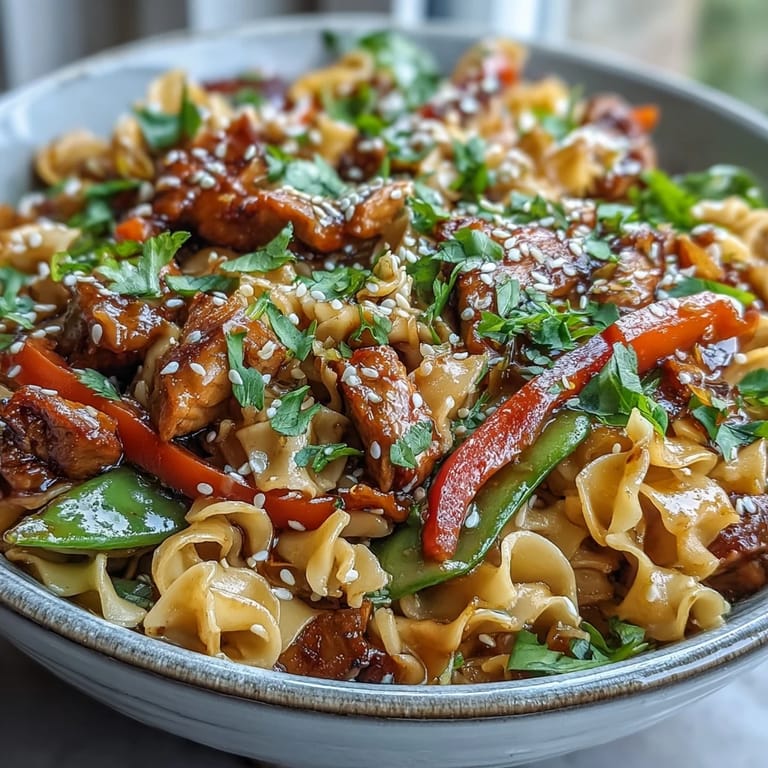
 There was a Tuesday evening when I stood in front of my fridge with twenty minutes to spare and a rumbling stomach. I pulled out some pork, a few bright vegetables, and half a package of noodles. What started as improvisation turned into one of those meals that I now make every other week. The sizzle of the wok, the way the sauce clings to every strand of noodle, it all comes together so fast you barely have time to set the table.
I made this for a group of friends who showed up unannounced one Friday night. I doubled the recipe, tossed in extra vegetables, and watched them go back for seconds without saying much. One of them asked for the recipe before leaving, which is always the best compliment. It became my go-to whenever I want something that feels special but doesnt require planning days ahead.
Ingredients
- Pork loin or tenderloin: Slice it thin so it cooks fast and stays tender, and marinating it even briefly makes a noticeable difference in flavor.
- Soy sauce: This is your salt and umami base, so use a good quality one if you can.
- Cornstarch: It helps the pork brown beautifully and thickens the sauce just enough to coat the noodles.
- Egg noodles or rice noodles: Either works perfectly, just cook them until theyre barely done because theyll finish in the wok.
- Red bell pepper: Adds sweetness and a pop of color that makes the dish look as good as it tastes.
- Carrot: Julienne it thin so it cooks quickly and adds a slight crunch.
- Sugar snap peas: These bring a fresh, crisp bite that balances the richness of the sauce.
- Spring onions: Toss them in at the end so they stay bright and slightly sharp.
- Garlic and ginger: Freshly minced and grated, they create the aromatic base that makes the whole kitchen smell incredible.
- Oyster sauce: This adds depth and a hint of sweetness that ties everything together.
- Hoisin sauce: A touch of this brings a subtle sweetness and complexity.
- Sesame oil: Just a teaspoon at the end adds a nutty finish.
- Brown sugar: Balances the salty elements and helps the sauce caramelize slightly.
- Vegetable oil: Use something with a high smoke point because the wok needs to be hot.
- Sesame seeds and coriander: Optional, but they make the dish feel complete.
Tired of Takeout? 🥡
Get 10 meals you can make faster than delivery arrives. Seriously.
One email. No spam. Unsubscribe anytime.
Instructions
- Marinate the pork:
- Toss the thinly sliced pork with soy sauce and cornstarch in a bowl, then let it sit for ten minutes. This step tenderizes the meat and helps it develop a beautiful golden crust when it hits the hot wok.
- Cook the noodles:
- Follow the package directions, but pull them off the heat a minute early since theyll finish cooking in the wok. Drain them well so they dont water down your sauce.
- Mix the sauce:
- Whisk together soy sauce, oyster sauce, hoisin, sesame oil, brown sugar, and water in a small bowl. Having this ready before you start cooking makes everything move smoothly.
- Sear the pork:
- Heat one tablespoon of oil in your wok over high heat until it shimmers, then add the pork in a single layer. Let it sear without moving it for a minute, then stir-fry until browned, about two to three minutes total, then remove and set aside.
- Stir-fry the vegetables:
- Add the remaining oil, then toss in garlic, ginger, bell pepper, carrot, and sugar snap peas. Keep everything moving for three to four minutes until the vegetables are tender but still have a bit of snap.
- Bring it all together:
- Return the pork to the wok, add the cooked noodles and pour in the sauce. Toss everything together for two to three minutes, making sure every strand of noodle is coated and glossy.
- Finish and serve:
- Toss in the spring onions, give everything one last stir, then take it off the heat. Serve immediately with sesame seeds and coriander if you have them.
 Save to Pinterest
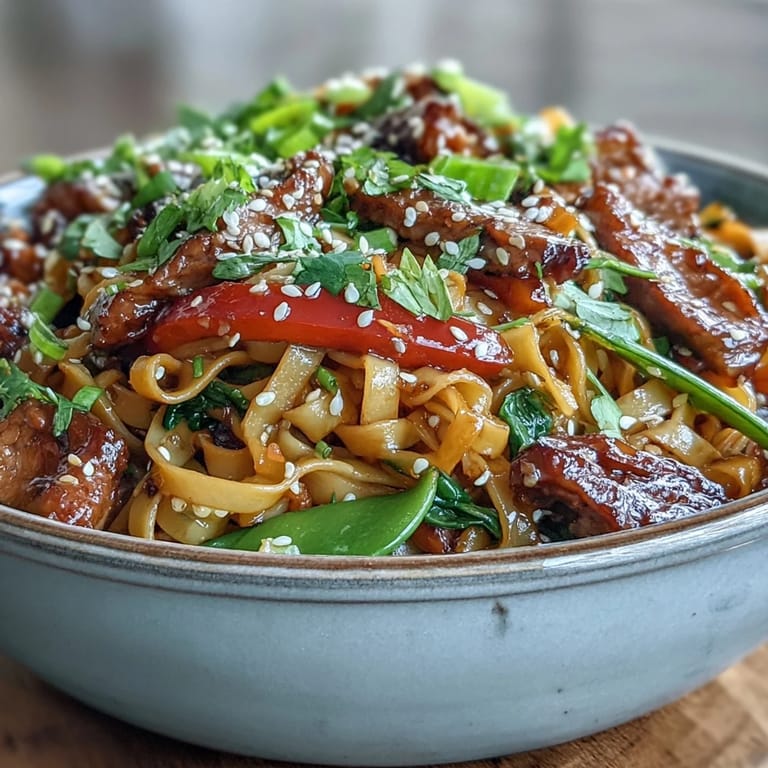
 One night I added a handful of baby corn and some bok choy because thats what I had on hand, and it turned out even better than the original version. This recipe is forgiving like that. It adapts to whatever vegetables are sitting in your crisper drawer, and it still tastes like something you ordered from your favorite spot down the street.
Swapping Proteins
Ive made this with chicken thighs, firm tofu, and even shrimp, and each version has its own charm. Chicken takes about the same time as pork, tofu gets wonderfully crispy if you press it first, and shrimp cooks in under two minutes. The sauce works beautifully with all of them, so feel free to use whatever protein you prefer or have available.
Making It Gluten Free
Swap regular soy sauce for tamari, use rice noodles instead of egg noodles, and check your oyster sauce label or use a gluten-free alternative. The flavor stays just as rich and satisfying, and no one will notice the difference. I keep tamari in my pantry now because it works in nearly every stir-fry I make.
Serving Suggestions
This dish is complete on its own, but sometimes I serve it with a simple cucumber salad dressed in rice vinegar or a side of steamed bok choy. A cold Riesling or a light lager pairs beautifully with the savory sauce, and if youre feeding a crowd, it doubles easily without losing any of its charm.
- Garnish with extra sliced chili if you like a bit of heat.
- Leftovers reheat well in a hot wok with a splash of water to loosen the sauce.
- Try adding mushrooms or baby corn for extra texture and flavor.
 Save to Pinterest
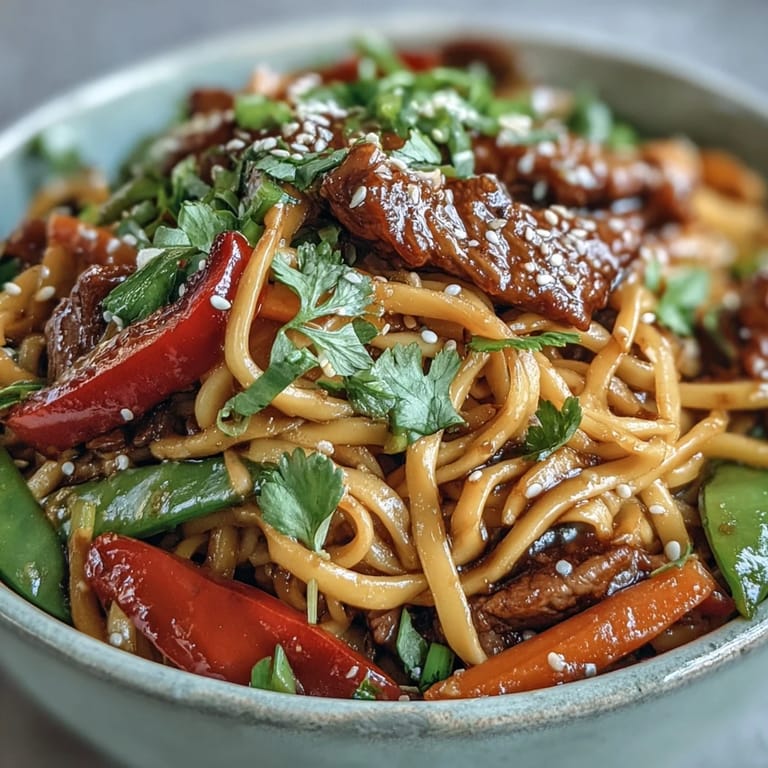
 This is the kind of recipe that saves you on busy nights and impresses people when you need it to. Keep the ingredients on hand, and youll always have a satisfying dinner just thirty minutes away.
Recipe FAQs
- → Can I use different types of noodles?
Yes, both egg noodles and rice noodles work perfectly. You can also substitute with udon, soba, or even spaghetti in a pinch. Just cook according to package directions and drain well before adding to the wok.
- → What cut of pork works best for stir-frying?
Pork loin or tenderloin are ideal because they're lean and tender. Slice them thinly against the grain for maximum tenderness. Pork shoulder can also work but may require slightly longer cooking time.
- → How do I prevent the vegetables from becoming soggy?
Use high heat and avoid overcrowding the wok. Stir-fry vegetables in batches if needed, and keep them moving constantly. Cook until just tender-crisp, usually 3-4 minutes, to maintain their texture and color.
- → Can I make this dish ahead of time?
While best served fresh, you can prep ingredients in advance. Marinate the pork, julienne vegetables, and mix the sauce up to a day ahead. The actual stir-frying should be done just before serving for optimal texture.
- → What can I substitute for oyster sauce?
For a vegetarian option, use mushroom-based oyster sauce or hoisin sauce. You can also mix soy sauce with a touch of sugar and a splash of Worcestershire sauce as an alternative.
- → How do I make this gluten-free?
Replace regular soy sauce with tamari or coconut aminos, use rice noodles instead of egg noodles, and ensure your oyster sauce and hoisin sauce are certified gluten-free. Always check ingredient labels carefully.