 Save to Pinterest
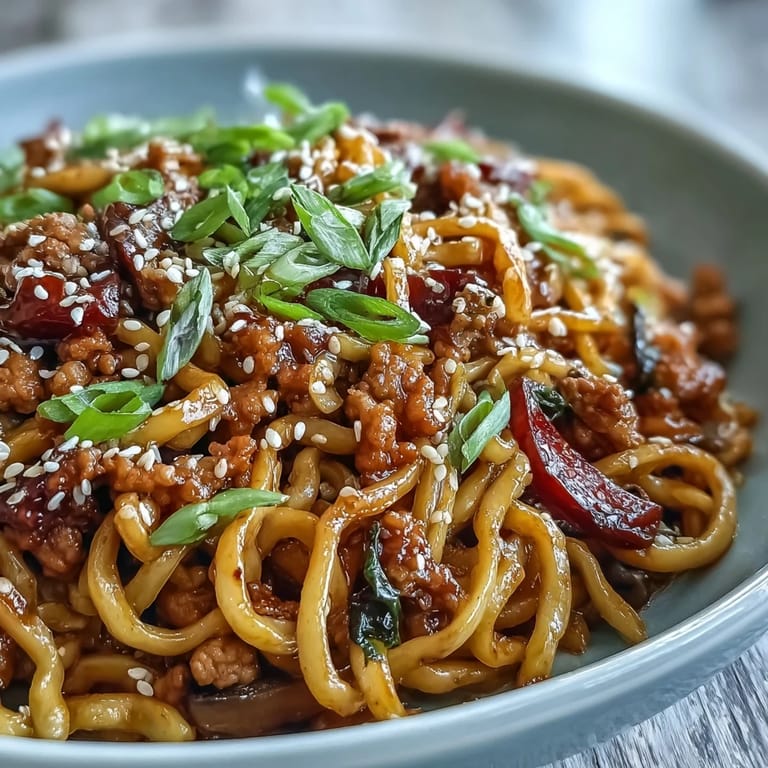
 My coworker dropped off a container of Korean fried noodles at my desk one Tuesday, and I devoured it in about five minutes flat. When she asked what I thought, I could only manage a thumbs up through chewing. That afternoon, I started experimenting with ground turkey instead of the beef she'd used, wondering if I could recreate that same magic at home on a random weeknight. Turns out, you absolutely can, and it tastes even better when you know exactly what went into it.
I made this for my roommate after she'd had a brutal day at work, and watching her face soften over a bowl of steaming noodles reminded me why cooking for someone matters. She didn't say much, just nodded and kept eating, and somehow that was the best compliment I could get. We ended up sharing the pot while sitting cross-legged on the kitchen floor, which is exactly the kind of meal this deserves to be.
Ingredients
- Fresh or dried wheat noodles (300 g): Udon or ramen work beautifully here; fresh noodles cook faster and have a better bite, but dried ones are more forgiving if you're new to this.
- Soy sauce (3 tbsp): The backbone of your sauce, so use one you actually like drinking from a spoon.
- Gochujang (2 tbsp): This fermented chili paste is the soul of the dish; it brings heat, funk, and depth that plain chili flakes cannot replicate.
- Brown sugar (1 tbsp): Balances the spice and saltiness with a subtle sweetness that makes you want another bite.
- Rice vinegar (1 tbsp): Cuts through the richness and keeps everything tasting bright instead of heavy.
- Sesame oil (1 tbsp): Adds a nutty aroma that fills your kitchen and makes the whole dish feel intentional and special.
- Ground turkey (400 g): Lean, quick-cooking, and absorbs the sauce beautifully without overwhelming the other flavors.
- Vegetable oil (2 tbsp): Divided into two stages for cooking turkey and then vegetables separately, which prevents steaming.
- Garlic and ginger (3 cloves minced, 1 tbsp minced): Mincing these fine releases their aromatics; don't skip this step or your sauce tastes one-dimensional.
- Yellow onion, carrot, red bell pepper, shiitake mushrooms: The vegetables should be prepped before you start cooking because everything happens fast once the heat is on.
- Spring onions (4 total, divided): Two go in at the end for warmth and freshness; two more garnish on top for crunch and color.
- Toasted sesame seeds (1 tbsp): The final touch that makes people ask if you learned this from a restaurant.
Tired of Takeout? 🥡
Get 10 meals you can make faster than delivery arrives. Seriously.
One email. No spam. Unsubscribe anytime.
Instructions
- Cook the noodles:
- Boil water in a medium saucepan and follow the package timing; these should be tender but not mushy. Drain them, rinse under cold water to stop the cooking, and toss with a tiny drop of oil so they don't clump while you work on everything else.
- Whisk the sauce together:
- Combine soy sauce, gochujang, brown sugar, rice vinegar, and sesame oil in a small bowl and stir until the gochujang dissolves completely. Taste it straight from the spoon; it should make your eyes water slightly and your mouth water immediately.
- Brown the turkey:
- Heat 1 tbsp oil in a large wok or skillet over medium-high heat until it shimmers. Add ground turkey and break it into small pieces with a wooden spoon, cooking for about 5 minutes until no pink remains and it smells savory and cooked through. Transfer it to a clean plate and don't wash the pan.
- Stir-fry the aromatics and vegetables:
- Add the remaining 1 tbsp oil to the same pan and let it get hot. Toss in minced garlic and ginger, stirring constantly for about 30 seconds until your kitchen smells incredible. Add the onion, carrot, bell pepper, and mushrooms, stirring constantly for 3 to 4 minutes until they're tender but still have some firmness.
- Bring everything together:
- Return the cooked turkey to the pan, add the noodles and sauce, and toss everything over high heat for 2 to 3 minutes, coating each strand of noodle with that gorgeous sauce. If it feels dry, add a splash of water; it should be glossy and cling to the noodles.
- Finish and serve:
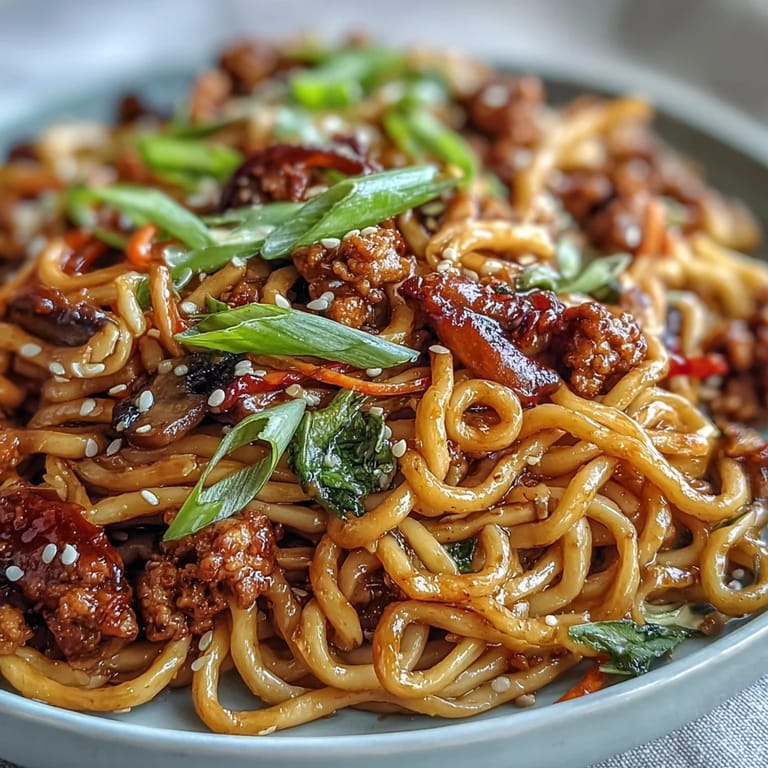
- Stir in the spring onions, then divide among bowls and top with toasted sesame seeds and extra spring onions for color and crunch.
 Save to Pinterest
 One night, my partner came home during the final minute of cooking and just stood in the doorway breathing in the smell of garlic, ginger, and toasted sesame seeds. He didn't say anything until he sat down with a bowl, and then he said it was the best thing I'd made in months, which felt like winning something. Food that makes people stop and actually taste it deserves to exist in your rotation forever.
Why This Dish Works
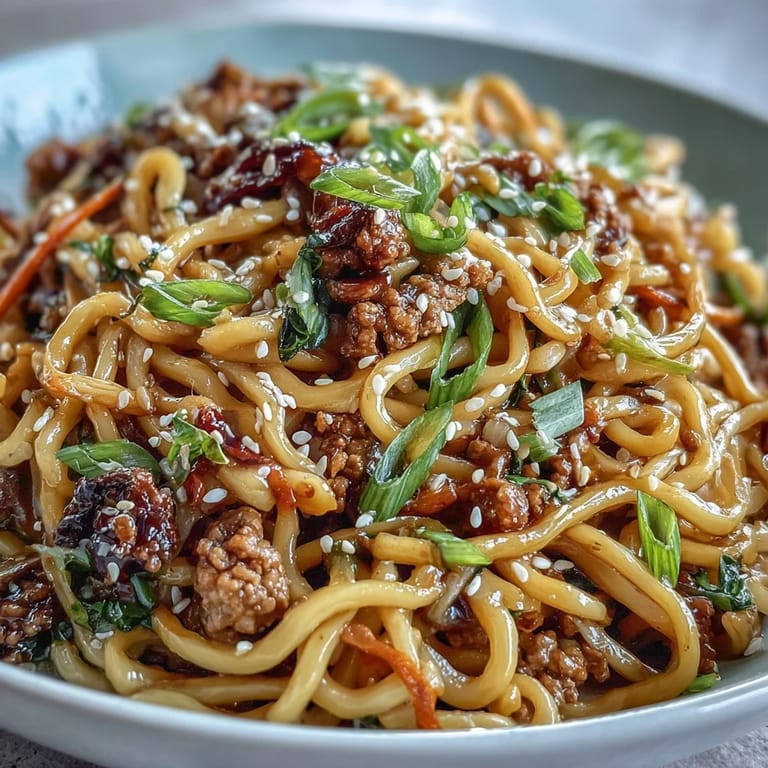
The magic here is texture and contrast: the bouncy noodles catch and hold the sauce, the vegetables stay firm enough to snap between your teeth, and the ground turkey keeps everything protein-forward and satisfying. The sauce itself balances heat, sweetness, saltiness, and umami in a way that makes you keep going back for one more bite. It's the kind of dish that feels elegant enough for guests but easy enough for a solo dinner when you deserve something that tastes like love.
Make It Your Own
Ground chicken tastes just as good as turkey and cooks at the same speed if that's what you have on hand. Beef is richer and adds a deeper flavor, though it needs a minute or two longer to cook through. Vegetarians can swap the turkey for crumbled firm tofu or a mix of mushrooms and walnuts, and the dish still sings.
Storage and Serving
This tastes best served immediately while the noodles are hot and the vegetables still have some firmness, though leftovers reheat beautifully in a wok or large skillet over medium heat with a splash of water. If you're meal prepping, keep the sauce separate from the noodles until you're ready to eat, which prevents everything from drying out. Serve it with kimchi on the side, a cold beer, or chilled soju if you want to be traditional about it.
- Add a fried egg on top for richness and a runny yolk that makes the best sauce.
- Slice a fresh chili and scatter it over the top if you like more heat than the gochujang already provides.
- Toast the sesame seeds yourself if you have whole ones; it takes 2 minutes in a dry skillet and changes everything.
 Save to Pinterest
 This is the kind of recipe you'll come back to over and over, the one that becomes muscle memory and tastes better every time because you know what to expect. It asks so little of you in terms of time and skill, yet delivers something that feels restaurant-quality and deeply personal.
Recipe FAQs
- → Can I use different protein?
Yes, ground chicken or beef work beautifully as substitutes. Adjust cooking time slightly based on the protein you choose.
- → What noodles work best?
Udon, ramen, or any wheat-based noodles are ideal. Their chewy texture holds up well during high-heat stir-frying and absorbs the savory sauce perfectly.
- → Is this dish very spicy?
The heat level is moderate and balanced by brown sugar. Add sliced chili or flakes if you prefer more intensity, or reduce gochujang for a milder version.
- → Can I prep this ahead?
Cut vegetables and whisk the sauce in advance. Cook everything just before serving for the freshest texture and flavor.
- → What sides pair well?
Fresh kimchi adds authentic tang and crunch. A light lager or chilled soju complements the bold flavors beautifully.
- → How do I store leftovers?
Keep refrigerated in an airtight container for up to 3 days. Reheat gently in a pan with a splash of water to refresh the noodles.