 Save to Pinterest
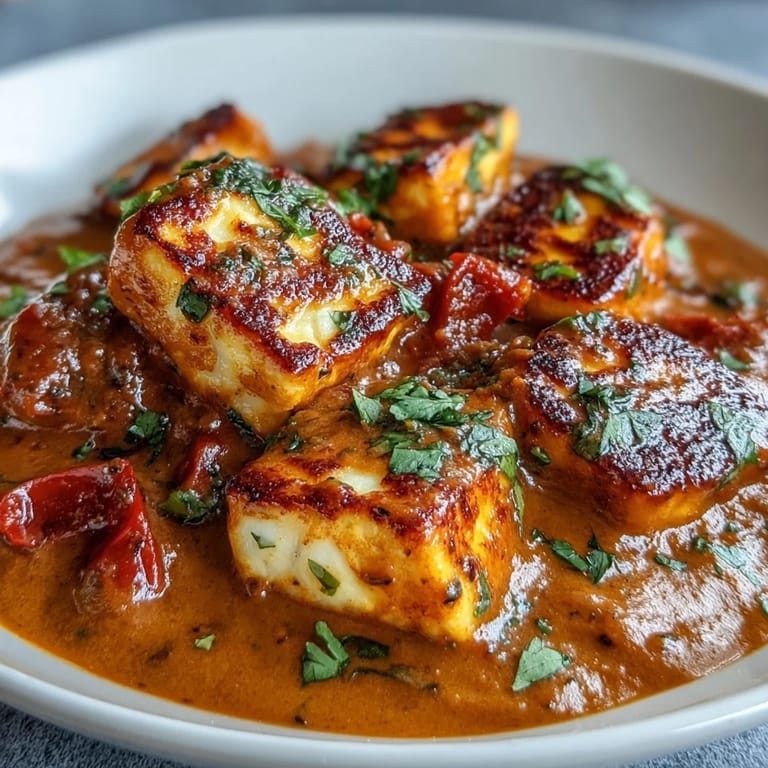
 The sizzle of halloumi hitting a hot pan is one of those sounds that always pulls my kids into the kitchen. I started making this curry on a rainy Tuesday when I had a block of halloumi that needed using and a craving for something warm and comforting. The way the cheese turns golden and squeaky, then softens into that creamy tomato sauce, reminded me why I love cooking dishes that feel both familiar and a little unexpected. It's become our go-to when we want curry night without the usual chicken or chickpea routine. Everyone from my six-year-old to my mother-in-law asks for seconds.
I made this for a small dinner party last spring, and my friend who usually claims she does not like cheese in curry went back for thirds. She said the halloumi felt like a cross between paneer and grilled cheese, which is exactly the vibe I was hoping for. We ate it with warm naan, and the room filled with the scent of garam masala and coconut. That night taught me that sometimes the best meals are the ones you throw together on instinct, trusting your ingredients to do the talking. It has been on rotation ever since, especially when I need something that feels special but does not demand much from me.
Ingredients
- Halloumi cheese: This firm, salty cheese is the star here, and cutting it into 2 cm cubes ensures every piece gets a crispy edge and a soft center when fried.
- Onion: Finely chopped onion creates the savory base that holds all the spices together, turning sweet and golden as it cooks.
- Garlic and ginger: Fresh is essential, the sharpness of garlic and the warmth of ginger wake up the whole dish and make your kitchen smell like a proper curry house.
- Red bell pepper: Adds a subtle sweetness and a pop of color that balances the richness of the sauce.
- Canned chopped tomatoes: The backbone of the curry, providing acidity and body without any extra effort.
- Garam masala: This blend is the soul of the dish, bringing warmth and complexity without overwhelming the creamy coconut.
- Ground cumin and coriander: These two spices add earthy depth and a gentle fragrance that makes every bite feel well-rounded.
- Turmeric: Just a half teaspoon gives the sauce that warm golden hue and a subtle, earthy undertone.
- Chili powder and paprika: Together they add a gentle warmth and a hint of smokiness, adjust the chili to suit your heat tolerance.
- Coconut milk: Full fat is best here, it makes the sauce luxuriously creamy and mellows out the tomatoes beautifully.
- Tomato paste: Concentrates the tomato flavor and helps thicken the sauce into something velvety and rich.
- Vegetable oil: A neutral oil works best for frying the halloumi without competing with the spices.
- Fresh cilantro and lemon wedges: The brightness of cilantro and the zing of lemon cut through the richness and make every bite feel fresh.
Tired of Takeout? 🥡
Get 10 meals you can make faster than delivery arrives. Seriously.
One email. No spam. Unsubscribe anytime.
Instructions
- Fry the halloumi:
- Heat the oil in a large nonstick skillet over medium-high heat, then add the halloumi cubes in a single layer. Let them sizzle undisturbed for 2 to 3 minutes per side until they turn golden and crispy, then remove and set them aside on a plate.
- Sauté the aromatics:
- Lower the heat to medium and add the chopped onion to the same pan, stirring occasionally for 3 to 4 minutes until it softens and turns translucent. Stir in the garlic, ginger, and red bell pepper, cooking for another 2 to 3 minutes until the air fills with their fragrance.
- Bloom the spices:
- Add the tomato paste along with the garam masala, cumin, coriander, turmeric, chili powder, and paprika. Stir everything together for about a minute, letting the spices toast gently and release their oils.
- Build the sauce:
- Pour in the canned tomatoes and coconut milk, stirring to combine, then season with salt and black pepper. Let the mixture simmer for 8 to 10 minutes, stirring occasionally, until the sauce thickens and the flavors meld together.
- Add the halloumi back:
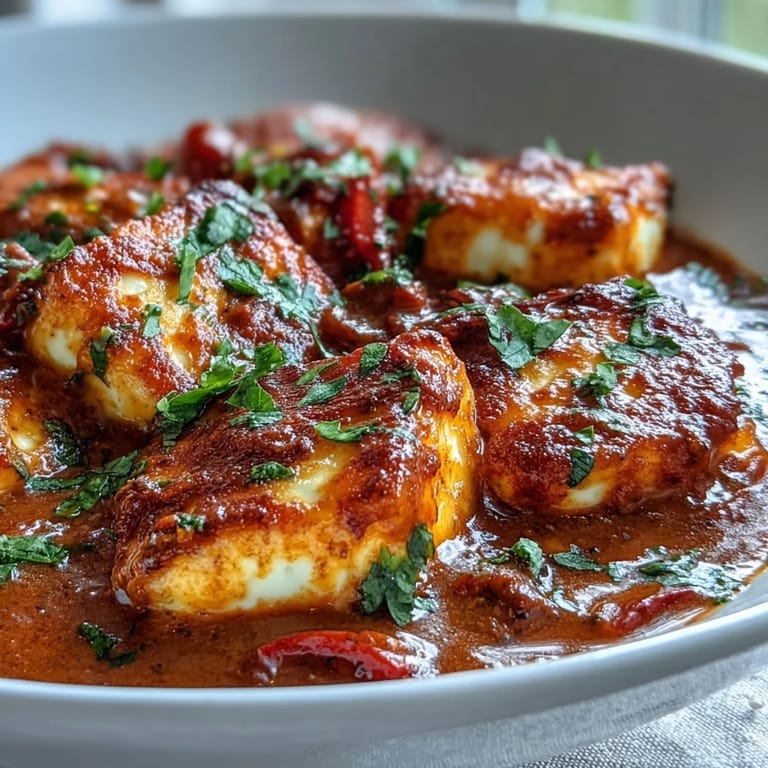
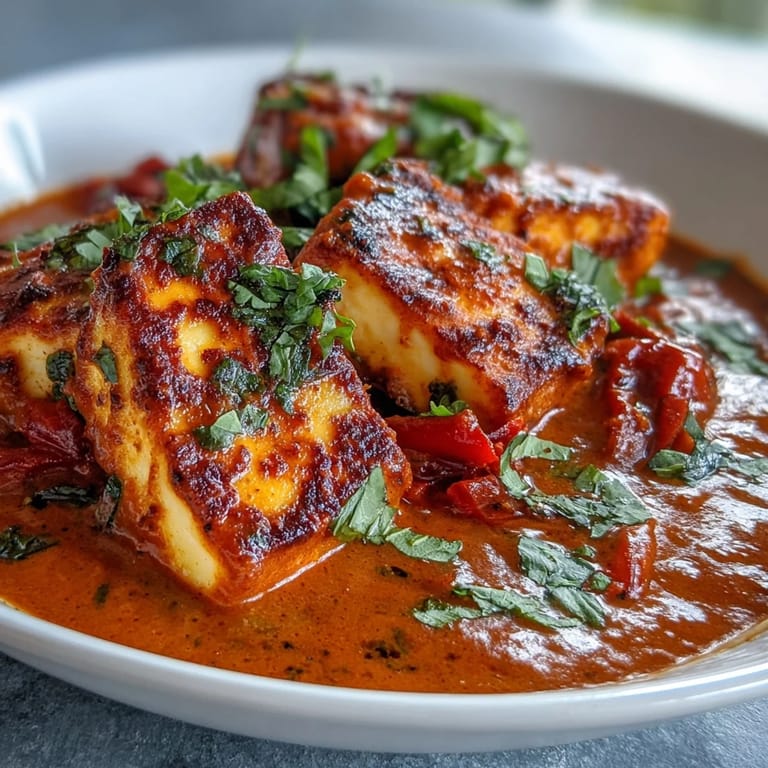
- Gently nestle the fried halloumi cubes into the sauce and simmer for 5 minutes, letting the cheese soak up the curry flavors without losing its golden edges. Taste and adjust the seasoning if needed, then garnish with fresh cilantro and serve with lemon wedges on the side.
 Save to Pinterest
 One evening my daughter asked if we could have the squeaky cheese curry again, and I realized this dish had quietly become part of our family language. It is the kind of recipe that does not demand perfection but rewards you with something warm, satisfying, and just different enough to feel like a treat. We have eaten it on rushed weeknights and slow Sundays, and it always delivers. There is something deeply comforting about a curry that welcomes everyone to the table, no matter their age or spice tolerance.
Serving Suggestions
I usually serve this with steamed basmati rice, letting the grains soak up every bit of that creamy sauce. Warm naan bread is another favorite, especially when you tear it and use it to scoop up the halloumi and sauce together. Sometimes I add a simple cucumber raita on the side to cool things down, or a handful of fresh greens dressed with lemon juice for a bit of contrast. The lemon wedges are not optional, that bright squeeze at the end makes everything sing.
Ingredient Swaps and Variations
If you want a more traditional Indian flavor, swap the halloumi for paneer and follow the same steps. For extra heat, toss in a chopped green chili when you add the garlic and ginger, it will give the curry a sharper kick. You can also stir in a handful of spinach or peas during the last few minutes of simmering for added color and nutrition. If coconut milk is not your thing, try using heavy cream instead, though the flavor will be richer and less tropical.
Storage and Reheating
Leftovers keep well in an airtight container in the fridge for up to three days, and the flavors actually deepen overnight. Reheat gently on the stovetop over low heat, adding a splash of water or coconut milk if the sauce has thickened too much. I do not recommend freezing this one, the halloumi can become a bit grainy when thawed, though the sauce itself freezes beautifully if you want to make a double batch.
- Always store the curry in a glass or ceramic container to avoid any metallic taste from the tomatoes.
- If reheating in the microwave, do it in short bursts and stir often to keep the sauce from splitting.
- Garnish with fresh cilantro and a squeeze of lemon just before serving to bring back that bright, fresh flavor.
 Save to Pinterest
 This curry has a way of turning an ordinary evening into something a little more special, without asking much of you in return. I hope it finds a place in your kitchen the way it has in mine.
Recipe FAQs
- → Can I substitute halloumi with another cheese?
Yes, paneer is an excellent substitute and provides a more traditional Indian flavor. It has a similar texture and holds up well during cooking. You can also use firm tofu for a dairy-free version.
- → How can I make this curry spicier?
Increase the chili powder amount or add a chopped green chili with the aromatics. You can also finish with red pepper flakes or fresh sliced chilies as garnish for extra heat.
- → What's the best way to serve this curry?
Serve over steamed basmati rice or with warm naan bread. The rice absorbs the creamy sauce beautifully, while naan is perfect for scooping. Add a side of cucumber raita for cooling contrast.
- → Can I make this ahead of time?
Yes, you can prepare the curry sauce in advance and refrigerate for up to 2 days. Fry the halloumi fresh just before serving to maintain its golden texture and add it to the reheated sauce.
- → Why do I need to fry the halloumi first?
Frying creates a golden crust that adds texture and prevents the cheese from becoming too soft in the sauce. It also develops a deeper, slightly caramelized flavor that enhances the overall dish.
- → Can I use light coconut milk?
Yes, light coconut milk works for a lower-calorie version, though the sauce will be less rich and creamy. For best results, use full-fat coconut milk to achieve the signature silky texture.