 Save to Pinterest
 My neighbor brought over a box of doughnut holes one Saturday morning, still warm from her kitchen, and I watched my kids devour them in minutes. That afternoon, I decided to figure out how to make them myself—not the complicated yeast kind, but something quick and foolproof that could be ready by the time coffee finished brewing. The first batch came out golden and perfect, and I realized these little puffs of fried dough were going to become a weekend ritual in our house.
I brought these to a potluck once, packed in a paper bag with powdered sugar dusting the inside, and people kept asking if I'd bought them from somewhere special. There's something about homemade doughnut holes that feels more generous than store-bought, even when they're this simple to make.
Ingredients
- All-purpose flour: Two cups gives you structure without heaviness; this is the backbone of a tender crumb.
- Granulated sugar: A quarter cup sweetens the dough itself, so every bite tastes intentional.
- Baking powder: One and a half teaspoons is your leavening agent, creating that light, airy interior.
- Salt: Half a teaspoon makes the other flavors pop and balances the sweetness.
- Ground nutmeg: Just a half teaspoon adds warmth without announcing itself—people taste it but can't quite name it.
- Whole milk: Two-thirds cup keeps the crumb tender and rich.
- Large eggs: Two of them bind everything together and help with lift.
- Unsalted butter, melted: Two tablespoons add richness and help achieve that golden crust.
- Vanilla extract: One teaspoon brings out the sweetness subtly.
- Vegetable oil for frying: Four cups gives you enough depth for even cooking; neutral oils work best.
- Powdered sugar or cinnamon-sugar coating: Either gives you that signature finish, though cinnamon-sugar is my weakness.
Tired of Takeout? 🥡
Get 10 meals you can make faster than delivery arrives. Seriously.
One email. No spam. Unsubscribe anytime.
Instructions
- Combine your dry ingredients:
- Whisk together flour, granulated sugar, baking powder, salt, and nutmeg in a large bowl. This distributes the leavening evenly so every doughnut hole rises the same way.
- Mix the wet ingredients:
- In another bowl, whisk milk, eggs, melted butter, and vanilla until smooth and combined. This base should look homogeneous before it meets the dry mix.
- Bring it together gently:
- Pour the wet ingredients into the dry and stir just until the flour disappears. Overmixing develops gluten and makes them tough, so stop as soon as you don't see streaks of flour.
- Heat your oil:
- Bring four cups of vegetable oil to 350°F in a deep pot or Dutch oven. Use a thermometer; too cool and they'll be greasy, too hot and they'll brown before cooking through.
- Fry in batches:
- Drop tablespoon-sized balls of dough into the oil using a small cookie scoop or spoon, working in batches so the oil doesn't cool down. Crowding the pan drops the temperature and leads to soggy results.
- Turn and time:
- Let them fry for 2 to 3 minutes, turning occasionally with a slotted spoon until they're golden brown all over. You'll see them bob to the surface when they're nearly done.
- Drain and rest:
- Lift them out with a slotted spoon and set them on paper towels to shed excess oil. They'll crisp up a little more as they cool.
- Coat while warm:
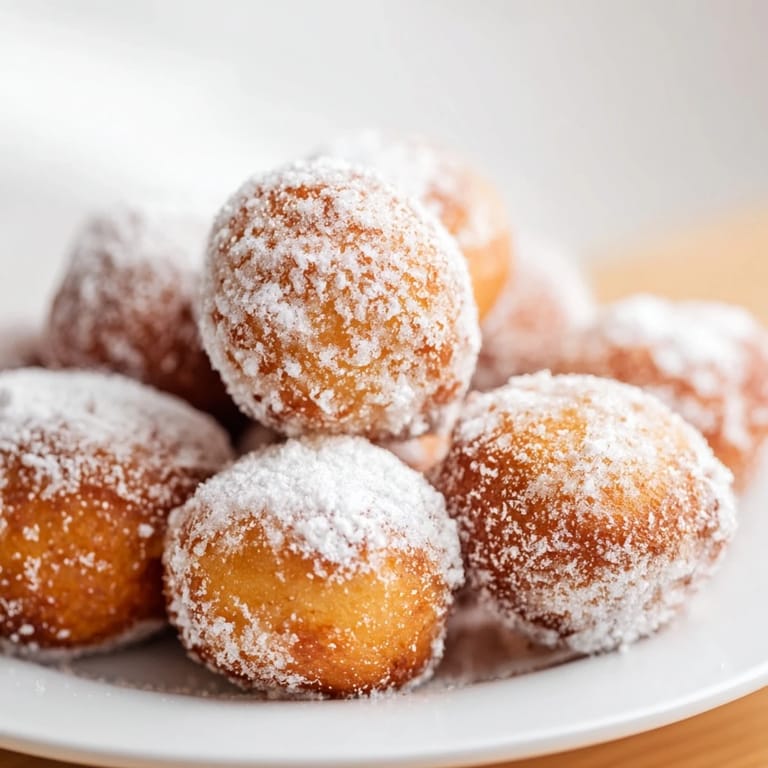
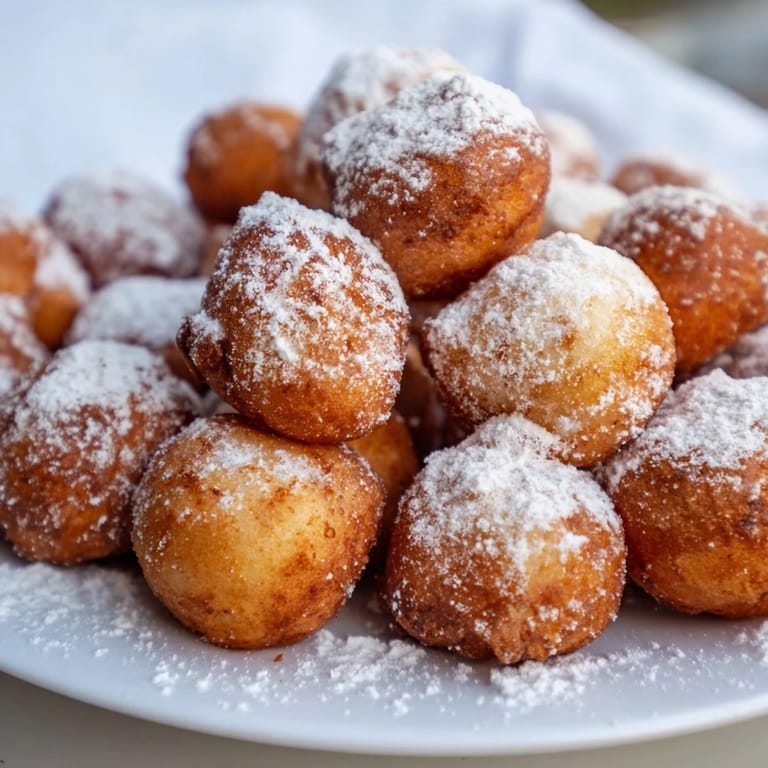
- While they're still warm, toss them in powdered sugar or a mixture of granulated sugar and cinnamon. The warmth helps the coating adhere and melt slightly into the surface.
- Serve immediately:
- These are best enjoyed fresh, when the outside is still crispy and the inside is soft. They'll keep in an airtight container for a day, but they're really magic in the first hour.
 Save to Pinterest
 My daughter once asked why these tasted different from the ones at the fair, and I realized it was because ours were still warm. There's a tenderness to a fresh doughnut hole that makes it feel like a small luxury.
Flavor Variations That Feel Natural
The vanilla and nutmeg in the base are already doing subtle work, but this dough welcomes a pinch of cardamom if you want something a little more sophisticated. I've also added a scrape of lemon zest once and it made them taste like a fancy bakery experiment. Cinnamon-sugar coating is classic, but powdered sugar dusted generously feels more like a nostalgic carnival treat.
Storage and Make-Ahead Thinking
These are genuinely best fresh, but if you have leftovers, an airtight container keeps them soft for about a day at room temperature. I once tried refrigerating them and they became a bit stale, so room temperature storage is your friend. If you're planning ahead, you can make the batter the night before and refrigerate it, then fry them fresh in the morning when you need a quick breakfast or snack.
A Few Last Thoughts for Success
The magic of doughnut holes is in their simplicity—no yeast fermentation, no waiting around, just straight into hot oil. They're small enough that kids can help shape the dough, and forgiving enough that a slightly odd shape doesn't matter. I've found that doughnut holes are the kind of thing that makes people smile disproportionate to the effort involved.
- If you want a jam-filled version, use a smaller scoop, fry the hole, cool it slightly, poke a hole in the side, and use a small spoon or piping bag to fill it with jam.
- A cookie scoop with a release mechanism makes uniform sizing effortless and keeps your hands clean.
- Keep paper towels and a slotted spoon within arm's reach of the pot so you can pull them out the moment they're perfect.
 Save to Pinterest
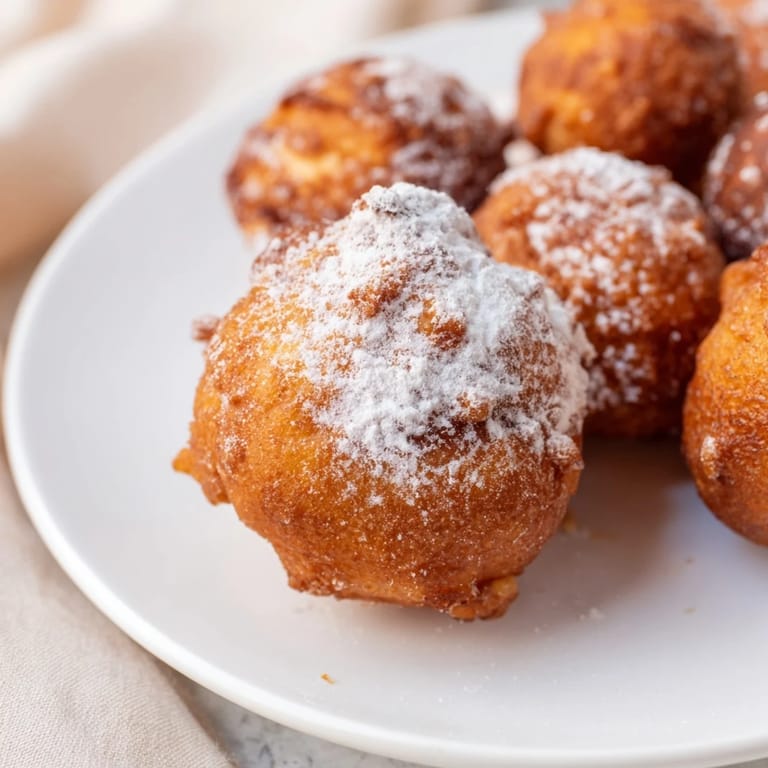
 Doughnut holes remind me that some of the best things in the kitchen come from not overthinking it. Make a batch this weekend and watch how quickly they disappear.
Recipe FAQs
- → What is the best oil for frying dough balls?
Vegetable oil with a high smoke point, like canola or sunflower oil, works best for frying to ensure even cooking and crispness without burning.
- → How do I know when to remove the dough balls from the oil?
They should be golden brown all over and float to the surface. Fry for about 2–3 minutes and turn occasionally for even color.
- → Can I flavor the dough before frying?
Yes, adding spices such as nutmeg and cardamom enhances the flavor, complementing the sweet coating after frying.
- → What are the coating options for these fried dough balls?
Powdered sugar and a mixture of granulated sugar with cinnamon are classic coatings, adding sweetness and a hint of spice.
- → How should I store leftover fried dough balls?
Store them in an airtight container at room temperature for up to one day to maintain freshness and texture.
- → Can these be made ahead and reheated?
While best enjoyed fresh, reheating briefly in a warm oven helps restore some crispness, but texture may slightly soften.