 Save to Pinterest
 My friend Sarah showed up one afternoon with a bamboo mat tucked under her arm and declared we were making sushi rolls in her tiny apartment kitchen. I was nervous—sushi seemed like something only professionals could do—but she laughed and said the real magic wasn't in perfection, it was in how simple the whole thing actually was. Twenty minutes later, we were slicing into vibrant rolls filled with cucumber and avocado, and I realized I'd been overthinking it the entire time. Now whenever I make nori rolls, I think of that afternoon and how confidently she'd said, just roll it tight and don't stress.
I brought a batch of these to a potluck once, and they disappeared before anything else on the table did—not because they were fancy, but because people could actually taste the quality of each ingredient. Someone asked for the recipe, and I realized I'd been making them so casually that I'd never written it down. That's when I knew this deserved to be a go-to recipe, something you keep coming back to because it never disappoints and always feels a little special.
Ingredients
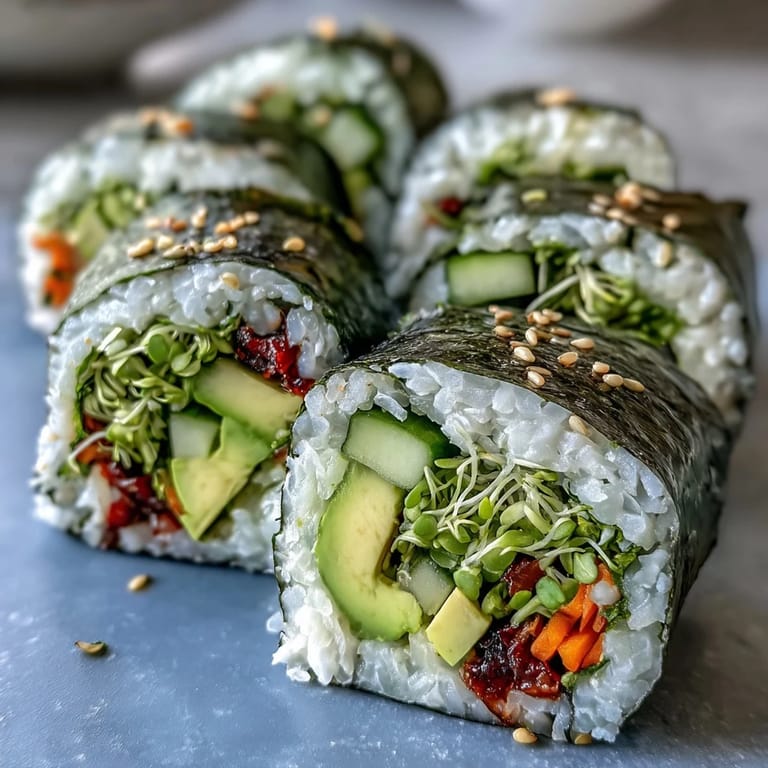
- Nori sheets: These are roasted seaweed rectangles that hold everything together—they should feel papery and crisp, and roasting creates that toasted flavor that makes the whole roll sing.
- Cucumber: Julienne it into thin matchsticks so it adds crunch without making the roll hard to close; you want texture, not bulk.
- Avocado: Use one that yields slightly to pressure—too hard and it won't slice cleanly, too soft and it'll turn to mush inside the roll.
- Mixed sprouts: These are your hidden gem for nutrition and that delicate peppery crunch that transforms a simple roll into something memorable.
- Carrot: Julienned like the cucumber, it adds natural sweetness and a bright pop of color that makes each slice look like a little work of art.
- Red bell pepper: Slice it into thin strips so it plays well with everything else without overpowering the more delicate flavors.
- Sushi rice: If you're using it, cook it ahead and let it cool completely—warm rice will make your nori soggy and ruin everything you've worked for.
- Rice vinegar: Just a touch transforms plain rice into something with subtle depth and helps it hold together when you roll.
- Sesame seeds: Toast them yourself if you can; the difference between toasted and raw is the difference between a good roll and one that makes people close their eyes when they taste it.
Tired of Takeout? 🥡
Get 10 meals you can make faster than delivery arrives. Seriously.
One email. No spam. Unsubscribe anytime.
Instructions
- Prepare the rice if using:
- Combine your cooked sushi rice with rice vinegar while it's still warm, then spread it on a plate to cool to room temperature. This step might feel tedious, but cool rice is forgiving rice—it won't tear your nori and will seal properly when you roll.
- Lay out your nori and mat:
- Place the shiny side of the nori down on your bamboo mat, with the rough side facing up toward you. You'll feel the difference between the two sides immediately, and that's your signal you're oriented correctly.
- Spread the rice layer:
- If using rice, apply a thin, even layer over the lower third of the nori, leaving about two centimeters of bare seaweed at the top as your seal. Think of it as a foundation, not a mountain—you want enough to hold things together but not so much that it fights back when you roll.
- Arrange your vegetables:
- Line up your cucumber, avocado, sprouts, carrot, and bell pepper in a neat row across the rice, then scatter sesame seeds over everything. This is where you can be creative and adjust based on what you actually have and what sounds good today.
- Roll with intention:
- Using the edge of the mat closest to you, lift it and roll the nori tightly over the filling, using gentle pressure as you go. When you reach the top, dab the bare nori edge with a tiny bit of water and press it down to seal—water is your secret weapon here.
- Slice with a sharp, damp knife:
- Once all your rolls are complete, wipe your knife with a damp cloth before each cut to prevent the rice from sticking and tearing the nori. You'll get clean, beautiful pieces that look like you actually knew what you were doing.
 Save to Pinterest
 My neighbor made these for her daughter's first vegetarian lunch at school, and the daughter came home talking about how she'd made them herself, how cool the layers were when she bit into them, how she wanted to make them every weekend. That's when I understood that nori rolls aren't just food—they're an invitation to play in the kitchen and take ownership of what you're eating.
The Grain-Free Option
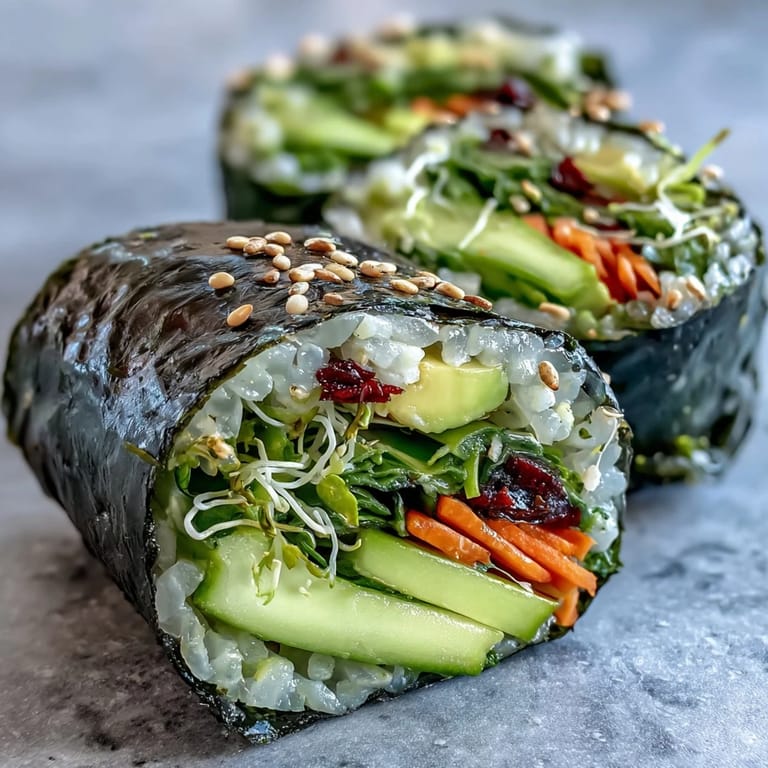
Skip the rice entirely and double down on vegetables if you want something lighter or lower-carb. The nori and vegetables alone create a satisfying roll, and honestly, sometimes the delicate simplicity of just seaweed wrapped around fresh vegetables is exactly what you need. You get more crunch, less heaviness, and everything tastes brighter because nothing's diluting the individual flavors.
Adding Protein to Make It Heartier
If you want these to feel more like a full meal, add sliced tofu that you've marinated in soy sauce and ginger, or try sautéed mushrooms that have been dressed in something savory and aromatic. Some people add thin strips of tempeh, others swear by cooked shrimp if they're not vegetarian. The key is that whatever you add should be thin enough to fit neatly in the roll without making it impossible to close.
Dipping Sauces and Serving Ideas
Serve these with soy sauce or tamari for dipping, and set out small dishes of pickled ginger and wasabi for people to adjust the heat and flavor exactly how they like it. A side salad makes the whole thing feel more elegant without requiring you to do any extra cooking. The beauty of this dish is that it's flexible right up until the moment someone takes their first bite.
- Make a quick ponzu sauce by mixing soy sauce with rice vinegar and a squeeze of lime if you want something with more complexity.
- Prepare everything ahead of time and assemble the rolls just before serving so the nori stays crisp and the vegetables stay cool.
- These keep in the refrigerator for a few hours but taste best when eaten within an hour of rolling.
 Save to Pinterest
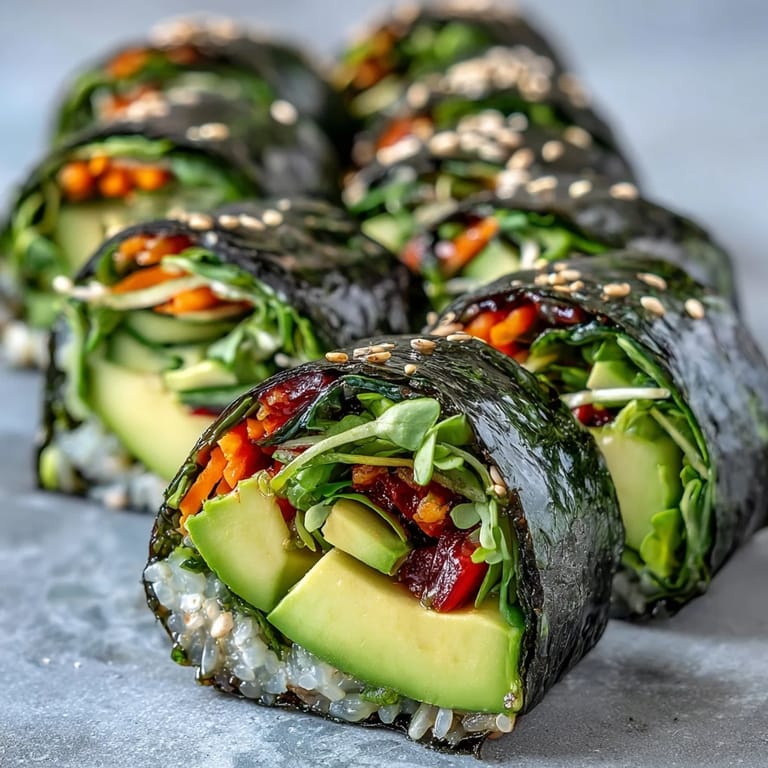
 These rolls prove that simple, fresh ingredients don't need anything fancy to shine—they just need respect and a sharp knife. Make a batch this week and experience the quiet joy of biting into something you built with your own hands.
Recipe FAQs
- → What vegetables work best in nori rolls?
Crisp vegetables like cucumber, carrot, and bell pepper provide satisfying crunch. Avocado adds creaminess that balances the textures. Sprouts contribute freshness and extra nutrition while layering beautifully between other ingredients.
- → Do I need special equipment to make these rolls?
A bamboo sushi rolling mat helps achieve tight, uniform rolls, though a clean kitchen towel works as an alternative. A sharp knife ensures clean slices through the nori without tearing. Otherwise, basic kitchen tools suffice.
- → Can I make these rolls ahead of time?
For best texture, assemble and serve immediately. Nori can become soggy if refrigerated too long. If meal prepping, keep vegetables prepared separately and roll just before eating. The rolls stay fresh at room temperature for several hours.
- → What makes these rolls vegan and gluten-free?
Nori sheets and vegetables are naturally plant-based and gluten-free. Using tamari instead of soy sauce avoids wheat while providing similar savory flavor. Skip the optional sushi rice for a grain-free version that remains satisfying.
- → How do I prevent the nori from tearing when rolling?
Keep your hands slightly damp when handling nori to prevent cracking. Spread ingredients evenly without overstuffing. Roll firmly but gently, using the bamboo mat to apply even pressure. Seal edges with a touch of water if needed.