 Save to Pinterest
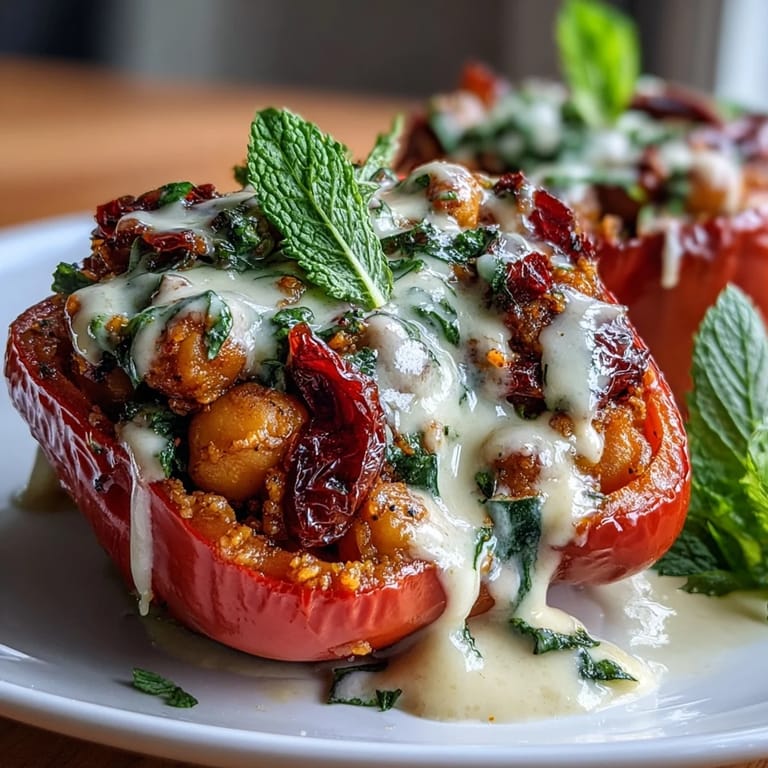
 There's something almost magical about the moment a bell pepper transforms from an empty shell into a vessel of Mediterranean flavors. My neighbor brought over a bag of vibrant peppers from her garden last summer, and instead of the usual roasted side dish, I decided to fill them with something substantial—a chickpea mixture that felt both nourishing and celebratory. The tahini sauce came later, drizzled on impulse, and suddenly what started as a simple idea became the kind of dinner that made everyone pause mid-conversation to take another bite.
I made this for my sister's book club, and watching everyone ask for the recipe before dessert even arrived told me everything I needed to know. One guest mentioned she'd been vegetarian for three years and nobody had invited her to a proper dinner party since—that comment stuck with me, and now these peppers are my go-to when I want someone to feel genuinely welcomed at my table.
Ingredients
- Bell peppers (red, yellow, or orange): Choose large, sturdy ones with flat bottoms so they'll stand upright in the baking dish; the different colors add visual drama and each has a slightly different sweetness level.
- Chickpeas: These are the backbone of your filling—canned works perfectly fine, just make sure to rinse them well to remove that starchy liquid.
- Quinoa or rice: The grain helps bind everything together and adds a satisfying texture; quinoa brings a little nuttiness while rice stays neutral.
- Kalamata olives: Their briny punch is essential—don't skip them or use plain black olives, which don't have nearly the same personality.
- Sun-dried tomatoes: A small amount goes a long way; they concentrate all the tomato flavor into these chewy little bits.
- Tahini: This is what makes the sauce, and it needs to be smooth and fresh-tasting; store it in a cool place because it can go rancid faster than you'd think.
- Fresh herbs: Parsley and mint brighten everything at the end; add them after cooking so they don't lose their freshness.
- Lemon juice: Use fresh-squeezed if you can; bottled changes the whole character of the sauce and filling.
Tired of Takeout? 🥡
Get 10 meals you can make faster than delivery arrives. Seriously.
One email. No spam. Unsubscribe anytime.
Instructions
- Get your peppers ready:
- Slice off the top of each pepper and scoop out the seeds and membranes with a small spoon or knife, working gently so you don't puncture the walls. Lightly brush the outside with oil if you want them to brown evenly.
- Build your flavor base:
- Heat oil in a skillet and let the onion soften until it's translucent—this takes about three minutes and happens faster than you'd expect. Add garlic next, stirring constantly for just one minute so it doesn't burn and turn bitter.
- Create layers of texture:
- The zucchini should be tender but not mushy, so four minutes over medium heat is usually right. Add the cherry tomatoes and let them soften just enough to release their juice, then it's time to move on.
- Bring it all together:
- Toss in the chickpeas, grain, olives, and spices, letting everything warm through and get to know each other for a few minutes. The oregano and cumin should bloom in that heat, making the whole kitchen smell like the Mediterranean.
- Finish with brightness:
- Stir in the fresh herbs and lemon juice off the heat—this keeps their flavor sharp and alive. Taste and adjust salt or pepper; you want it to taste slightly bold since it's going into the peppers.
- Stuff with purpose:
- Pack the filling into each pepper generously but not so tight that it bursts; nestle them upright in a baking dish so they support each other. If they tip over, they'll cook unevenly and lose their filling.
- Bake with patience:
- Start covered with foil so the peppers steam and soften, then uncover to let them develop color and the edges caramelize slightly. The whole process takes about thirty-five minutes, and you'll know they're done when a fork slides through the pepper skin easily.
- Whisk your sauce:
- Tahini can be stubborn and clumpy at first, so whisk it with lemon juice slowly until it breaks down into a creamy paste. Add water gradually until you get the right consistency for drizzling—it should be pourable but not runny.
 Save to Pinterest
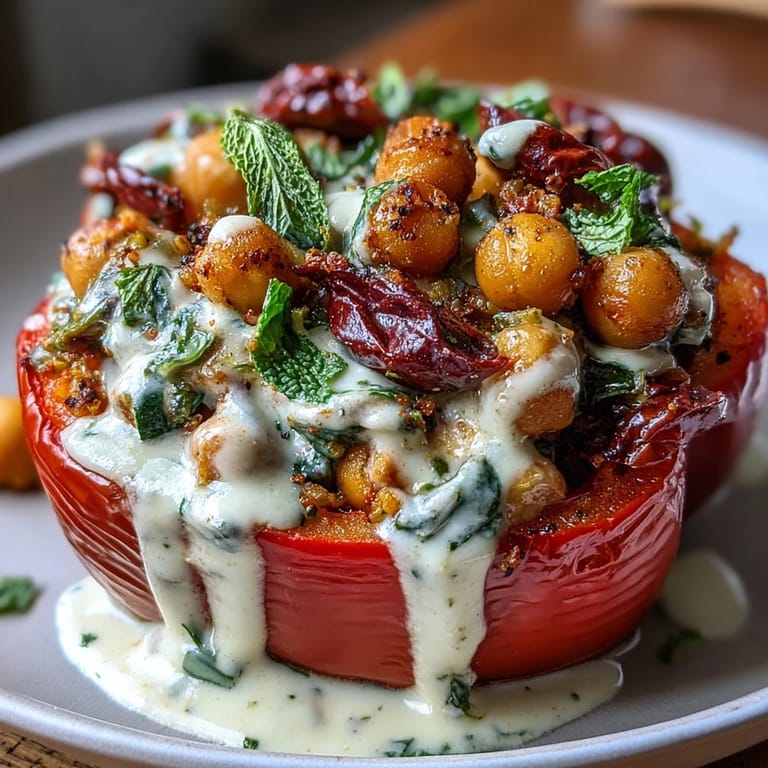
 My mom tasted one of these peppers and immediately asked if I'd used butter or cream in the tahini sauce—that's when I knew the richness was exactly right. Seeing her eyes widen when I told her it was entirely plant-based felt like some kind of small victory, the kind that reminds you why cooking for people matters.
Making the Filling Your Own
The beauty of this recipe is how forgiving it is once you understand the basic structure—you're essentially combining a grain, a legume, vegetables, and brightness. I've made versions with crumbled tofu instead of chickpeas on days when I'm craving something different, and added roasted eggplant when that's what needed using up. The important thing is that balance of textures and flavors, not rigid adherence to what's listed.
The Tahini Sauce Magic
This sauce is secretly the MVP of the whole dish—it transforms sturdy vegetables and chickpeas into something that feels luxurious and complete. A friend once asked if it was made with cream cheese, and I realized that most people don't expect tahini to taste this smooth and rich; sharing that moment of surprise is part of why I keep making this dish.
Serving and Storing
These peppers are wonderful served warm straight from the oven, but they're also excellent at room temperature or even cold the next day, which makes them perfect for meal prep or bringing to someone's house. The filling stays moist and the flavors actually develop more complexity as they sit together overnight.
- Refrigerate leftovers in an airtight container for up to four days, and reheat gently in the oven so the peppers don't get too soft.
- You can stuff the peppers up to eight hours ahead and store them in the fridge before baking, making this a great option for entertaining.
- The tahini sauce can be made a few hours ahead and kept in a covered bowl, but stir it well and add a splash of water before serving.
 Save to Pinterest
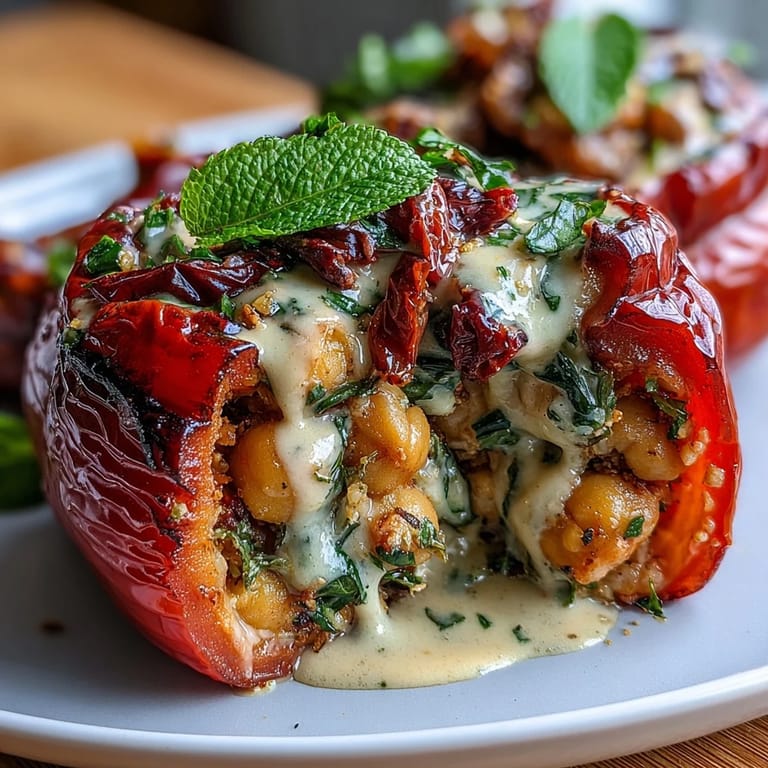
 This dish has become my answer to the question of what to cook when you want to impress someone without spending hours in the kitchen. It's the kind of meal that makes people feel seen and nourished all at once.
Recipe FAQs
- → Can I use other grains instead of quinoa or rice?
Yes, cooked farro, bulgur, or couscous can be used as substitutes, though some may add gluten.
- → How can I add a hint of spice to this dish?
Adding a pinch of chili flakes to the chickpea filling will introduce a subtle heat without overpowering the flavors.
- → What wine pairs well with these stuffed peppers?
A crisp white wine like Sauvignon Blanc complements the fresh and herbaceous notes of the dish.
- → Is the lemon tahini sauce adjustable in thickness?
Yes, you can add more water to thin the sauce to a drizzling consistency as desired.
- → Can I prepare this dish ahead of time?
The stuffed peppers can be assembled and refrigerated before baking; bake just before serving for best texture.