 Save to Pinterest
 There's a particular magic to watching onions transform in a hot pan—from sharp and biting to something almost honeyed and complex. I discovered this tart on a lazy Sunday afternoon when a friend arrived unannounced with a bottle of wine and I had almost nothing in the kitchen except butter, onions, and a thawed sheet of puff pastry shoved in the freezer. What emerged from the oven forty minutes later was so golden and fragrant that she stayed for hours, and we polished off nearly the entire thing. Now it's become my go-to when I want to feel sophisticated without spending all day cooking.
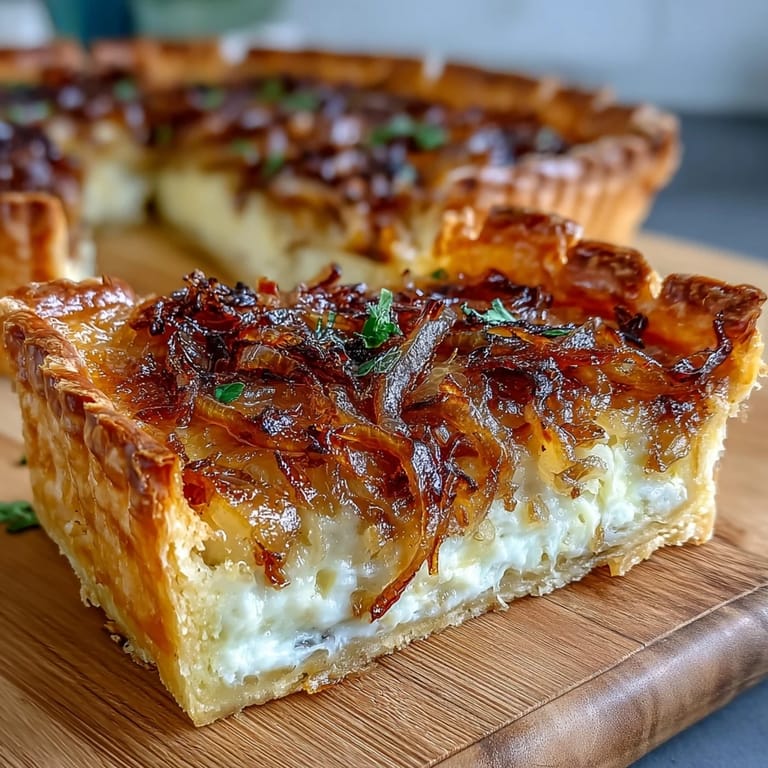
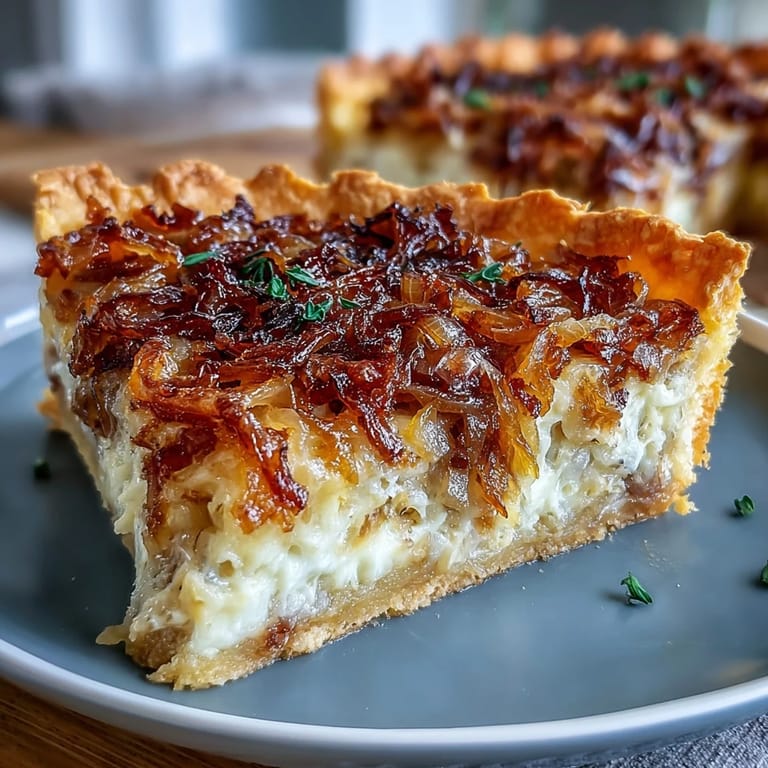
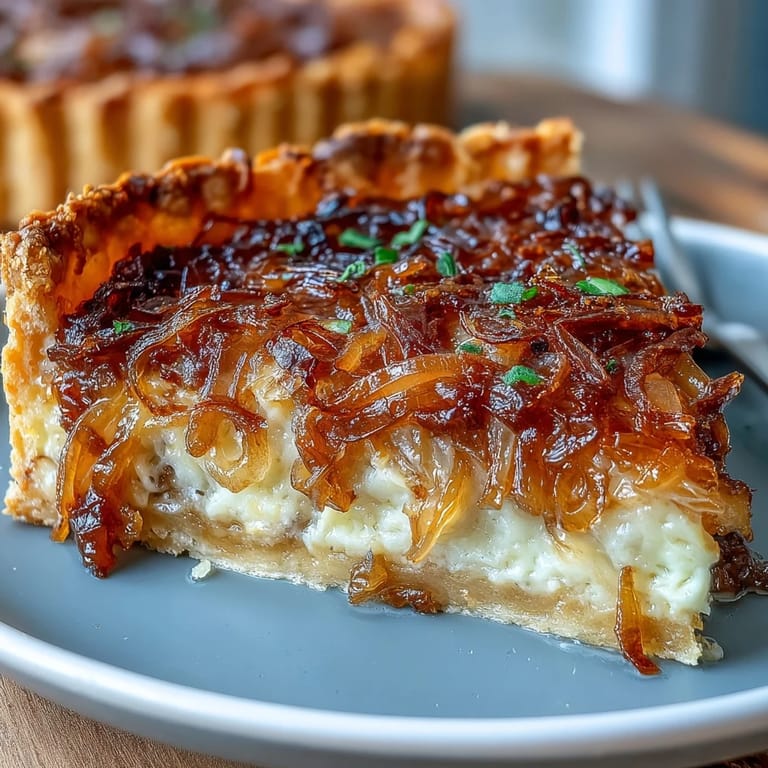
I made this tart for a book club meeting in autumn, and it turned out to be the only thing anyone really wanted to eat. One guest came back to the kitchen and watched me slice it, asking if I'd trained as a chef—the sight of that creamy, golden filling with pockets of melted cheese and caramelized onions was enough to make everyone forget the fancy appetizers I'd spent time preparing.
Ingredients
- Puff pastry (9-inch round sheet): Use quality all-butter pastry if you can find it—the flavor difference is noticeable, and it puffs more dramatically than the margarine versions.
- Unsalted butter and olive oil: The combination prevents the butter from burning while the onions cook down, creating a richer base than oil alone.
- Yellow onions (4 large, thinly sliced): Thickness matters here—slice them thin enough that they'll collapse into strands of sweetness as they caramelize.
- Salt, pepper, and sugar: The sugar accelerates caramelization and brings out the onions' natural sweetness without making the dish taste sweet.
- Fresh thyme: Add it near the end so the fragrance remains alive in the finished tart rather than cooking away into the background.
- Eggs and heavy cream: This custard base needs the richness of both to feel luxurious; using all milk makes it lean and less forgiving.
- Whole milk: Lightens the custard slightly so it sets properly without becoming dense.
- Ground nutmeg: Just a whisper—enough that people will taste something they can't quite name.
- Gruyere cheese (1.5 cups grated): Its nuttiness complements the onions perfectly, but don't grate it too far ahead or it'll clump.
- Dijon mustard: This thin layer prevents the pastry from absorbing moisture and keeps it crisp while adding a subtle tang.
Tired of Takeout? 🥡
Get 10 meals you can make faster than delivery arrives. Seriously.
One email. No spam. Unsubscribe anytime.
Instructions
- Prepare your oven and chill the pastry:
- Heat the oven to 375°F (190°C). Fit the pastry into your tart pan, trim the edges, and prick the base all over with a fork—this prevents it from puffing wildly in the center. Slide it into the refrigerator while you work on everything else.
- Begin the slow caramelization:
- In a large skillet, melt butter with olive oil over medium-low heat. Add your sliced onions along with salt, pepper, and that pinch of sugar, then settle in—this is about patience, not speed. Stir every few minutes as the onions gradually soften and their moisture evaporates, turning them from pale and sharp to deep golden and impossibly sweet, roughly 30 to 35 minutes.
- Finish the onions with thyme:
- In the last five minutes of cooking, stir in your fresh thyme leaves so their flavor stays bright. Once they're fragrant and fully caramelized, remove from heat and let cool slightly so they don't scramble the eggs.
- Make the custard filling:
- Whisk together your eggs, heavy cream, milk, nutmeg, salt, and pepper in a bowl until completely smooth—no streaks of egg white. This is your base, and it should look pale and uniform.
- Assemble the tart:
- Remove your chilled pastry shell and brush the base lightly with Dijon mustard, which creates a flavor anchor and keeps the crust from absorbing liquid. Spread the cooled caramelized onions evenly across the bottom, then scatter the grated Gruyere over top in an even layer.
- Pour and bake:
- Carefully pour your custard mixture over the onions and cheese, letting it settle into every crevice. Bake for 35 to 40 minutes until the filling is just set in the center—it should barely jiggle when you gently shake the pan—and the top turns golden brown.
- Rest before serving:
- Let the tart cool for about 10 minutes once it comes out of the oven. This allows the filling to set fully and makes slicing infinitely easier, though the temptation to dig in immediately is understandable.
 Save to Pinterest
 The first time someone told me this tart was better than the chicken dish I'd also prepared, something shifted in how I thought about cooking. It wasn't about complexity or expense—it was about giving each ingredient space to become its best self and letting time do the heavy lifting.
The Art of Caramelization
Caramelizing onions isn't difficult, but it does require attention and patience. The process releases their natural sugars slowly, creating that complex sweetness that defines this tart. Lower heat actually works better than high heat—rushing them will scorch them rather than caramelize them. I've learned to use this time for other kitchen tasks or to simply enjoy a quiet moment in the kitchen, checking in on them every few minutes and stirring to ensure even browning.
Why Gruyere Makes All the Difference
While you could technically use any melting cheese, Gruyere brings a subtle nuttiness and complexity that elevates this tart from simple to sophisticated. Its higher fat content means it melts smoothly into the custard rather than becoming rubbery, and it doesn't overpower the delicate caramelized onions. Emmental and Swiss cheese work as substitutes, but they lack that rich, slightly earthy undertone that makes Gruyere special in this context.
Serving and Pairing Ideas
This tart is elegant enough for brunch yet casual enough for a light weeknight dinner. It's equally at home on a picnic blanket as it is on a formal table. A crisp white wine like Sauvignon Blanc cuts through the richness beautifully, and a simple salad of peppery greens with lemon vinaigrette provides balance and brightness.
- Serve warm or at room temperature—both work wonderfully, and room temperature actually lets the flavors shine more clearly.
- Make it up to two days ahead and reheat gently in a low oven, which also gives you flexibility for entertaining.
- Slice with a sharp knife dipped in hot water between cuts to keep the pastry from shattering.
 Save to Pinterest
 There's something deeply satisfying about pulling a golden tart from the oven and knowing you've created something that feels fancy without the stress. Once you've made this once, you'll find yourself reaching for it again and again.
Recipe FAQs
- → How do I properly caramelize onions for this tart?
Slice onions thinly and cook slowly over medium-low heat with butter and olive oil, stirring often until they turn golden brown and sweet.
- → Can I substitute Gruyere cheese with another type?
Yes, Emmental or Swiss cheese can be used as alternatives to achieve a similar creamy and mild flavor profile.
- → What is the best way to prepare the puff pastry base?
Roll out thawed puff pastry and fit it into a tart pan with removable bottom. Trim excess, prick the base with a fork, and chill before adding the filling.
- → How long should the tart bake for optimal texture?
Bake the tart for 35 to 40 minutes at 375°F (190°C) until the filling is set and the top is golden brown.
- → What flavors enhance the caramelized onions during cooking?
Adding a pinch of sugar and fresh thyme during the last minutes of cooking enhances the sweetness and aroma of the onions.
- → Is it possible to add a splash of wine to the onions?
Yes, a splash of white wine can be added during caramelization for extra depth and richness.