 Save to Pinterest
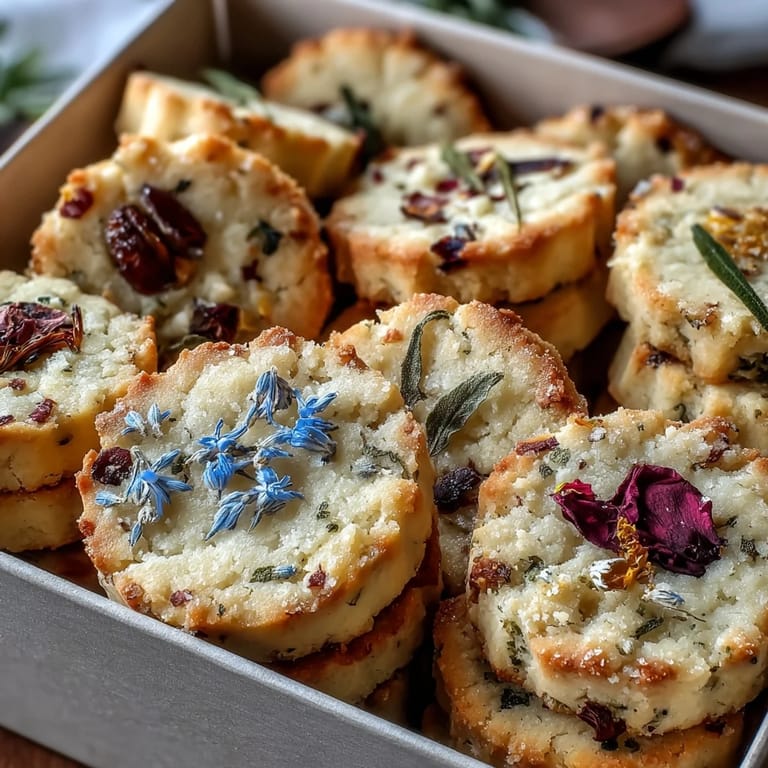
 My sister called me in a panic two days before Mother's Day, asking if I could help her create something special for our mom. We ended up in my kitchen on a gray afternoon, butter softening on the counter while we debated flower choices like we were curating an art exhibit. There's something about making shortbread that feels inherently celebratory—the way it melts on your tongue, the buttery aroma that fills the house. These delicate cookies became our answer, and by the time we arranged them in a vintage box with tissue paper, we realized we'd made something far more meaningful than just dessert.
I'll never forget watching my mom's face when she opened that box—she spent a full minute just looking before eating a single cookie, which told me everything. She kept one in a small dish on her nightstand for days, and whenever I'd visit, she'd mention how she'd nibble just a corner before bed. That's when I understood these weren't just cookies; they were tiny edible love notes.
Ingredients
- Unsalted butter, softened: This is the soul of shortbread—use real butter, never margarine, and make sure it's genuinely soft so it creams properly without turning into a greasy puddle.
- Powdered sugar: Its fine texture dissolves seamlessly into the butter, creating that signature tender crumb that shortbread is famous for.
- Vanilla extract: Just enough to whisper in the background; it enhances without announcing itself.
- All-purpose flour: Measure by weight if you can, as it makes shortbread far more forgiving and consistently tender.
- Fine sea salt: A tiny pinch that somehow makes the butter taste more buttery—trust it.
- Egg white: Your adhesive for the flowers; lightly beaten means you want just enough to make things sticky, not soupy.
- Edible dried flowers: Source these from reputable suppliers only—your garden roses or supermarket bouquets won't do, as they're typically treated with pesticides that absolutely shouldn't end up in food.
- Granulated sugar: A light sparkle that catches the light and adds textural contrast to each bite.
Tired of Takeout? 🥡
Get 10 meals you can make faster than delivery arrives. Seriously.
One email. No spam. Unsubscribe anytime.
Instructions
- Set your stage:
- Preheat your oven to 325°F and line two baking sheets with parchment paper. This low, gentle heat is crucial for shortbread—you want pale golden edges, not brown ones.
- Build your foundation:
- Cream the softened butter with powdered sugar using an electric mixer or steady wooden spoon, beating until it transforms into something light, fluffy, and nearly white. This aerating step is what gives shortbread its tender, melt-in-your-mouth texture.
- Bring it together:
- Mix in the vanilla, then sift the flour and salt directly over the mixture. Stir gently just until the dough comes together—overmixing develops gluten and makes shortbread tough, which is the opposite of what you want.
- Roll with care:
- Turn the dough onto a lightly floured surface and roll it to 1/4 inch thickness, using light pressure so you don't compress it. If it's warm and sticking, chill it for ten minutes first.
- Cut and arrange:
- Use cookie cutters to create your shapes, then place each cookie on the prepared baking sheets with a little breathing room between them. They won't spread much, but they will bake slightly larger than they look.
- Dress them up:
- Brush each cookie lightly with beaten egg white—and I mean lightly, just enough for the flowers to grip. Gently press your chosen edible flowers onto the surface, then sprinkle a tiny amount of granulated sugar over the top for sparkle.
- Bake with restraint:
- Slide them into the oven for 16 to 18 minutes, watching for pale golden edges while the centers stay soft and tender. The moment they look done, take them out—overbaking is the fastest way to turn shortbread into something hard.
- Cool strategically:
- Let them rest on the baking sheet for five minutes so they firm up just enough to move without breaking, then transfer to a wire rack to cool completely. Patience here prevents cracking.
- Gift them beautifully:
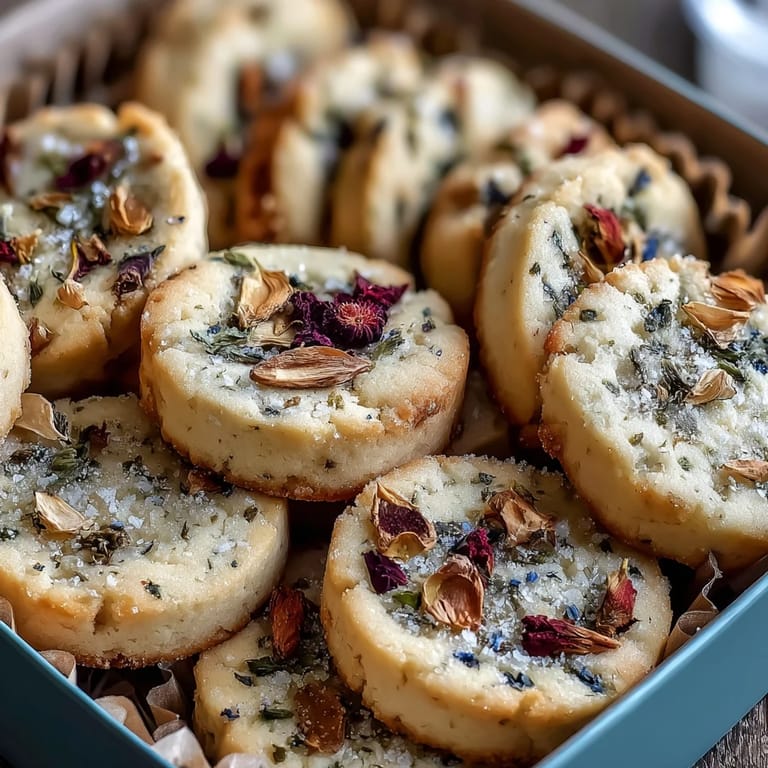
- Arrange the cooled cookies in a decorative box with tissue paper or parchment between layers. This is the moment where your gift transforms from homemade to heirloom-feeling.
 Save to Pinterest
 There's a quiet intimacy in making something delicate by hand that you'll give away, knowing the person receiving it will taste every bit of attention you poured into it. These cookies remind me that the most elegant gifts are often the simplest ones, made with intention and arranged with care.
Flavor Variations Worth Exploring
Once you master the basic recipe, you can subtly shift the flavor profile in directions that still feel refined. A teaspoon of finely grated lemon or orange zest stirred into the dough adds a bright note that pairs beautifully with rose or lavender flowers. I've also experimented with adding just a whisper of almond extract instead of vanilla, which creates an almost marzipan-like undercurrent. The key is restraint—shortbread speaks softly, and you want your additions to enhance rather than shout.
Choosing and Working with Edible Flowers
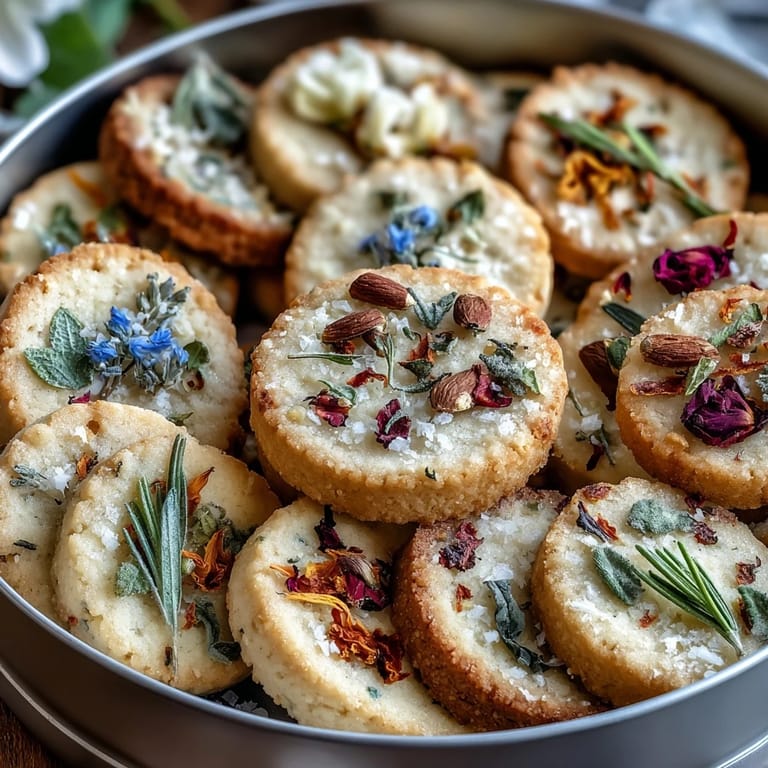
The flower selection makes or breaks the visual impact of these cookies, so choose with intention. Rose petals, lavender buds, violets, and calendula petals are all stunning and food-safe when sourced properly. Dried flowers actually work better than fresh ones because they're lighter and won't release moisture onto your cookies, causing them to become soggy. When you press them onto the egg white, use your fingertip to gently seat them without crushing the delicate petals—you want them to look like they landed there by chance, not like you gripped them.
Storage, Gifting, and Last-Minute Saves
Shortbread keeps beautifully for up to a week in an airtight container, which means you can bake these days in advance and still feel fresh about gifting them. Layer the cooled cookies between parchment paper sheets to prevent them from sticking together, and store them at room temperature away from heat and humidity. If you're decorating ahead of time, the cookies will stay crisp because the edible flowers don't absorb moisture the way fresh flowers would.
- Make these up to four days ahead and decorate them the morning of gifting for maximum freshness and visual impact.
- If a batch cracks slightly during cooling, it's still delicious—reserve those for yourself and give the perfect ones as gifts.
- Line your gift box with tissue paper or parchment to create a luxe presentation that tells the recipient this was made with care.
 Save to Pinterest
 Every time you give these cookies away, you're offering something that bridges the gap between homemade comfort and elegant gift-giving. They're proof that the most meaningful expressions of care don't require complicated techniques or hard-to-find ingredients.
Recipe FAQs
- → What type of flowers are safe for decorating these shortbreads?
Use edible dried flowers such as rose petals, lavender, violets, or calendula. Ensure they are food-grade and untreated with pesticides.
- → Can the dough be prepared in advance?
Yes, the dough or baked shortbreads can be made up to a week ahead if stored in an airtight container to maintain freshness.
- → How should the shortbreads be baked to avoid overcooking?
Bake at 325°F (160°C) for 16–18 minutes until edges are a pale golden color. Avoid baking longer to keep them tender.
- → Is it possible to add flavor variations?
Yes, adding finely grated lemon or orange zest to the dough introduces a bright citrus twist to the buttery base.
- → What tools are recommended for shaping the cookies?
Use rolling pins to evenly flatten the dough and cookie cutters to create consistent shapes before decorating.
- → Are these shortbreads suitable for vegetarians?
Yes, all ingredients are vegetarian-friendly, including butter and egg white used for decoration.