 Save to Pinterest
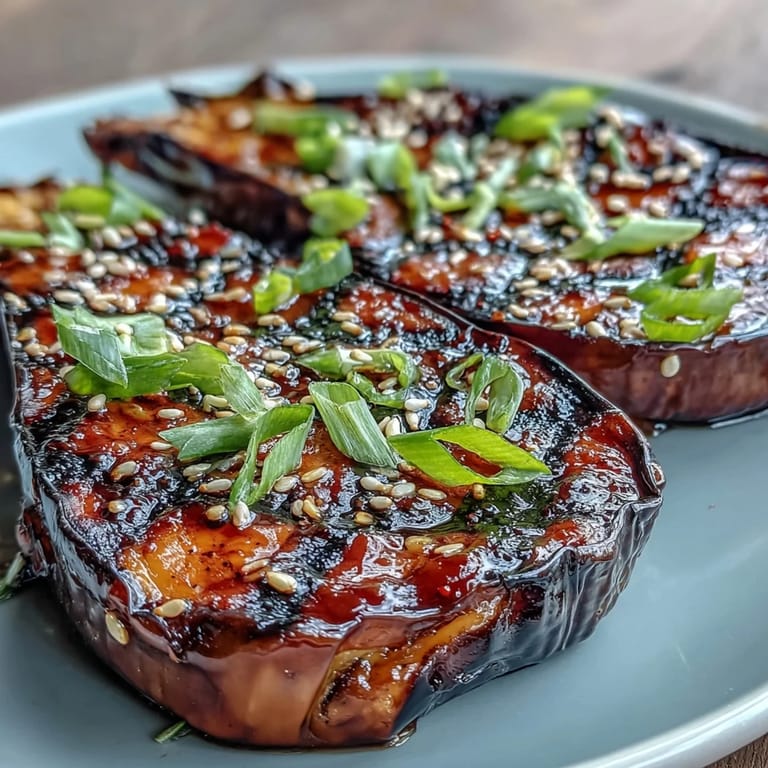
 Miso Glazed Eggplant, also known as Nasu Dengaku, is a quintessential Japanese dish that highlights the incredible transformation of eggplant when roasted. The flesh becomes buttery and silky, providing the perfect canvas for a rich, sweet-savory miso glaze that caramelizes into a beautiful golden crust under the broiler.
Save to Pinterest This recipe is an excellent introduction to Japanese home cooking. By scoring the eggplant in a crosshatch pattern, the glaze penetrates deep into the vegetable, ensuring every bite is packed with the signature flavors of mirin, sake, and miso.
Ingredients
Tired of Takeout? 🥡
Get 10 meals you can make faster than delivery arrives. Seriously.
One email. No spam. Unsubscribe anytime.
- Eggplant: 2 medium Japanese eggplants
- Miso Glaze: 3 tbsp white miso paste, 1 tbsp mirin, 1 tbsp sake, 1 tbsp sugar, 1 tbsp sesame oil
- Garnish: 1 tbsp toasted sesame seeds, 2 green onions, thinly sliced
Instructions
- Step 1
- Preheat oven to 400°F (200°C). Line a baking sheet with parchment paper.
- Step 2
- Slice eggplants in half lengthwise. Score the flesh in a crosshatch pattern, being careful not to pierce the skin.
- Step 3
- Brush cut sides with a little sesame oil and place cut-side up on the baking sheet.
- Step 4
- Roast for 20–25 minutes, until the flesh is tender and golden.
- Step 5
- Meanwhile, whisk together the miso paste, mirin, sake, sugar, and remaining sesame oil in a small bowl until smooth.
- Step 6
- Remove eggplants from the oven. Spread a generous layer of miso glaze evenly over the cut sides.
- Step 7
- Set oven to broil. Broil eggplants for 2–3 minutes, until the glaze bubbles and caramelizes (watch closely to prevent burning).
- Step 8
- Remove from oven and sprinkle with toasted sesame seeds and green onions. Serve warm.
Zusatztipps für die Zubereitung
Using a sharp knife is essential for scoring the eggplant without tearing the skin. For the best results, use a small mixing bowl to ensure the miso glaze is completely smooth before brushing it onto the tender roasted halves. Be aware that miso contains soy and sesame oil contains sesame; always check labels for hidden allergens in your sake and mirin.
Varianten und Anpassungen
You can substitute honey or maple syrup for the sugar to achieve a different sweetness profile. To make this dish gluten-free, ensure you use gluten-free certified miso paste and verify that your sake and mirin are gluten-free. For a vegan-friendly version, simply ensure your white miso paste is labeled vegan.
Serviervorschläge
These glazed eggplants are delicious when served alongside a bowl of steamed white rice. They also make a fantastic addition to a multi-course Japanese-inspired meal. With only 110 calories per serving, it serves as a light and nutritious main dish or a vibrant side.
 Save to Pinterest
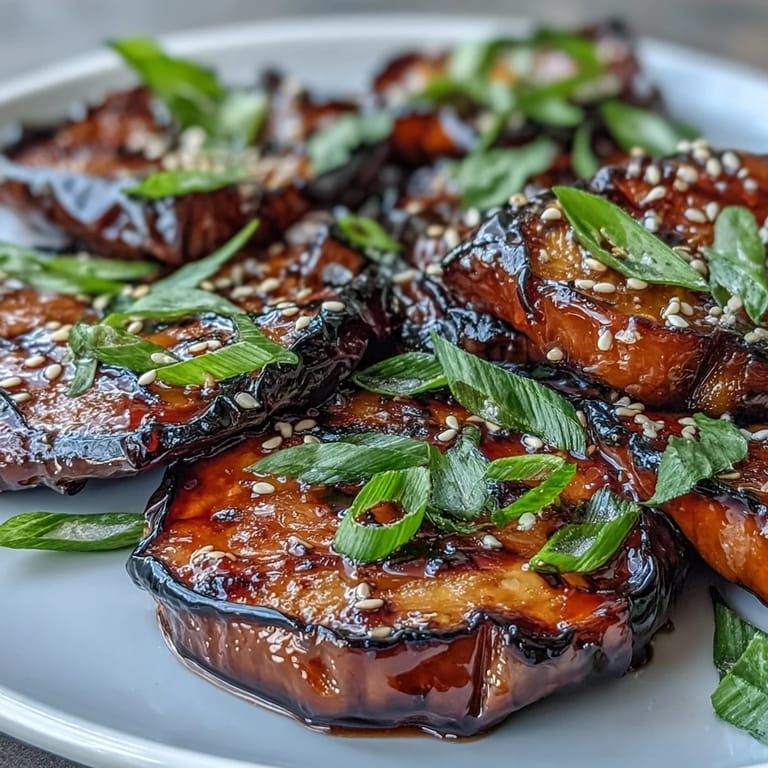
 With its striking appearance and rich, savory profile, this Miso Glazed Eggplant is sure to become a favorite in your recipe rotation. Enjoy the perfect balance of tender vegetable and caramelized glaze in every bite.
Recipe FAQs
- → Can I use regular eggplant instead of Japanese?
While Japanese eggplant has a thinner skin and more delicate texture, you can substitute regular globe eggplant. Slice it into thicker rounds or lengthwise planks and adjust roasting time by 5-10 minutes longer until tender.
- → What does miso glaze taste like?
The glaze delivers a perfect balance of savory, sweet, and umami flavors. White miso provides a mild, fermented richness while mirin and sake add subtle sweetness and depth. The sugar helps create that beautiful caramelized finish under the broiler.
- → How do I prevent the glaze from burning?
Watch closely during the final 2-3 minutes under the broiler. The sugar in the glaze can go from perfectly caramelized to burned quickly. Keep the oven door cracked slightly and check every minute to achieve golden-brown perfection without scorching.
- → Can I make this dish gluten-free?
Absolutely. Use certified gluten-free miso paste and check your sake and mirin labels, as some brands contain wheat or barley. The glaze and preparation method remain exactly the same with these simple substitutions.
- → How long does leftover miso glazed eggplant keep?
Store leftovers in an airtight container in the refrigerator for up to 3 days. Reheat gently in a 350°F oven for 10-15 minutes or microwave briefly. Note that the glaze may lose some of its caramelized crispness upon reheating.
- → What should I serve with miso glazed eggplant?
Pair with steamed white or brown rice for a complete meal. It also complements other Japanese dishes like tofu, pickled vegetables, or miso soup. The rich umami flavor balances well with fresh green salads or simply prepared proteins like grilled fish.