 Save to Pinterest
 There's something almost meditative about watching tapioca pearls transform in a pot of simmering milk. I discovered this pudding on a rainy afternoon when I was craving something that felt both simple and luxurious, and there it was—soft, creamy, unexpectedly elegant. The way those little pearls go from opaque and hard to glassy and tender never gets old, and somehow the whole kitchen fills with this warm vanilla sweetness that makes everything feel slower, quieter, better.
I made this for my sister once when she was stressed about something I can't quite remember now, and she sat at my kitchen counter with a bowl of it and just got quiet in the best way. She'd taste a spoonful, close her eyes, and smile. That's when I realized tapioca pudding isn't just dessert—it's a small kindness you can give someone with a saucepan and a little patience.
Ingredients
- Small pearl tapioca (1/2 cup): Don't reach for the instant kind—regular small pearls have the best texture and that appealing slight chew that makes the pudding interesting.
- Whole milk (2 1/2 cups): Use whatever milk you have, but the fat matters for creaminess; if going dairy-free, coconut milk gives richness while oat milk feels closest to traditional.
- Salt (1/4 teaspoon): Just a whisper to deepen the vanilla flavor and keep the pudding from tasting one-dimensional.
- Granulated sugar (1/3 cup): Start here and taste as you go; some fruits are sweeter than others, and you might not need every grain.
- Pure vanilla extract (1 teaspoon): The real thing makes all the difference—it should smell like a vanilla pod, not chemical or thin.
- Large egg yolks (2, optional): These are your secret weapon for a silkier, more luxurious texture, but honestly the pudding is beautiful without them too.
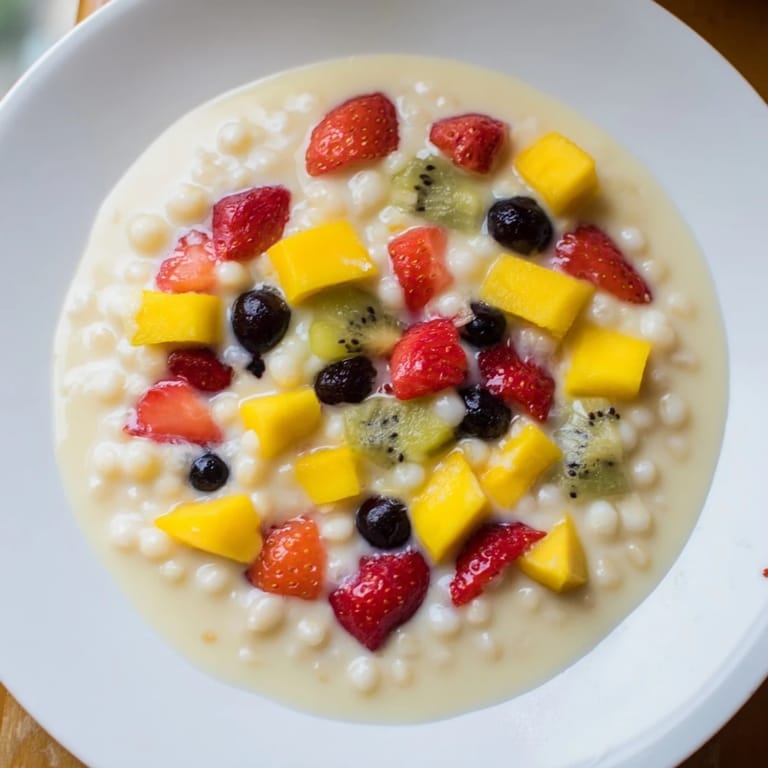
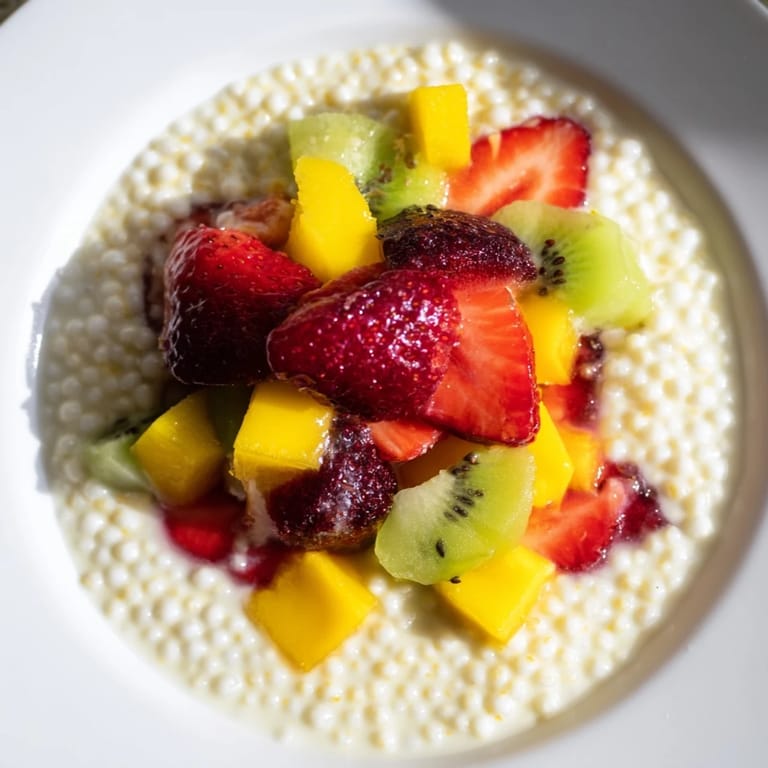
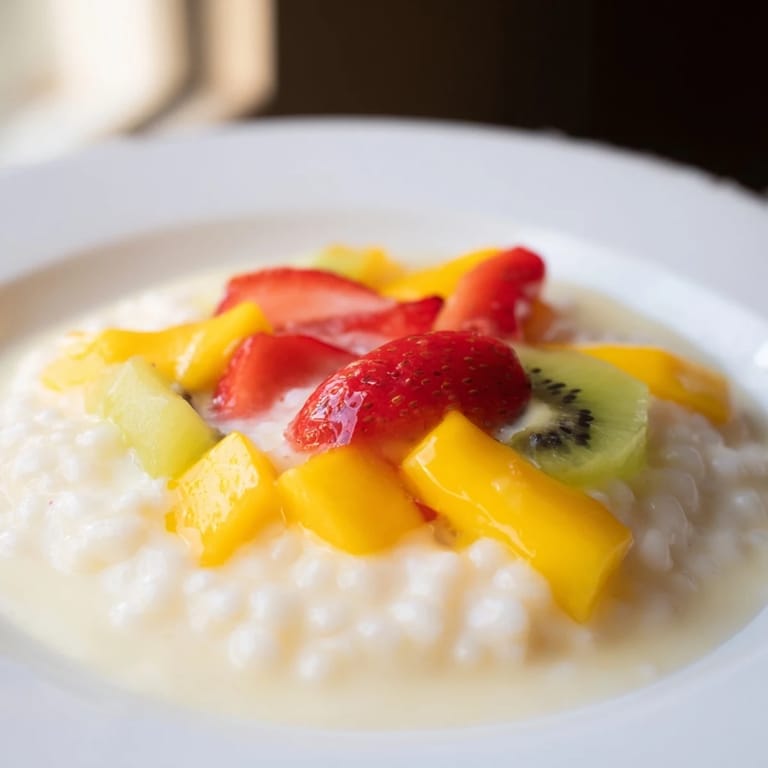
- Fresh mixed berries or sliced fruit (1 cup): Strawberries, mango, kiwi, blueberries, raspberries—choose whatever is ripe and bright, or use passion fruit for tartness.
Tired of Takeout? 🥡
Get 10 meals you can make faster than delivery arrives. Seriously.
One email. No spam. Unsubscribe anytime.
Instructions
- Soak your pearls:
- Pour the tapioca into a medium saucepan with the milk and salt. Let it sit for half an hour while you do something else—the pearls will start absorbing liquid and softening slightly. It's like giving them a head start.
- Bring it to a gentle simmer:
- Set the pan over medium heat and stir often, watching as the mixture slowly begins to steam. You want a soft, rolling bubble here and there, not an aggressive boil—aggressive heat can make the pearls get tough instead of tender.
- Cook until translucent:
- Keep stirring every minute or so, scraping the bottom of the pan to prevent sticking. After about 15 to 20 minutes, you'll notice the tapioca pearls are no longer cloudy—they become nearly see-through with a tiny white dot in the very center, and the whole pudding turns thick and glossy.
- Temper the eggs (if using):
- Whisk your egg yolks in a separate bowl. Scoop out a few spoonfuls of the hot tapioca mixture and slowly stir it into the yolks while whisking constantly—this prevents scrambled eggs and instead gives you a silky richness. Pour this mixture slowly back into the saucepan, stirring constantly for another 2 to 3 minutes until it thickens further.
- Finish with vanilla:
- Remove the pan from heat and stir in the vanilla extract, breathing in deeply. The pudding will smell incredible and taste warm and comforting even before it's completely cooled.
- Chill until ready:
- Divide the pudding among serving dishes and refrigerate for at least an hour. The pudding will set up and become even creamier as it cools, which is exactly what you want.
- Top and serve:
- Just before eating, scatter fresh fruit on top while the fruit is still cold and the pudding is chilled. This contrast of temperatures and the tartness of berries against the sweetness of tapioca is what makes every bite feel surprising.
 Save to Pinterest
 I've come to think of tapioca pudding as the dessert that asks you to slow down. It doesn't rush—it soaks, it simmers, it thickens on its own time. And somehow that rhythm teaches you something about patience, about not forcing things, about trusting the process.
Choosing Your Milk
The milk you choose shapes the entire pudding's personality. Whole dairy milk creates that classic, silky richness; coconut milk brings a subtle sweetness and warmth that feels a little tropical; oat milk is creamy and neutral, letting the vanilla shine. I've even used almond milk when that's what I had on hand, and while it's a bit lighter, it still works beautifully. The beauty of this recipe is that it adapts to whatever you're pouring.
The Fruit Matters More Than You'd Think
Don't skip this step or treat it like an afterthought. The fruit is what cuts through the richness and keeps the pudding from feeling heavy or one-note. Bright, slightly tart berries are classic for good reason—their tartness plays against the sweetness of tapioca and vanilla. But I've also topped it with caramelized bananas for warmth, stewed plums for deeper flavor, and passion fruit pulp for pure tartness. Whatever you choose, make sure it's fresh and that you taste it before it goes on top—you want to know what flavor you're bringing to the party.
Serving Warm Versus Cold
There's no single right way to serve this pudding. Cold and chilled is traditional and feels refreshing, with the pudding setting into a thick, creamy texture that's almost velvety on the tongue. But warm tapioca pudding has its own appeal—it's more custard-like, softer, almost soup-like in the best way, and the vanilla aroma floats up with the steam. Try both and see which version speaks to you.
- Cold pudding stays thick and can even be slightly jiggly, which is exactly the texture you want for a proper chill.
- Warm pudding is more pourable and best served in a bowl where you can appreciate its silky texture.
- You can make it ahead and serve it either way—it keeps well covered in the refrigerator for up to three days.
 Save to Pinterest
 This pudding has a way of becoming a quiet ritual, something you make when you want to give yourself—or someone you love—a moment of softness. That's its real gift.
Recipe FAQs
- → How do I prevent tapioca pearls from sticking during cooking?
Stir frequently over medium heat to keep the pearls evenly cooked and prevent them from sticking to the saucepan bottom.
- → Can I make this dish dairy-free?
Yes, substitute whole milk with almond, coconut, or oat milk alternatives without affecting the texture significantly.
- → What effect do egg yolks have when added?
Egg yolks add richness and a silkier, creamier texture when tempered and stirred into the warm mixture.
- → Is it better served warm or chilled?
It can be enjoyed either warm or chilled, though chilling improves the texture and flavor melding.
- → What fruits work well as a topping?
Fresh berries, mango, kiwi, passion fruit, or caramelized bananas provide vibrant contrast and freshness.