 Save to Pinterest
 One Sunday afternoon, I was standing in my kitchen trying to figure out lunch when my roommate walked in asking if I had something substantial but not heavy. I'd been craving something with roasted peppers, and it hit me—why not build a bowl around creamy hummus instead of the usual spreads? That moment sparked this recipe, which has since become my go-to when I want to feel energized without feeling stuffed.
I made these bowls for a potluck once where half the guests were vegan, and I watched people go back for seconds without realizing they were eating plant-based food. That's when I knew this recipe had staying power—it's satisfying and delicious in a way that transcends dietary labels.
Ingredients
- Chickpeas (1 can, 400 g): The foundation of your hummus—rinse them well to remove excess starch, which makes the texture creamier.
- Roasted red bell pepper (1 large): Use jarred if roasting feels like too much; the flavor is what matters, and you'll save 15 minutes.
- Tahini (2 tablespoons): This sesame paste is what makes hummus taste like hummus—don't skip it or substitute it with peanut butter.
- Fresh lemon juice (2 tablespoons plus 2 for dressing): Bottled works, but fresh makes a noticeable difference in brightness.
- Garlic (1 clove): One clove is enough; garlic hummus can easily become overpowering.
- Extra virgin olive oil (2 tablespoons plus 1 for dressing): Quality oil elevates the whole bowl—this isn't the place to use the cheap stuff.
- Ground cumin and smoked paprika (1/2 teaspoon each): These spices give the hummus depth and a subtle warmth.
- Quinoa or brown rice (1 cup cooked): Choose whatever grain you have on hand; millet works beautifully too.
- Fresh vegetables (tomatoes, cucumber, cabbage, spinach, avocado, carrots): Buy what's in season and what looks vibrant at the market—color equals nutrients here.
- Kalamata olives and pumpkin seeds (1/4 cup and 2 tablespoons): These add texture and richness that make each bite interesting.
Tired of Takeout? 🥡
Get 10 meals you can make faster than delivery arrives. Seriously.
One email. No spam. Unsubscribe anytime.
Instructions
- Blend your hummus base:
- Combine chickpeas, roasted pepper, tahini, lemon juice, garlic, olive oil, cumin, paprika, and salt in a food processor. Pulse first, then blend on high, listening for the texture to shift from gritty to creamy—this usually takes 2 to 3 minutes. Add cold water slowly, a tablespoon at a time, until you reach that perfect spreadable consistency.
- Toast your grains:
- While the hummus blends, warm your cooked quinoa gently in a skillet if you want it at room temperature, or keep it cold straight from the fridge. Some days I prefer it warm; other days cold feels right.
- Prep your vegetables:
- Wash and chop everything—halve the tomatoes, dice the cucumber, shred the cabbage by hand or with a box grater. This is meditative work, the kind that makes you feel like you're actually cooking rather than just assembling.
- Assemble with intention:
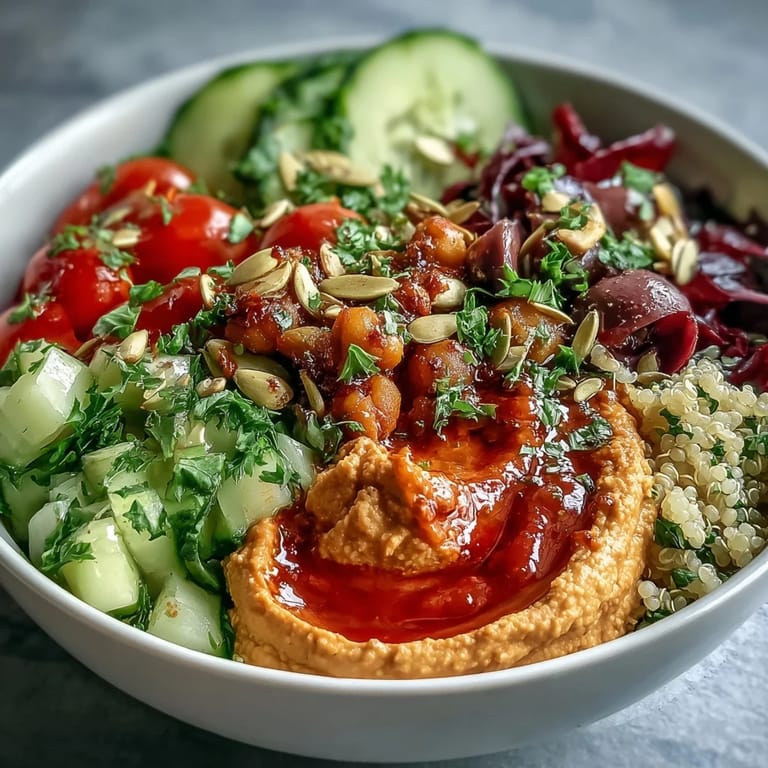
- Divide quinoa among four bowls, then arrange vegetables in sections around the bowl rather than mixing them together. This way each spoonful has different textures and colors, and the bowl looks intentional, not thrown together.
- Add the hummus generously:
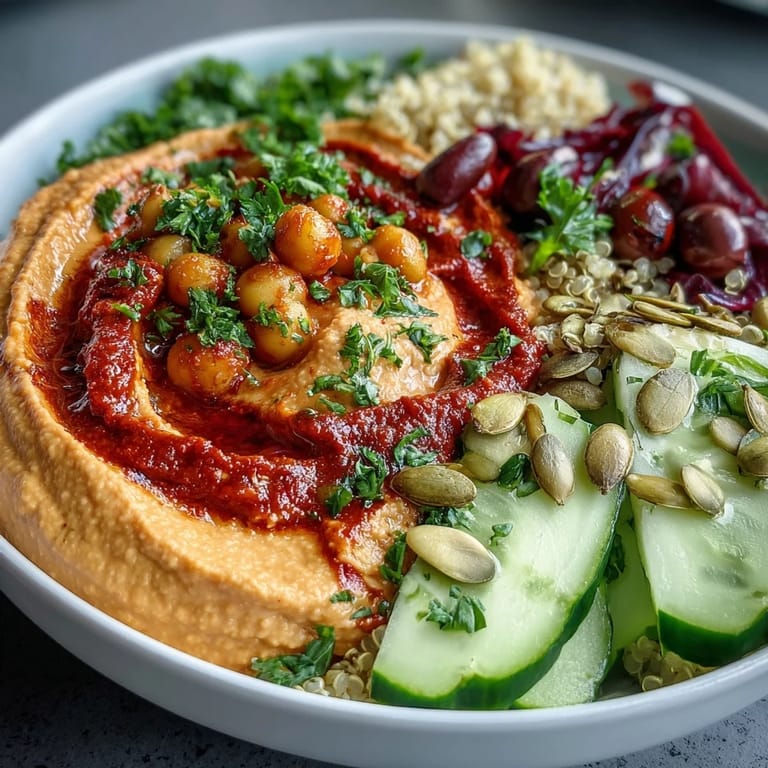
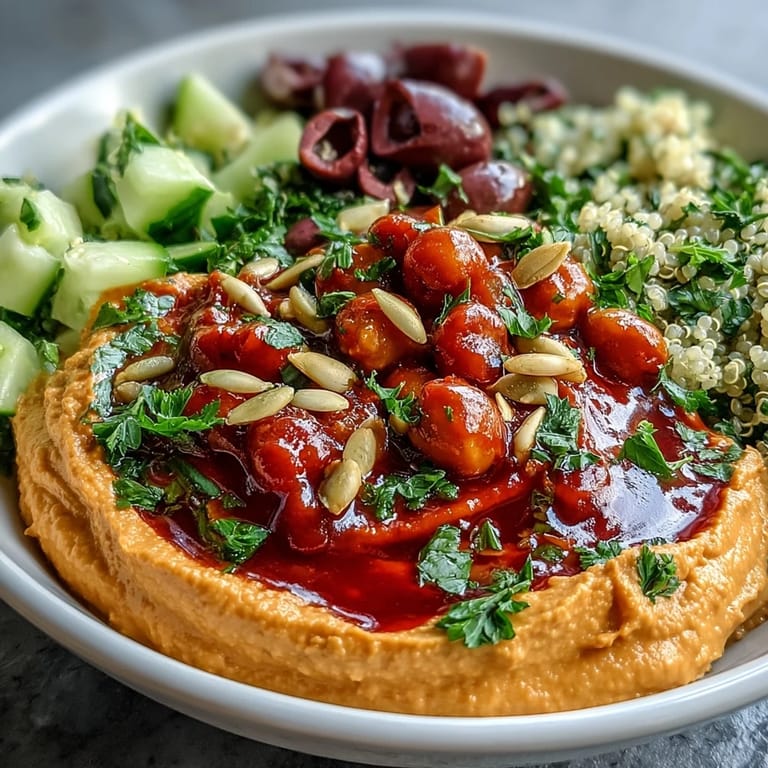
- Spoon a big dollop of roasted pepper hummus into the center of each bowl, leaving some vegetables visible around it. This is where the whole bowl comes together.
- Make your dressing and finish:
- Whisk together lemon juice, olive oil, salt, and pepper in a small bowl, then drizzle lightly over everything. Scatter fresh parsley on top and serve right away while everything is still crisp.
 Save to Pinterest
 There's something grounding about eating a bowl of vegetables and grains that actually tastes like you put thought into it. I've noticed people slow down when eating these—they taste the flavors instead of rushing through lunch.
Making the Hummus Shine
The hummus is really the star here, so treat it as such. I learned the hard way that over-processing turns hummus into a dense paste instead of keeping it airy, so pulse first and then blend gently. The cold water addition is crucial—add it slowly and taste as you go. Some days your chickpeas are drier than others, so you might need more or less water than the recipe suggests. If you're feeling fancy, drizzle a little extra olive oil and a sprinkle of paprika on top of the hummus in the bowl; it catches the light and tastes luxurious.
Grain Flexibility
Quinoa is my standard choice because it's fluffy and mild, but I've made these bowls with farro, millet, brown rice, and even couscous. Each grain brings its own texture—farro is chewier, millet is nuttier, rice is more neutral. The only rule is that the grain should be cooked and cooled or brought to room temperature before assembly. I once tried a warm grain in a summer bowl and it wilted everything, so that taught me the importance of temperature.
Building Your Bowl Like an Artist
This is where you get to have fun and make the bowl your own. I always place the hummus in the center and then arrange vegetables in sections radiating outward—it looks intentional and helps you get a little bit of everything in each spoonful. The pumpkin seeds add a crucial crunch that keeps the bowl from feeling too soft, and the olives bring a salty note that ties everything together. Consider this your chance to use up vegetables that are about to go bad or to include anything you're craving that day.
- If you want extra protein, roast some chickpeas separately with olive oil and smoked paprika for a crispy topping.
- Add a splash of tahini to your dressing for extra creaminess and earthiness.
- Always taste the hummus before assembling—a pinch more salt or lemon can make a surprising difference.
 Save to Pinterest
 These bowls have become my answer to the question of what to eat when I want to feel good without thinking too hard. They're forgiving enough for weeknight dinners and impressive enough to share.
Recipe FAQs
- → What is the best way to roast red peppers?
Roast red peppers over an open flame or under a broiler until the skin is charred. Then, place them in a covered bowl to steam, allowing easy removal of the skin for a smooth texture.
- → Can I substitute quinoa in this bowl?
Yes, you can replace quinoa with brown rice, millet, or any preferred grain to suit your taste and dietary needs.
- → How do I achieve a creamy texture in the hummus?
Blend chickpeas, roasted peppers, tahini, lemon juice, garlic, and olive oil until smooth, adding cold water gradually to reach the desired creaminess.
- → Are there options to boost protein content?
Consider adding roasted chickpeas, tofu, or extra pumpkin seeds to increase protein while keeping the dish plant-based.
- → What are suitable garnishes for this bowl?
Fresh parsley or cilantro provide a bright finish, while optional lemon-olive oil dressing adds a tangy touch to enhance flavors.