 Save to Pinterest
 My neighbor showed up one December afternoon with a tin of spritz cookies shaped like tiny wreaths and stars, and I couldn't stop eating them. She told me the dough was so simple it practically made itself, and the cookie press did all the work. I borrowed hers that same week, and by the time I returned it, I'd already ordered my own. These cookies became my go-to whenever I needed something that looked impressive but didn't require rolling or cutting.
I made these for a cookie exchange one year and watched people pick them up cautiously, assuming they'd be dry or bland. Then they'd take a bite and reach for two more. Someone asked if I'd used a special European butter, but it was just regular unsalted butter creamed long enough to turn pale and airy. That's when I realized the secret wasn't fancy ingredients, it was giving the butter and sugar those extra few seconds in the mixer.
Ingredients
- Unsalted butter, softened: This is the backbone of the cookie, so make sure it's truly soft, not melted or cold, or the dough won't press cleanly through the disk.
- Granulated sugar: It dissolves into the butter to create that light, tender crumb that makes spritz cookies melt on your tongue.
- Egg, at room temperature: A cold egg can cause the butter to seize, so let it sit on the counter for fifteen minutes before you crack it.
- Vanilla extract and almond extract: Vanilla is the foundation, and almond brings a subtle warmth that makes people wonder what the secret ingredient is.
- All-purpose flour: Measure it carefully, spooning it into the cup and leveling it off, because too much will make the dough stiff and hard to press.
- Fine salt: Just enough to balance the sweetness and bring out the butter's richness without making the cookies taste salty.
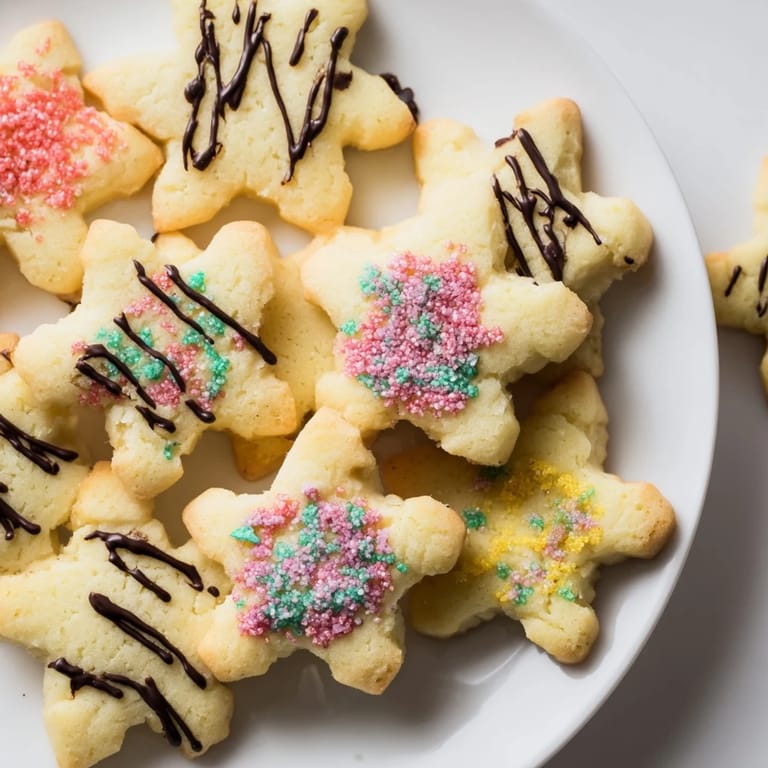
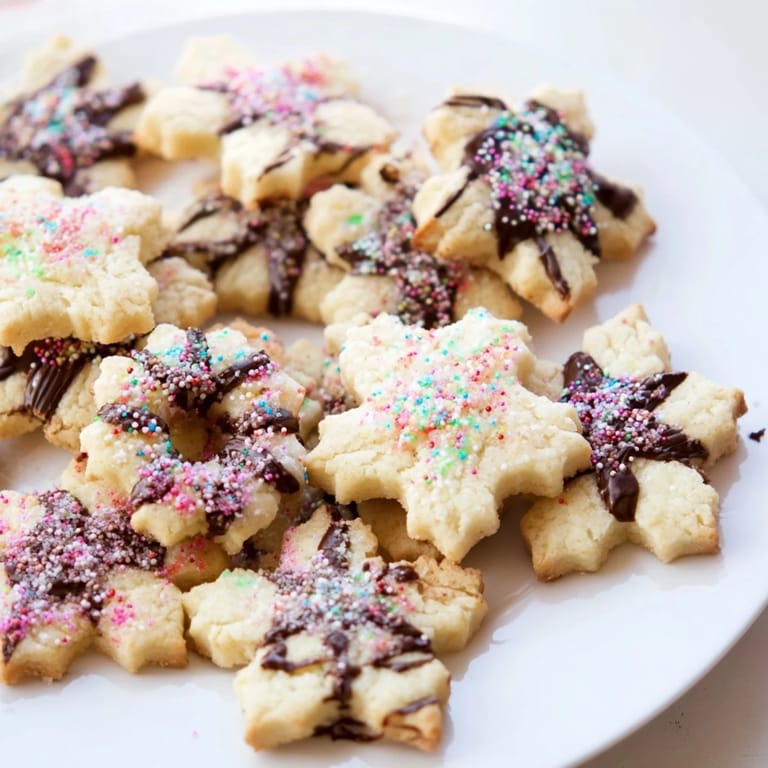
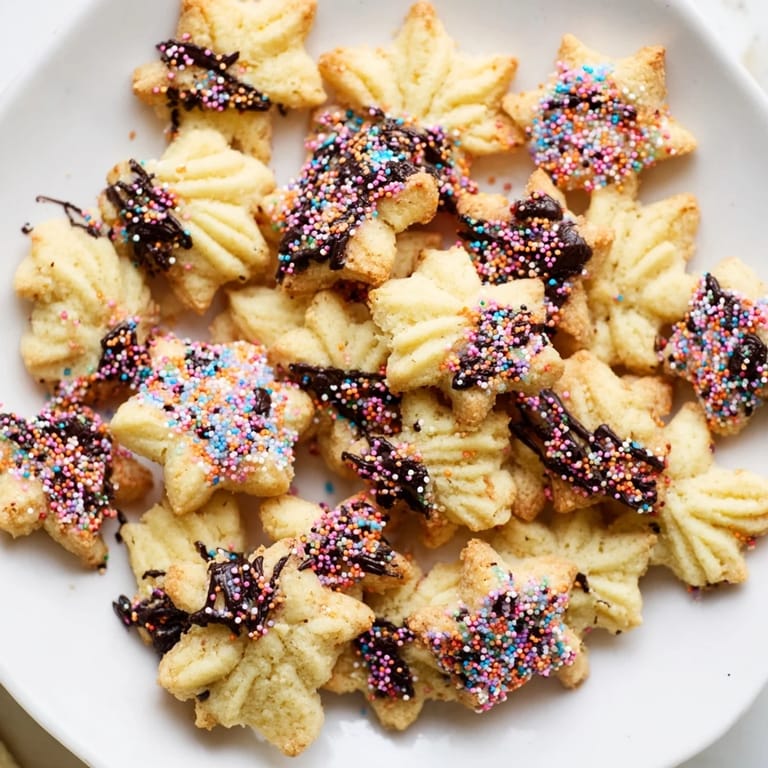
- Colored sanding sugar, chocolate, sprinkles: These are optional, but a little sparkle or a drizzle of chocolate turns a simple cookie into something you'd see in a bakery window.
Tired of Takeout? 🥡
Get 10 meals you can make faster than delivery arrives. Seriously.
One email. No spam. Unsubscribe anytime.
Instructions
- Preheat and Prep:
- Set your oven to 350°F and line your baking sheets with parchment, or leave them bare if they're nonstick. I've done both, and parchment makes cleanup easier, but ungreased sheets give the cookies a slightly crisper edge.
- Cream the Butter and Sugar:
- Beat them together until the mixture looks pale and fluffy, like whipped frosting, which usually takes two to three minutes. This step is what gives the cookies their delicate texture, so don't rush it.
- Add the Wet Ingredients:
- Mix in the egg, vanilla, and almond extract until everything is smooth and combined. The dough will look a little glossy and soft at this point.
- Incorporate the Flour and Salt:
- Add them gradually, scraping down the sides of the bowl so no dry pockets hide at the bottom. The dough should be soft and pliable, not crumbly or sticky.
- Fill the Cookie Press:
- Follow the instructions that came with your press, packing the dough in firmly so there are no air bubbles. I learned the hard way that gaps in the dough cause the cookies to come out uneven or broken.
- Press the Cookies:
- Hold the press straight down against the baking sheet and squeeze until the dough stops coming out, then lift straight up. Space them about an inch apart, and if a cookie doesn't release cleanly, scrape it off and try again.
- Decorate Before Baking:
- Sprinkle on colored sugar or tiny sprinkles while the dough is still sticky so they adhere. Once the cookies bake, the decorations won't stick as well.
- Bake Until Just Golden:
- They only need seven to nine minutes, and the edges should be barely turning golden while the centers stay pale. Overbaking makes them hard instead of tender.
- Cool on the Sheet:
- Let them sit for two minutes before moving them to a wire rack. They're fragile when hot, and I've broken more than a few by rushing this step.
- Drizzle with Chocolate:
- If you want a chocolate finish, melt some chocolate and drizzle it over the cooled cookies with a fork or a piping bag. It sets quickly and adds a nice contrast to the buttery sweetness.
 Save to Pinterest
 I brought a tin of these to a friend's house one evening, and her kids lined them up by shape before eating them, debating whether the stars or the trees tasted better. They all tasted the same, of course, but it didn't matter. Watching them take the cookies seriously like that reminded me why I keep making them, even when I don't need to.
How to Store Spritz Cookies
These keep for up to a week in an airtight container at room temperature, layered between sheets of parchment or wax paper so they don't stick together. I've also frozen them for a month in a freezer-safe container, and they thaw in minutes on the counter, tasting just as buttery as the day I baked them. If you've drizzled them with chocolate, let it set completely before stacking, or you'll end up with a sticky mess.
Flavor Variations to Try
Swap the almond extract for a teaspoon of lemon or orange zest, and you'll get a bright, citrusy cookie that tastes like sunshine. I've also added a tablespoon of cocoa powder to the dough for a chocolate version, though you may need to add a teaspoon or two of milk to keep it soft enough to press. Some people mix in finely ground nuts or a pinch of cardamom, and every version I've tried has worked as long as the dough stays soft and pliable.
Troubleshooting Your Cookie Press
If the dough isn't coming out cleanly, it's usually too cold, too thick, or packed with air bubbles, so let it warm up slightly or re-pack the press. Sometimes the disk gets clogged with a bit of dough, and a quick wipe with a paper towel fixes it. I've found that pressing on an ungreased, cool baking sheet gives the cleanest release, and if a cookie breaks, I just press another one right on top.
- Make sure your butter is truly soft by pressing it with your finger, it should leave an indentation without feeling greasy.
- If your first few cookies come out misshapen, don't worry, the press takes a little practice and the dough is forgiving.
- Keep a damp towel nearby to wipe your hands, because the dough can get sticky as you work.
 Save to Pinterest
 These cookies don't need much to be special, just soft butter, a little patience, and a cookie press that you'll use more than you think. They've become the ones I reach for when I want something that feels homemade without taking over my whole afternoon.
Recipe FAQs
- → What is the best butter temperature for mixing?
Use softened, room temperature butter to achieve a light, fluffy dough that mixes evenly with sugar.
- → Can almond extract be substituted?
Yes, lemon or orange zest can replace almond extract to offer a fresh twist in flavor.
- → How long should the cookies bake?
Bake them for 7 to 9 minutes, until the edges just start turning golden for a tender texture.
- → Is chilling the dough necessary before pressing?
Do not chill the dough; it needs to remain soft to pass smoothly through the cookie press.
- → What decorations work best?
Colored sanding sugar, sprinkles, or a drizzle of melted chocolate add festive colors and textures.
- → How should cookies be stored to maintain freshness?
Store in an airtight container at room temperature to keep them fresh for up to one week.