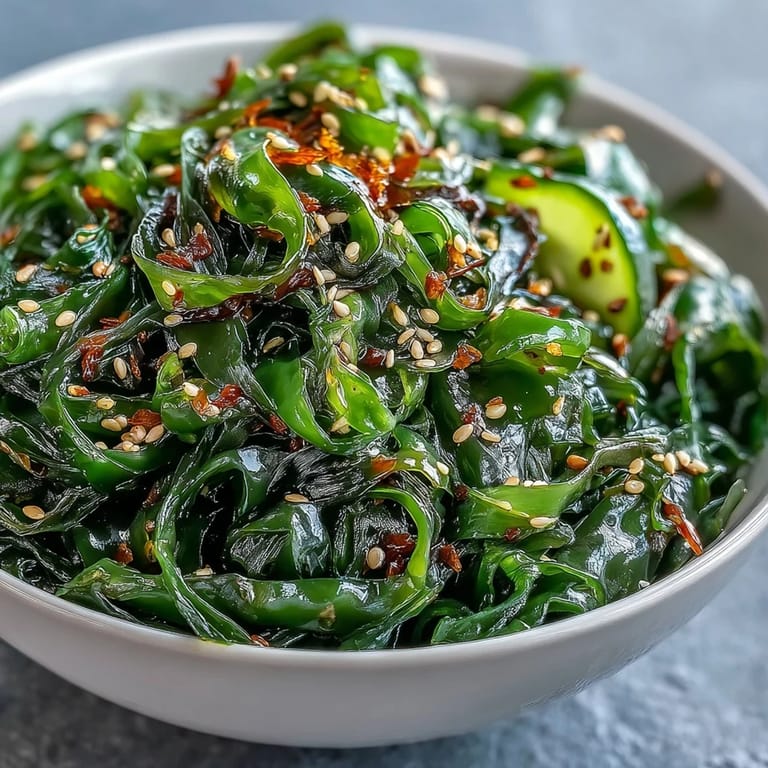
 Save to Pinterest
 I discovered seaweed salad on a quiet Tuesday afternoon at a small Japanese market, standing in front of a refrigerated case wondering what on earth those dark, tender ribbons were. The shop owner caught my puzzled expression and smiled, handing me a sample with a pair of chopsticks. One bite—that bright, tangy punch of ponzu mixed with the delicate ocean taste—and I was hooked. Now whenever I make it at home, that same curious feeling comes back, like I'm uncovering a small treasure that's been hiding in plain sight.
Last summer I brought this to a potluck where everyone else showed up with heavy pasta salads and mayo-based sides, and mine was the first bowl to empty. A friend kept asking what was in it, genuinely surprised that something so elegant and refreshing came from her neighbor's kitchen instead of a restaurant. Watching people go back for seconds while the summer sun was still warm made me realize how much joy a simple, honest salad could bring to a table.
Ingredients
- Dried mixed seaweed: Wakame, hijiki, or arame each bring their own subtle flavor—wakame is the mildest and most approachable if you're new to seaweed, while hijiki has a deeper, earthier note that really shines when paired with ginger.
- Cucumber: Slice it thin enough to drink in the ponzu but thick enough to still feel crisp under your teeth, and you'll understand why this vegetable exists.
- Carrot: Julienne it with intention because those thin strands will catch every drop of dressing and add a whisper of natural sweetness.
- Scallions: The green parts especially add a bright, fresh bite that keeps the whole salad from feeling too oceanic.
- Ponzu sauce: This is the backbone—that citrusy, umami-rich liquid that turns everything it touches into something special.
- Rice vinegar: Don't skip this because it amplifies the ponzu's brightness instead of muddying it.
- Soy sauce or tamari: Choose tamari if gluten is a concern, and know that both deepen the savory notes without overpowering the delicate seaweed.
- Toasted sesame oil: A little goes a long way—this oil carries warmth and nuttiness that regular oil never could.
- Fresh ginger: Grating it fresh rather than using jarred gives the salad a clean, almost tingling quality that feels alive on your tongue.
- Sugar or maple syrup: Just enough to balance the acid and salty elements, not to make it sweet.
- Chili flakes: Optional but worth the small heat they add, especially if you like a little bite at the end.
- Toasted sesame seeds: Toast them yourself if you can—the smell alone will make you understand why they deserve their own moment in the spotlight.
- Red chili slices: Fresh and thinly sliced, these bring color and a gentle warmth that builds as you eat.
Tired of Takeout? 🥡
Get 10 meals you can make faster than delivery arrives. Seriously.
One email. No spam. Unsubscribe anytime.
Instructions
- Awaken the seaweed:
- Pour cold water over your dried seaweed and watch it slowly unfurl and soften—this takes about 10 minutes, though you should check your package since some varieties are faster. When you drain it, really squeeze out the excess water or your salad will taste diluted and sad.
- Build your base:
- In a large bowl, combine the soft seaweed with your thinly sliced cucumber, julienned carrot, and sliced scallions. At this point, the colors should feel alive and varied, not monochromatic.
- Create the magic dressing:
- In a separate small bowl, whisk together ponzu, rice vinegar, soy sauce, sesame oil, grated ginger, sugar, and chili flakes if you're using them. The dressing should smell bright and complicated all at once—that's how you know you're on the right track.
- Bring it all together:
- Pour that dressing over your seaweed and vegetables, then toss gently so everything gets coated without bruising the more delicate pieces. The whole mixture should glisten.
- Finish with intention:
- Transfer to your serving bowl or individual dishes, then scatter toasted sesame seeds across the top and add red chili slices if you like. These garnishes aren't just pretty—they add crucial texture and flavor to each bite.
- Serve with patience:
- You can eat it right away or chill it, but let it sit for a few minutes after dressing so the flavors get acquainted with each other.
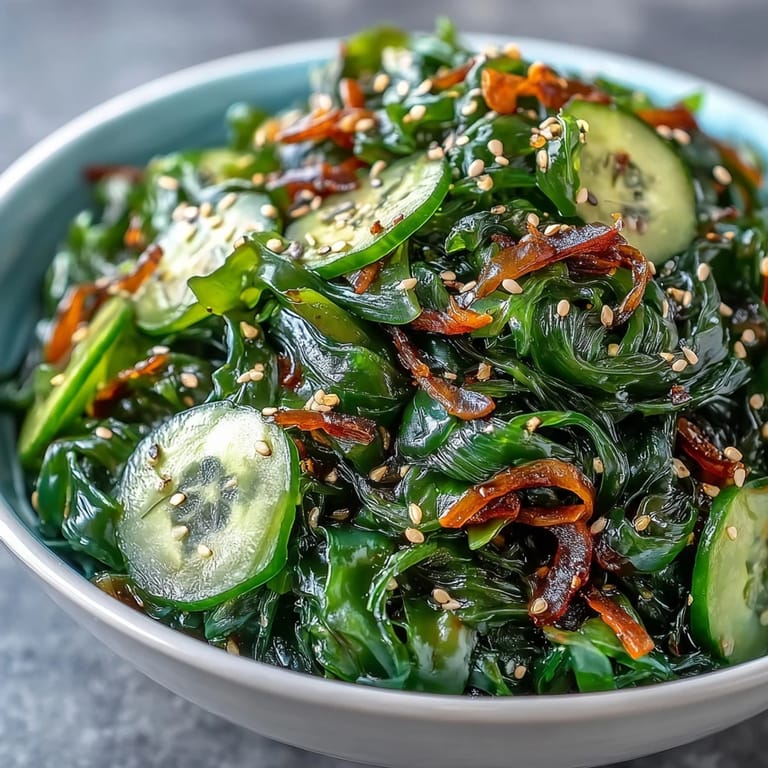 Save to Pinterest
 There's something almost meditative about making this salad—the quiet work of slicing vegetables, the gentle toss of everything coming together, the final moment when you sprinkle those sesame seeds and suddenly it looks like something you'd order from a place with white tablecloths. It turned into my go-to dish for when I need to feel like I'm taking care of myself, one delicate bite at a time.
The Seaweed Question
I used to think seaweed was just something that belonged in sushi, wrapped around rice and fish, but this salad changed that completely. When seaweed is the star instead of a supporting player, you taste its true character—the subtle brininess, the tender chew, the way it soaks up flavor without falling apart. If you've never bought dried seaweed before, look for mixed varieties at any Asian market, and don't be intimidated by the vacuum-sealed packaging.
Why Cold Water Matters
I once tried to speed up the process by using warm water and the seaweed turned mushy almost immediately, like it had given up on life. Cold water rehydrates gently and preserves that tender-but-still-firm texture that makes every bite interesting instead of turning everything into a soft blob. It's a small detail that makes an enormous difference, and now I always give the seaweed the respect it deserves by letting it wake up slowly.
Making It Your Own
This salad is flexible in the best way—a canvas waiting for your preferences and what happens to be in your refrigerator. I've added thinly sliced radishes for extra crunch, thrown in some edamame for protein, and even swapped out the carrot for shredded daikon when I was feeling adventurous. The ponzu dressing is forgiving too; if you like things tangier, add more rice vinegar, or if you prefer it sweeter, drizzle in a bit more maple syrup.
- Radishes and edamame both add their own textural drama to an already interesting salad.
- Taste the dressing before adding it to the vegetables—this way you can adjust the balance exactly to your liking.
- Leftover salad keeps in the fridge for up to two days, though it's honestly best enjoyed the day it's made when everything still has personality.
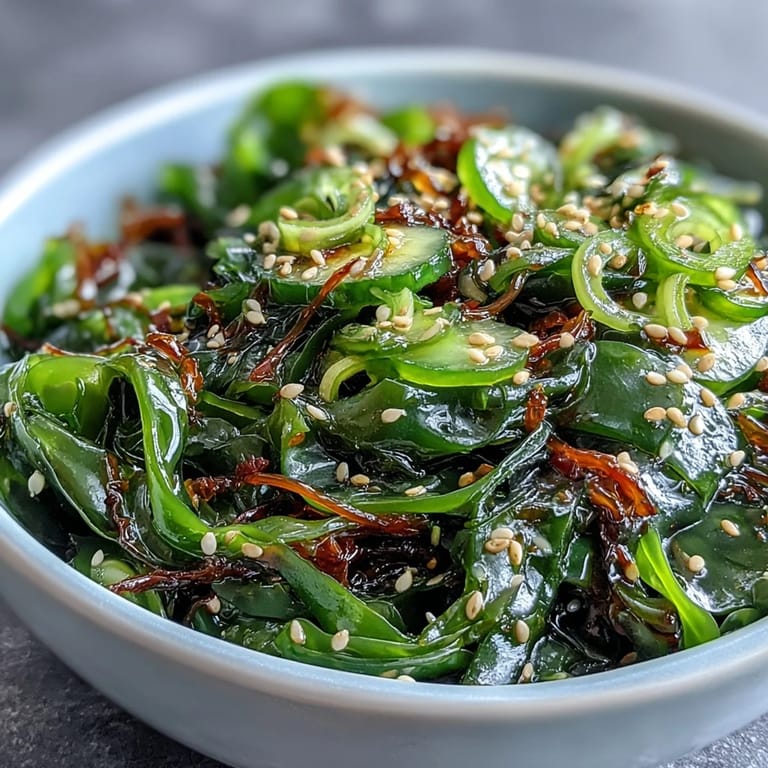 Save to Pinterest
 This seaweed salad has become my answer to the question of what to bring, what to make, what to serve when I want something that feels special but isn't exhausting. It's proof that the simplest dishes, made with attention and fresh ingredients, often turn out to be the ones people remember.
Recipe FAQs
- → How do you prepare the dried seaweed?
Soak the dried seaweed in cold water for about 10 minutes until fully rehydrated, then drain and gently squeeze out any excess water.
- → What vegetables complement this seaweed mixture best?
Thinly sliced cucumber, julienned carrot, and scallions add crispness and freshness that balance the tender seaweed.
- → Can the dressing be adjusted for different flavor preferences?
Yes, you can tweak the sweetness or acidity by adjusting sugar or vinegar levels to suit your taste.
- → Is there a gluten-free option available?
Use tamari instead of soy sauce and ensure the ponzu sauce is gluten-free to make the dish gluten-friendly.
- → How should the salad be served for best flavor?
Serve chilled or at room temperature to highlight the fresh and tangy notes of the dressing.
- → What garnishes enhance the final dish?
Toasted sesame seeds add nuttiness, and thinly sliced red chili can bring an optional hint of heat.