 Save to Pinterest
 The first time I piped choux pastry into twisted rings, I half-expected them to collapse the moment they hit the hot oil. Instead, they puffed up like golden clouds, and I stood mesmerized watching them transform from dense dough into something impossibly light and airy. That's when I understood why the French fell in love with crullers—they're equal parts magic and technique, the kind of dessert that feels fancy but rewards you for showing up with good ingredients and a steady hand.
I made these for my neighbor last winter when her son came home from college, and she texted me an hour later saying he'd eaten four before realizing they were homemade. There's something about serving crullers warm, still tender enough to be almost doughy, that turns a simple dessert into a moment people actually remember.
Ingredients
- Water: Room temperature works fine, but cold water can slow down the cooking process, so I always use filtered water that's been sitting out for a bit.
- Unsalted butter: This is non-negotiable—salted butter will throw off the balance and make your dough unpredictable.
- Granulated sugar: Just a tablespoon to help caramelize the exterior slightly and feed the yeast-like rise.
- Salt: A quarter teaspoon cuts through richness and makes the eggy flavor sing.
- All-purpose flour: Sift it if you have time; it makes the dough lighter and less likely to get lumpy when you add the eggs.
- Eggs at room temperature: This matters more than you'd think—cold eggs won't incorporate smoothly and you'll end up with a grainy dough instead of that silky choux pastry base.
- Vanilla extract: A teaspoon adds warmth and prevents the crullers from tasting eggy, which choux can do if you're not careful.
- Powdered sugar: Sift this for the glaze so you don't end up with tiny lumps that catch in your teeth.
- Milk or water for glaze: Start with two tablespoons and add more slowly until you get a dip-able consistency—too thick and it won't coat smoothly, too thin and it slides right off.
- Neutral oil: Vegetable or canola oil stays the cleanest and doesn't impart flavor that competes with the delicate pastry.
Tired of Takeout? 🥡
Get 10 meals you can make faster than delivery arrives. Seriously.
One email. No spam. Unsubscribe anytime.
Instructions
- Build your paste:
- Combine water, butter, sugar, and salt in a saucepan and bring everything to a rolling boil, stirring so the butter melts evenly and the sugar dissolves completely. Once it's boiling, you're ready for the next step—don't let it simmer too long or you'll lose water to evaporation and mess up the dough's hydration.
- Make the base:
- Add flour all at once and stir hard with a wooden spoon for about two minutes until the mixture pulls into a ball and leaves the sides of the pan clean. You'll feel it happen—the dough will suddenly feel cohesive instead of shaggy.
- Cool it slightly:
- Take the pan off heat and let it sit for three to five minutes so the dough cools enough that the eggs won't scramble when you add them. Patience here prevents broken dough later.
- Incorporate the eggs:
- Add one egg at a time, beating well after each addition until the mixture is smooth and glossy, then mix in the vanilla. The dough should be thick but flow easily from a piping bag—if it's too stiff, a splash of room-temperature water helps.
- Pipe into shapes:
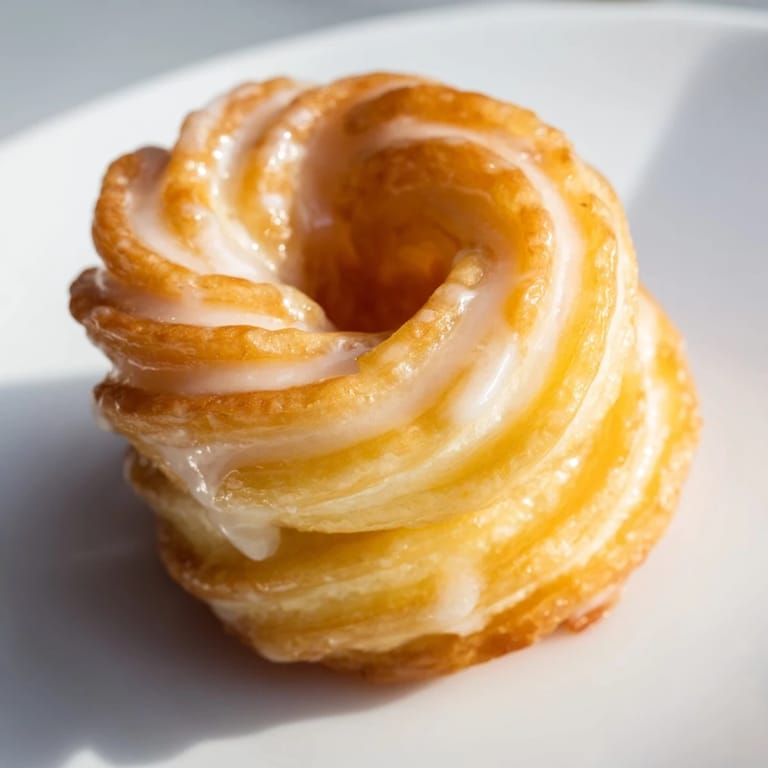
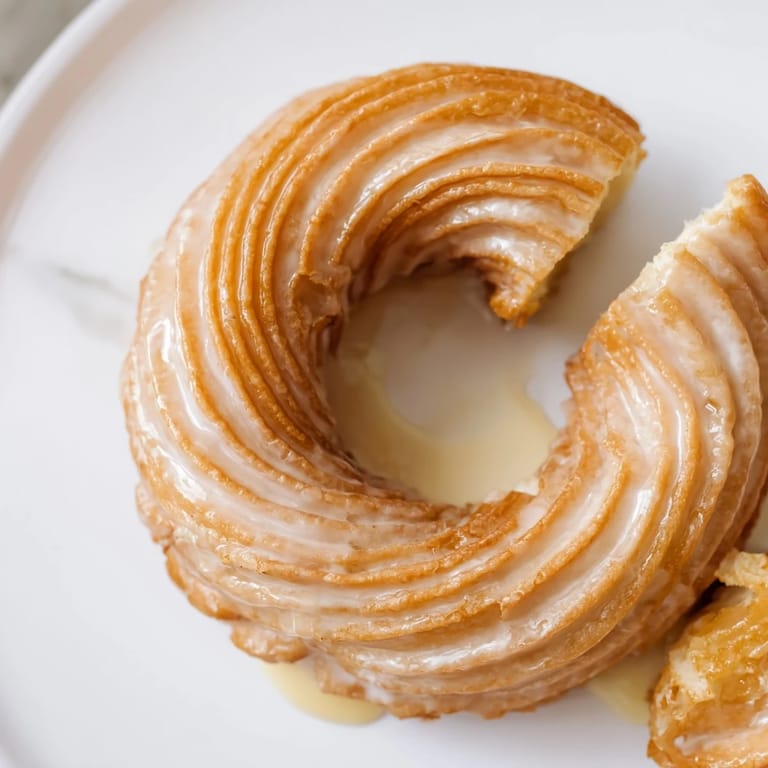
- Transfer the dough to a piping bag fitted with a large star tip and pipe three-inch rings onto parchment paper squares, making sure each cruller has a clear twisted pattern from the star tip. This texture will crisp up beautifully when fried.
- Heat your oil:
- Bring neutral oil to exactly 350°F (175°C) in a heavy pot or deep fryer, using a thermometer because eyeballing temperature is how crullers end up greasy instead of crispy. Hold the temperature steady throughout frying.
- Fry the first side:
- Carefully slide two or three crullers (still on their parchment squares) into the hot oil, parchment side down, and fry for about a minute and a half until the parchment loosens. Use tongs to gently peel away the parchment—it should come free easily without tearing the delicate pastry.
- Finish frying:
- Continue frying each cruller two to three minutes per side, using a slotted spoon to turn them gently and watching for a deep golden brown color that signals they're cooked through and crispy. If they're browning too fast, lower the heat slightly and give them more time—speed frying means a raw interior.
- Drain and cool:
- Transfer crullers to a cooling rack or paper towels to drain, and let them rest for a few minutes so the interior sets slightly before glazing. This prevents them from being too floppy and helps the glaze stick.
- Glaze while warm:
- Whisk powdered sugar, milk, and vanilla together until smooth, then dip each warm cruller into the glaze and place back on the rack to set. Warm crullers absorb glaze better than cold ones, so don't wait too long after frying.
 Save to Pinterest
 I'll never forget pulling a batch out of the oil and realizing for the first time that something so delicate could also be so substantial, that choux pastry was basically edible air held together by butter and eggs. That moment changed how I think about pastry—it's not about following steps, it's about understanding what's happening at each stage.
The Science Behind the Puff
Choux pastry works because water in the dough turns to steam when it hits hot oil, and that steam pushes the dough apart from the inside, creating those beautiful hollow centers that make crullers so satisfying to bite into. The eggs provide structure so the dough doesn't collapse as the steam escapes, and the flour gives it just enough body to hold its shape. Understanding this means you stop worrying about whether you're doing it right and start knowing exactly what's happening in your pot.
Troubleshooting Common Mistakes
If your crullers come out dense instead of airy, it's almost always one of three things: the eggs were cold and didn't incorporate properly, you added flour while the mixture was still steaming hot (which partially cooks the eggs), or your oil wasn't hot enough to generate steam immediately. If they're browning too fast but staying soft inside, lower your heat and give them more time—they should be golden and firm to the touch. If the dough won't pipe at all, it's too stiff, and a tablespoon of water mixed in very gently will fix it.
- Cold eggs create lumpy dough; room temperature is non-negotiable.
- Oil that's too cool gives you greasy crullers; too hot and they burn outside before cooking inside.
- Letting the dough cool slightly before adding eggs prevents scrambling and ensures smooth incorporation.
Variations and Flavor Riffs
Once you've mastered the basic cruller, the glaze becomes your playground—a touch of lemon or orange zest adds brightness and cuts through the richness in a way that feels sophisticated without being complicated. Some mornings I'll add a tiny bit of cinnamon to the glaze, or even a whisper of cardamom if I'm feeling Scandinavian. The dough itself is forgiving too; you could steep the milk in a vanilla bean instead of using extract, or add a splash of rum to the glaze for something more grown-up.
 Save to Pinterest
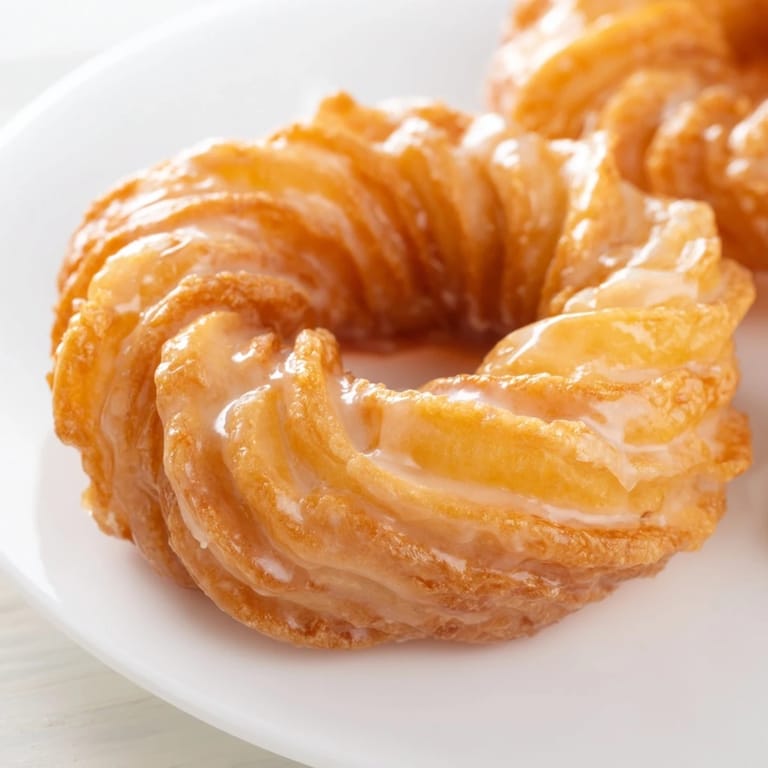
 Crullers are the kind of dessert that make you feel like you've accomplished something real, even though they only take forty-five minutes from start to finish. Serve them warm with strong coffee or afternoon tea, and watch people's faces light up the moment they bite through that crispy exterior into the tender center.
Recipe FAQs
- → What makes French crullers light and airy?
The light texture comes from choux pastry, which incorporates steam during cooking, creating hollow, airy centers when fried properly.
- → How do I achieve the perfect twisted shape?
Use a piping bag fitted with a large star tip to pipe 3-inch rings, then twist the dough to form consistent, elegant twists before frying.
- → Can I bake the crullers instead of frying?
Yes, baking at 400°F (200°C) for 20–25 minutes produces a golden exterior, but expect a less crisp texture compared to frying.
- → What oil is best for frying crullers?
Neutral oils like canola, sunflower, or vegetable oil are ideal to achieve a crisp, golden finish without affecting flavor.
- → How can I add a citrus twist to the glaze?
Incorporate 1 teaspoon of finely grated lemon or orange zest into the powdered sugar glaze for a fresh, aromatic note.
- → What should I serve with French crullers?
Pair crullers with coffee or black tea to enhance their delicate sweetness and enjoy a classic French indulgence.