 Save to Pinterest
 There's something about the smell of oil heating up at the fair that pulls you back to being a kid, wide-eyed and sticky-fingered. I didn't make funnel cakes at home until years later, standing in my kitchen on a lazy Sunday morning when my nephew asked if we could have "fair food" for breakfast. That first attempt was chaotic—batter went everywhere, the oil sputtered, and somehow I ended up with powdered sugar in my hair. But when that golden, lacy cake came out of the pan, still steaming, I understood why people line up for these things. It wasn't just nostalgia; it was the magic of something so simple becoming absolutely magical.
I made these for my book club once, thinking it would be a fun twist on dessert, and the whole evening shifted. Someone said, "Wait, you made these?" like I'd just revealed a secret talent I'd been hiding. We stood around my kitchen eating them straight off the paper towels, comparing our favorite toppings, and for the first time in years, we weren't rushing through an agenda—we were just enjoying each other's company and something warm and sweet. That's when I realized funnel cakes aren't really about the recipe; they're about creating a moment.
Ingredients
- All-purpose flour (2 cups): The foundation of a tender crumb; don't over-pack it when measuring, or you'll end up with something dense.
- Granulated sugar (2 tablespoons): Just enough for subtle sweetness—the powdered sugar coating does the heavy lifting.
- Baking powder (1 teaspoon): This is your secret to that signature light, airy texture that makes funnel cakes special.
- Salt (1/2 teaspoon): A tiny pinch that rounds out the flavors and keeps things balanced.
- Eggs (2 large): They bind everything and help the cake rise just enough to be fluffy, not dense.
- Whole milk (1 1/2 cups): Creates the pourable batter you need; if it feels too thick, a splash more milk fixes it.
- Vanilla extract (1 teaspoon): A whisper of warmth that makes people ask what the secret ingredient is.
- Vegetable oil (about 1 quart for frying): Keep it at 375°F for that perfect golden crust with a tender inside.
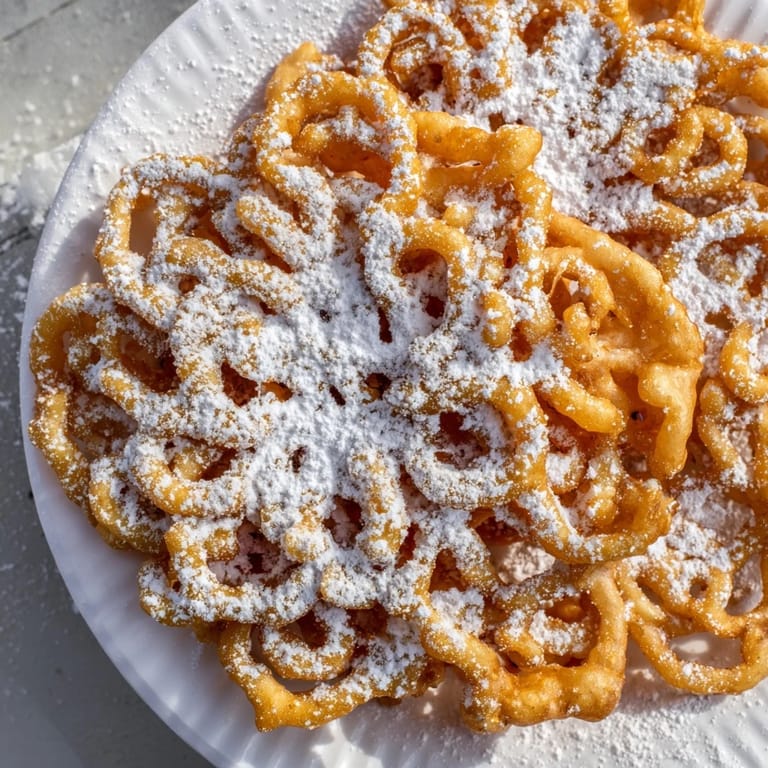
- Powdered sugar (for dusting): Apply it generously while the cakes are still warm so it sticks and becomes slightly caramelized.
Tired of Takeout? 🥡
Get 10 meals you can make faster than delivery arrives. Seriously.
One email. No spam. Unsubscribe anytime.
Instructions
- Combine Your Dry Ingredients:
- Whisk together the flour, sugar, baking powder, and salt in a large bowl, breaking up any small clumps as you go. This distributes the leavening evenly and prevents dense patches in your finished cake.
- Prepare the Wet Base:
- In a separate bowl, beat the eggs until they're a bit frothy, then whisk in the milk and vanilla extract until fully combined. The eggs already need some air worked into them, so don't skip the beating step.
- Make the Batter:
- Slowly pour the wet ingredients into the dry mixture, whisking gently until just smooth—don't overthink it, or you'll develop gluten and end up with tough cakes. If it looks too thick to pour, add milk a splash at a time until it flows easily from your funnel.
- Heat the Oil:
- Pour oil into your skillet to about 2 inches deep and bring it to 375°F, checking with a thermometer if you have one. The temperature is crucial; too cool and you'll get greasy, soggy cakes, too hot and they'll brown before cooking through.
- Fry Your First Cake:
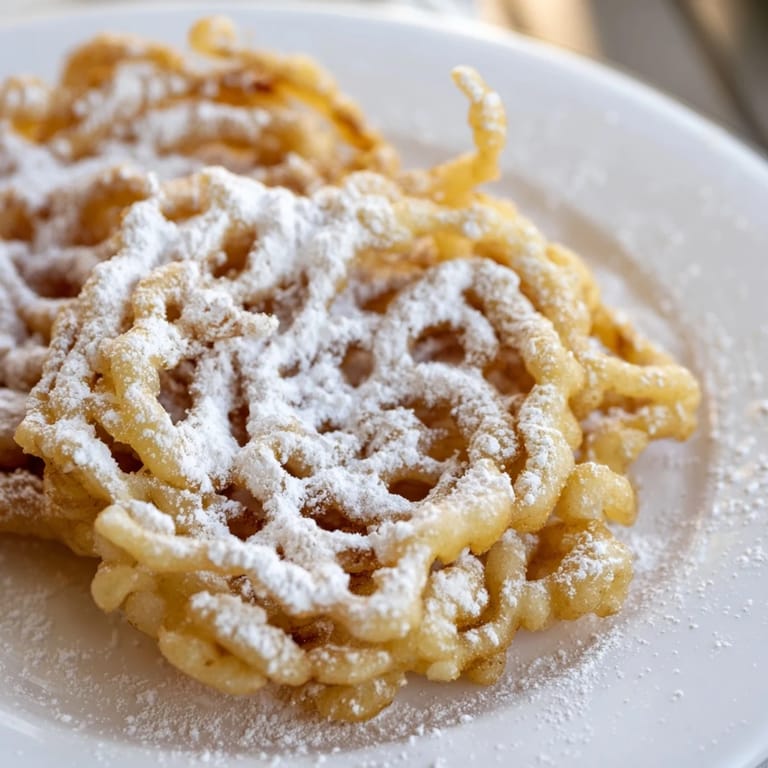
- Pour about 1/2 cup of batter into your funnel, hold your finger over the spout, position it over the hot oil, then release and move in a loose, swirling pattern to create that signature lacy shape. This takes a little confidence, but after the first one, you'll find your rhythm.
- Cook Until Golden:
- Let it fry 1 to 2 minutes per side, listening for the gentle sizzle to get quieter as the outsides set and crisp up. When it's that deep golden brown and the edges look almost lacey, it's ready to flip.
- Drain and Dust:
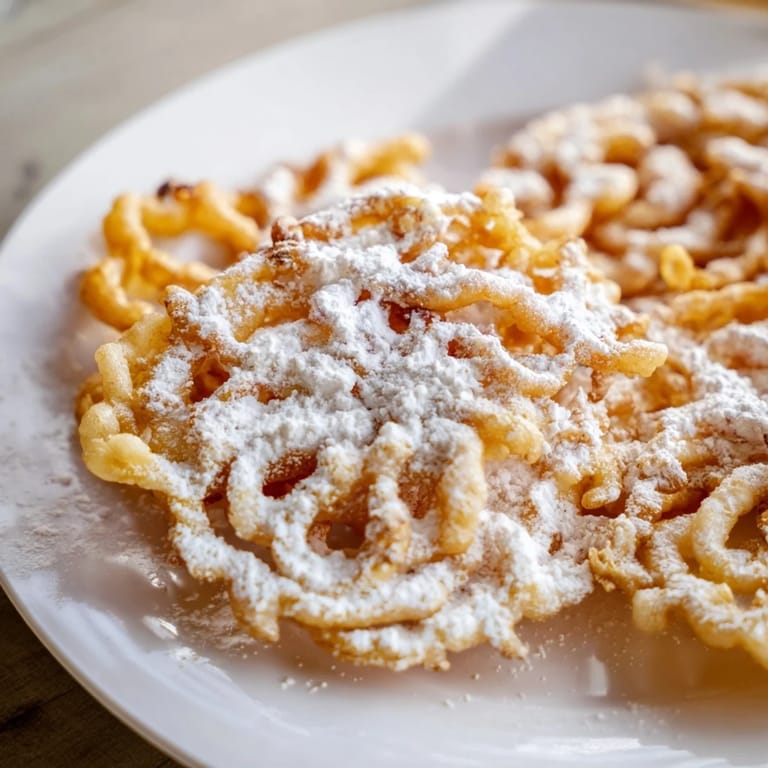
- Transfer each cake to a paper towel-lined plate with tongs, then dust generously with powdered sugar while it's still warm. The sugar will partially melt into the warm cake, creating this perfect sweet shell.
 Save to Pinterest
 My sister still jokes about the time I brought homemade funnel cakes to her daughter's school fair, and all the other parents suddenly looked at me like I'd brought magic from home. For a few minutes, I wasn't just another person at the bake sale—I was the person who made fair food, and that mattered to my niece in a way that still makes my heart feel full.
The Funnel Hack
If you don't have an actual funnel, a squeeze bottle works beautifully and gives you even better control over the batter flow. Some people use a small measuring cup with a spout, and honestly, once you get the hang of it, the tool matters less than the confidence in your hand. I've seen people pour freeform patterns, create tight spirals, even attempt letters—and every single one turned out delicious. The shape is less important than the texture and the fun of making something uniquely yours.
Toppings That Transform
Plain powdered sugar is perfect and timeless, but these cakes are a blank canvas for whatever sounds good in the moment. I've dusted them with cinnamon sugar on fall mornings, mixed cocoa powder into the powdered sugar for a chocolate lover's dream, and topped them with fresh berries and whipped cream for brunch. My favorite discovery was drizzling them with salted caramel while they were still warm—the sweet, salty contrast was unexpected and absolutely worth the mess.
Making It Your Own
The foundation of this recipe is so sturdy that you can play with it without fear of failure. Swap vanilla for almond extract, add a pinch of nutmeg to the batter, or mix in finely grated lemon zest for brightness. Some mornings I add a tablespoon of honey to the wet ingredients, which gives the cakes a subtle complexity that people can't quite name but absolutely notice. These little changes turn a classic into something that feels like your own creation, and that's where the real joy lives.
- Keep your batter at room temperature for the most consistent results across all your cakes.
- Have all your supplies ready before you start frying—this comes together quickly, and you won't want to hunt for the funnel mid-flow.
- If the powdered sugar isn't sticking well, the cake isn't warm enough; timing is everything here.
 Save to Pinterest
 Funnel cakes aren't fancy or complicated, but they carry a kind of happiness that fancier desserts sometimes miss. They're best shared warm, with people you actually want to spend time with, and served with no apologies.
Recipe FAQs
- → What batter consistency is best for these cakes?
The batter should be smooth and pourable but not too thin, allowing for a lacy pattern when fried.
- → What oil temperature should be used for frying?
Heat the oil to about 375°F (190°C) to ensure crispy and golden results without absorbing excess oil.
- → Can I add flavors to the powdered sugar dusting?
Yes, cinnamon or cocoa powder can be mixed with the powdered sugar for a twist on the classic finish.
- → What tools are recommended for shaping the cakes?
Use a funnel or squeeze bottle to pour the batter into the hot oil in a swirling, lacy pattern.
- → Are there any substitutions for dietary needs?
For gluten-free options, use gluten-free flour blends; for dairy-free, substitute whole milk with plant-based alternatives.