 Save to Pinterest
 There's something about rice pudding that stops time. I discovered this years ago when a neighbor brought over a warm bowl on a snowy afternoon—the kind of unexpected kindness that changes how you think about food. One spoonful and I was asking for the recipe before I'd even finished tasting it. The creaminess, the gentle spice, the way the rice grains had surrendered completely to the milk—it felt like comfort itself in a dish. I've made it countless times since, and each time it tastes like that same quiet moment of being cared for.
I made this for my partner during a particularly exhausting week, and watching their shoulders relax as they took the first spoonful reminded me why home cooking matters. There was no occasion, no celebration—just someone I loved needing something warm and gentle, and this pudding delivered exactly that.
Ingredients
- Short-grain white rice (120 g / 2/3 cup): Short-grain rice breaks down slightly during baking, creating that signature creamy texture—don't use long-grain rice here, or you'll end up with separate grains instead of a cohesive pudding.
- Whole milk (1 liter / 4 cups): This is the star, so use the best milk you have; its sweetness and fat content determine how luxurious the final pudding will be.
- Heavy cream (60 ml / 1/4 cup): Just enough to deepen the richness without overwhelming the milk's gentle flavor.
- Unsalted butter (40 g / 3 tbsp): Adds a subtle golden note and silky mouthfeel throughout.
- Granulated sugar (100 g / 1/2 cup): Adjust this down if you prefer less sweetness, or if your raisins are particularly plump and sugary.
- Raisins (80 g / 1/2 cup): Plump them slightly by soaking in warm water for five minutes before adding if you want them extra tender, though the baking liquid will soften them beautifully on its own.
- Ground cinnamon (1 tsp): The backbone of the flavor—don't skip it, and use fresh cinnamon if possible, as it makes a noticeable difference.
- Pure vanilla extract (1 tsp): Added after cooking to preserve its delicate flavor notes.
- Fine salt (1/4 tsp): A pinch that awakens all the other flavors without announcing itself.
- Ground nutmeg, for garnish: Optional but encouraged—a light dusting transforms the presentation and adds warmth.
Tired of Takeout? 🥡
Get 10 meals you can make faster than delivery arrives. Seriously.
One email. No spam. Unsubscribe anytime.
Instructions
- Set the stage:
- Preheat your oven to 160°C (325°F). Lightly butter a 2-liter baking dish—this gentle heat will coax the pudding to thick creaminess without any curdling or scorching.
- Prepare the rice:
- Rinse the rice under cold running water until the water runs completely clear, then drain it well. This removes excess starch that would otherwise cloud your pudding and make it gluey.
- Build the milk base:
- Pour milk, cream, sugar, butter, cinnamon, and salt into a large saucepan. Heat gently over medium heat, stirring occasionally, until the sugar dissolves and the mixture steams gently but never boils—you're warming everything to the right temperature, not cooking it yet.
- Bring it together:
- Stir in the rinsed rice and raisins, then remove from heat and add the vanilla extract. The residual heat will start softening the rice, and the mixture will smell absolutely divine.
- Transfer and settle:
- Pour everything into your prepared baking dish, stirring gently to distribute the rice and raisins evenly so they cook at the same pace.
- The covered bake:
- Cover the dish tightly with aluminum foil and bake for 55 minutes, then gently stir the pudding halfway through—this encourages even cooking and prevents a thick layer from forming on the bottom. You'll notice it thickening as it bakes.
- The final reveal:
- Remove the foil and continue baking for 15–20 minutes until the pudding is thick and creamy and the rice grains are completely tender. The top may develop a slight golden skin, which is lovely.
- Rest and serve:
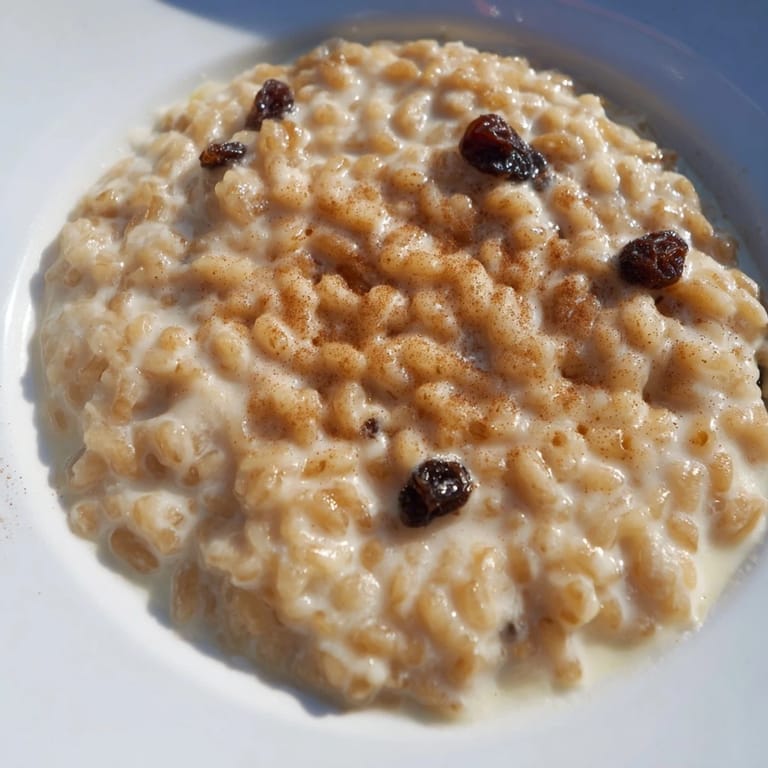
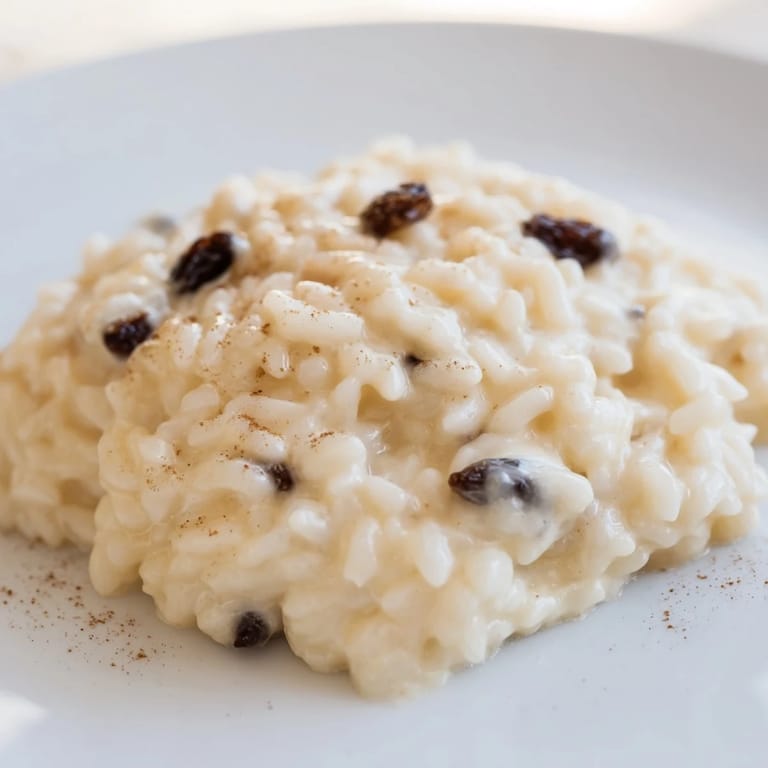
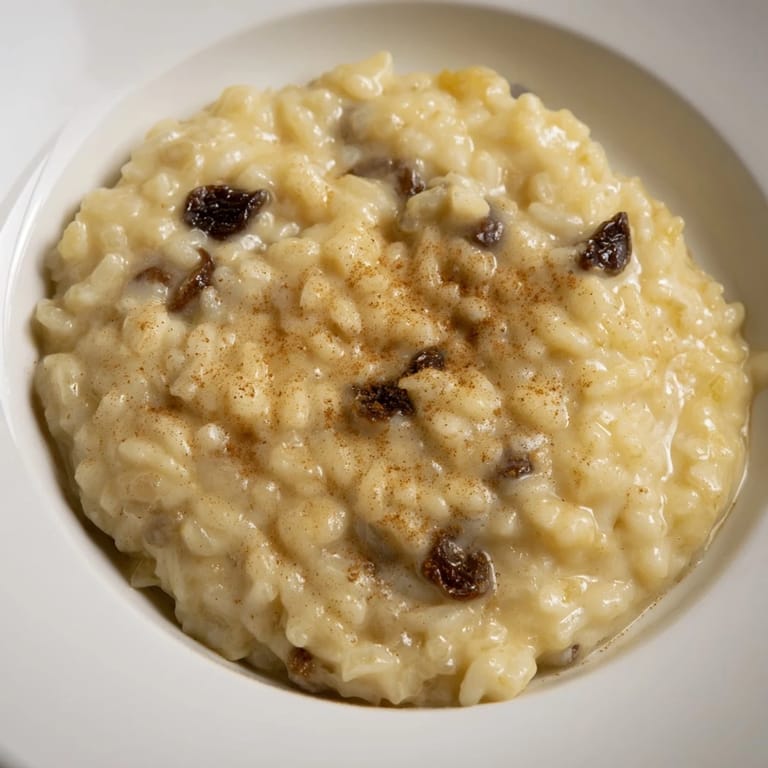
- Let it cool for 10 minutes—this allows the texture to set properly. Serve warm if you want it at its most indulgent, or chill it completely for a firmer, spoonable consistency. A light dusting of nutmeg on top catches the eye and adds a final whisper of warmth.
 Save to Pinterest
 My grandmother once told me that rice pudding was poor food made noble by kindness, and every time I make it I think of that—how the most humble ingredients, given time and gentle heat, become something worth savoring. It's a quiet reminder that simple can be profound.
Why This Works as Comfort Food
The baking method creates something that reaches further than stovetop puddings ever could. Because it's finished in the oven without constant attention, the flavors deepen and meld while the texture becomes naturally luxurious. There's a reason this dish appears in kitchens across cultures—it delivers genuine comfort without demanding fussy technique. The warmth of cinnamon and the sweetness of plumped raisins feel like an embrace, and the creamy rice base holds it all together like a favorite memory.
Serving Suggestions and Pairings
Warm rice pudding with a dollop of whipped cream and a few crushed gingersnaps is pure indulgence. Chilled pudding becomes elegant alongside stewed fruit—try poached pears or compote made with tart berries to cut through the richness. I've also served it at breakfast with fresh berries scattered on top, and somehow it feels like a permission slip to treat yourself first thing in the morning. Some nights I pair it with a small glass of sweet wine or a cup of dark tea, letting it be the entire dessert course, unhurried and complete.
Variations Worth Trying
Once you've made this classic version, you'll start imagining what could change. Golden raisins bring a different brightness, while dried cranberries add tartness that plays beautifully against the sweetness. Coconut milk swapped for half the dairy creates a fragrant, tropical twist that still feels familiar. Even small changes—like adding a pinch of cardamom alongside the cinnamon, or stirring in a handful of toasted almonds at the very end—make the dish feel new again without losing what made you love it in the first place.
- Try replacing half the milk with coconut milk for richness and subtle tropical notes.
- Swap dried cranberries or apricots for raisins to shift the flavor profile.
- Add a tiny pinch of cardamom or nutmeg into the milk base for unexpected warmth and depth.
 Save to Pinterest
 Rice pudding is one of those dishes that asks almost nothing of you and gives back everything—warmth, nostalgia, comfort, and the quiet satisfaction of feeding someone well. Once you've made it, you'll understand why it never goes out of style.
Recipe FAQs
- → What type of rice is best for creamy baked rice?
Short-grain white rice is ideal due to its higher starch content, which creates a creamy texture when cooked slowly in milk.
- → Can I substitute raisins with other fruits?
Yes, golden raisins or dried cranberries make excellent alternatives that provide slight variations in sweetness and flavor.
- → How do I ensure the baked rice becomes thick and creamy?
Cooking the mixture slowly in milk and cream and baking it covered helps the rice absorb the liquids fully and develop a rich, thick consistency.
- → Is it possible to make this dish dairy-free?
For a dairy-free variation, substitute half or all the milk with coconut milk, which adds a subtle richness and creaminess.
- → What is the best way to serve this dessert?
Served warm or chilled, garnished lightly with ground nutmeg or paired with stewed fruit or whipped cream for added richness.