 Save to Pinterest
 My neighbor Margaret taught me that shortbread isn't just about throwing ingredients together—it's about restraint. She'd make these butter-rich cookies every December, and the secret, she always said, was knowing when to stop mixing. The first time I watched her work the dough, barely stirring, I understood why hers melted on the tongue like butter-flavored clouds while mine came out tough and dense. Now whenever I make shortbread, I hear her voice reminding me: less is more.
I made a double batch on a rainy Sunday morning, and by afternoon, my kitchen smelled like toasted butter and sugar. My partner kept wandering in, stealing warm cookies from the cooling rack, declaring each one better than the last. There's something about homemade shortbread that turns an ordinary day into something worth savoring—no special occasion required.
Ingredients
- Unsalted butter, softened (1 cup): This is where all the magic happens—use good butter and let it sit out so it's truly soft, not melted or cold.
- Granulated sugar (½ cup): Just enough sweetness to balance the richness without overwhelming the butter flavor.
- All-purpose flour (2 cups): Keep it level when measuring; too much flour is the quickest way to dense, tough cookies.
- Cornstarch (¼ cup): This replaces some flour and creates that signature tender crumb that makes shortbread special.
- Fine sea salt (¼ tsp): A pinch that wakes up the butter and makes you wonder what it is that makes them taste so good.
Tired of Takeout? 🥡
Get 10 meals you can make faster than delivery arrives. Seriously.
One email. No spam. Unsubscribe anytime.
Instructions
- Set your oven and prep:
- Preheat to 325°F and line your baking sheet with parchment paper. This low temperature is key—high heat will brown the edges before the centers are done.
- Cream the butter and sugar:
- Beat them together until the mixture looks pale and fluffy, about 2–3 minutes. You're incorporating air that makes them tender, so don't skip this step.
- Bring the dry ingredients together:
- Sift the flour, cornstarch, and salt into the bowl. Fold it all together gently with a spatula or wooden spoon, stirring just until the dough comes together. Stop as soon as you can't see streaks of flour—overworking develops gluten and makes them tough.
- Shape and score:
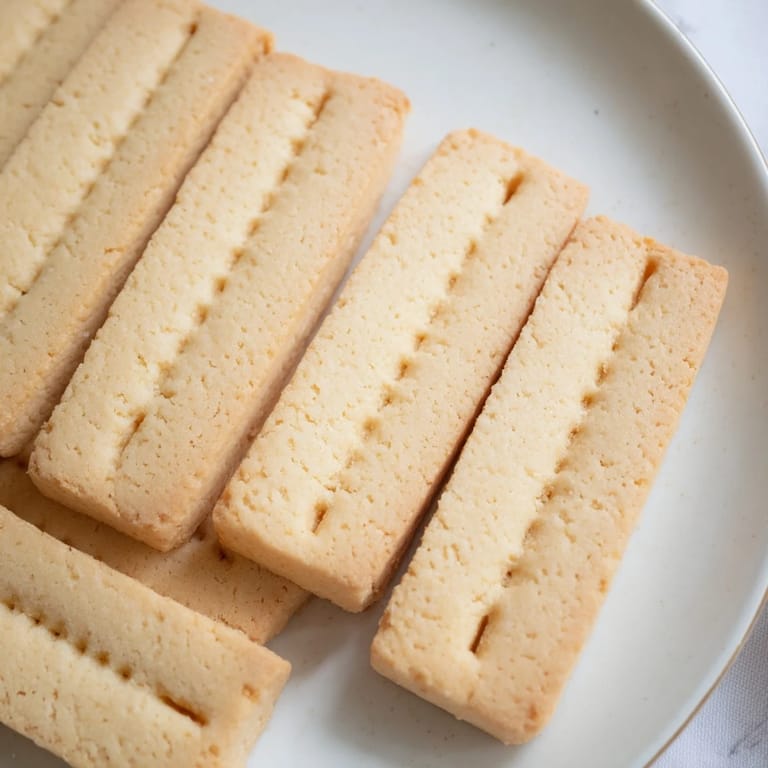
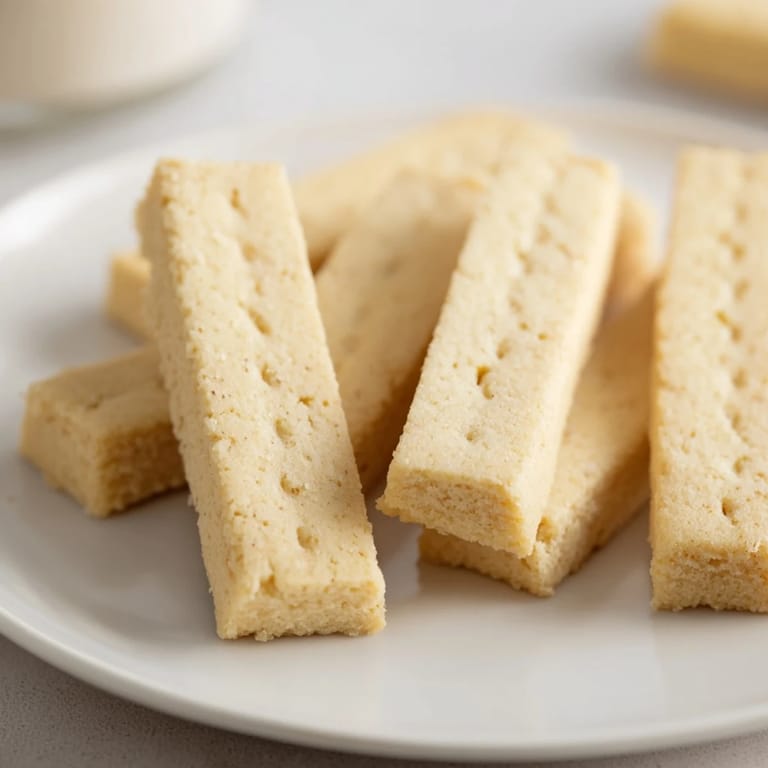
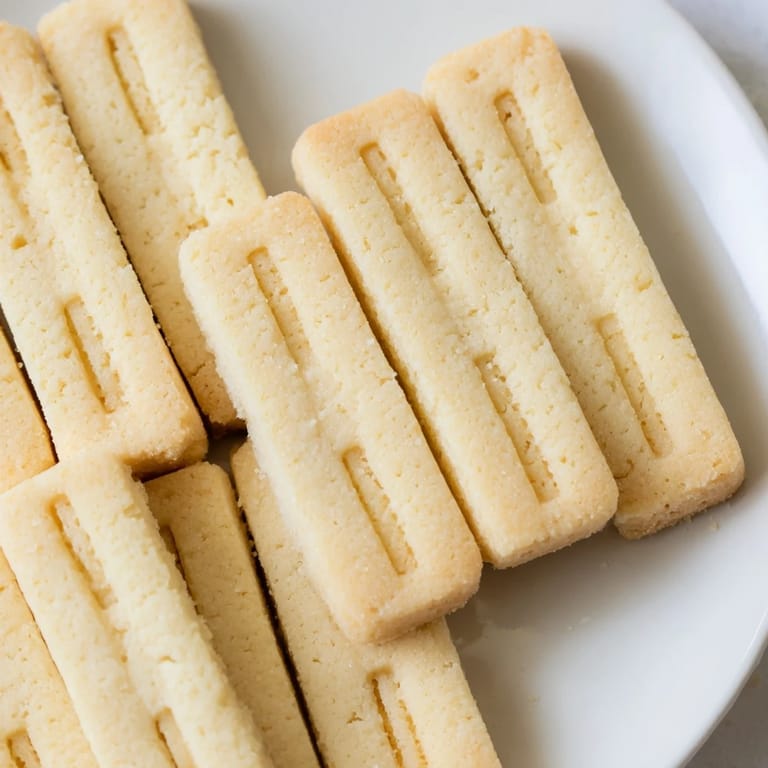
- Press the dough into an 8x8-inch pan or shape it into a ½-inch thick rectangle on your baking sheet. Use a sharp knife to score the top into wedges or fingers, then prick each piece with a fork to prevent puffing.
- Bake with patience:
- Bake for 22–25 minutes until the edges are pale golden but the center still looks barely set. They'll continue to firm up as they cool, so resist the urge to bake them golden brown.
- Cool and cut:
- Let them rest in the pan for 5 minutes so they hold their shape, then cut carefully along the scored lines. Once completely cool, they're ready to eat.
 Save to Pinterest
 Last winter, I sent a tin of these to an old friend who'd moved across the country, and her response was a photo of her family crowded around the opened box, half the cookies already gone. It reminded me that some of the best moments in the kitchen happen when what you make reaches someone and brings them a little joy, even from far away.
The Cornstarch Secret
Most people think shortbread is just butter, sugar, and flour, but that ¼ cup of cornstarch is what separates a dense, cake-like cookie from one that truly melts. Cornstarch doesn't develop gluten the way flour does, which means it keeps the texture tender and sandy instead of chewy. I learned this the hard way after making shortbread with all flour and wondering why it felt more like a butter cookie than the delicate thing I was after.
Variations Worth Trying
The beauty of shortbread is that you can keep it classic, or you can dress it up depending on your mood. A teaspoon of lemon or orange zest adds brightness without changing the texture. Dipping the cooled cookies in melted chocolate feels fancy but takes only an extra minute. You could also infuse the butter with a vanilla bean, or add a tiny pinch of cardamom for something unexpected.
Storage and Serving
Shortbread stays fresh in an airtight container for up to a week, though it rarely lasts that long in my house. They're perfect with afternoon tea, as a simple dessert after dinner, or honestly as a quiet snack while sitting in the kitchen with a cup of coffee. Keep them away from humidity, which softens them—the whole point is that delicate, crumbly texture.
- Store in an airtight container at room temperature away from other baked goods that might transfer moisture.
- If they do soften, pop them back in a 300°F oven for 5 minutes to re-crisp them.
- These keep well for up to a week, making them great for baking ahead.
 Save to Pinterest
 Shortbread is proof that sometimes the simplest recipes are the most satisfying. When you nail the balance of butter, sugar, flour, and restraint, you get something that feels both humble and special at the same time.
Recipe FAQs
- → What is the best way to achieve a crumbly texture?
Using cold butter and avoiding overmixing the dough helps maintain a tender, crumbly texture for shortbread.
- → Can I add flavors to this shortbread?
Yes, adding finely grated lemon or orange zest enhances freshness, while dipping cooled pieces in melted chocolate adds richness.
- → How do I store shortbread to keep it fresh?
Store in an airtight container at room temperature for up to one week to maintain crispness and flavor.
- → What type of pan is recommended for baking?
An 8x8-inch baking pan or a lined baking sheet works well for even baking and easy slicing.
- → Why is scoring the dough important before baking?
Scoring ensures even portions and helps prevent the dough from cracking while baking.
- → Can I substitute any ingredients for dietary preferences?
While traditional recipes use butter and wheat flour, alternatives may affect texture and flavor. Experiment cautiously.