 Save to Pinterest
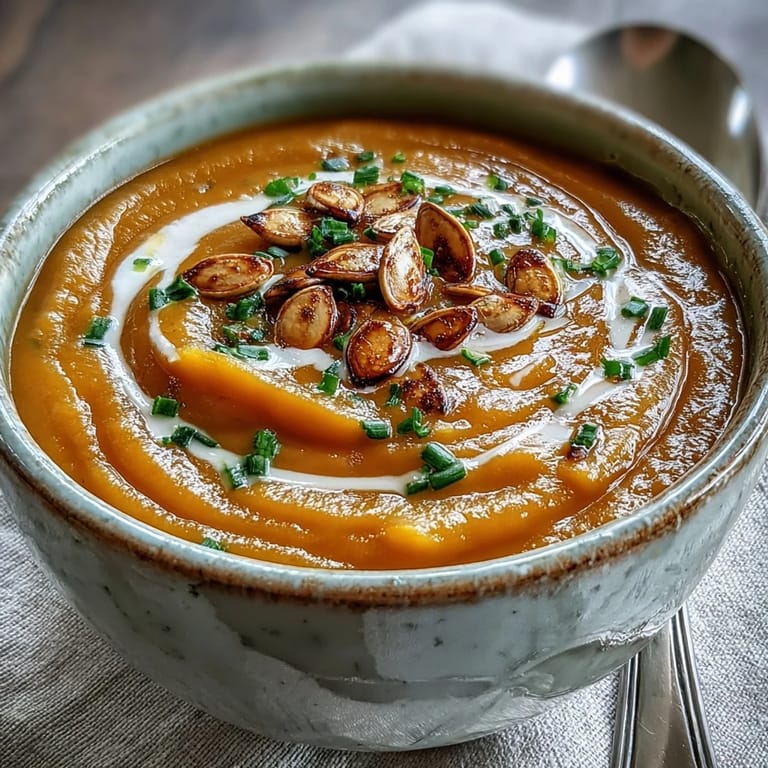
 The first time I made acorn squash soup, it was actually a mistake. I had planned to stuff the squash with quinoa, but they came out of the oven so tender and fragrant that I ended up scooping everything into a pot instead. Now I barely even consider roasting acorn squash any other way, especially when autumn settles in and I need something that feels like a warm embrace in bowl form.
I served this at a small dinner gathering last November when a friend mentioned she was feeling overwhelmed. She took one sip, closed her eyes, and actually relaxed her shoulders for the first time all evening. Sometimes food does that kind of quiet work better than anything else.
Ingredients
- Acorn squash: Roasting concentrates their natural sugars, which balance beautifully against savory aromatics
- Yellow onion and carrot: These provide a sweet backbone that keeps the soup from being one-note
- Garlic: Minced fresh adds subtle warmth without overpowering the delicate squash flavor
- Vegetable broth: Use a high-quality brand you actually enjoy drinking on its own
- Heavy cream or coconut milk: Just enough to round out the texture without making it feel heavy
- Nutmeg and cinnamon: A quarter teaspoon each is all you need to hint at cozy spices without veering into dessert territory
- Olive oil: Reserved in two portions, one for roasting the squash and one for sautéing the vegetables
Tired of Takeout? 🥡
Get 10 meals you can make faster than delivery arrives. Seriously.
One email. No spam. Unsubscribe anytime.
Instructions
- Roast the squash:
- Preheat your oven to 400°F and brush the cut sides with olive oil before placing them cut-side down on parchment paper. Let them roast for 30 to 35 minutes until completely tender, then cool slightly before scooping out the flesh.
- Build the flavor base:
- Heat the remaining olive oil in a large pot over medium heat and sauté the onion, carrot, and garlic until softened and fragrant, about 5 to 7 minutes.
- Simmer together:
- Add the roasted squash flesh, broth, water, salt, pepper, nutmeg, and cinnamon to the pot. Bring everything to a boil, then reduce the heat and let it simmer gently for 10 minutes to allow the flavors to meld.
- Blend until smooth:
- Use an immersion blender directly in the pot to purée the soup until completely silky, or work in batches with a countertop blender if you prefer.
- Finish with cream:
- Stir in the cream or coconut milk, taste, and adjust the seasoning as needed before reheating gently and serving.
 Save to Pinterest
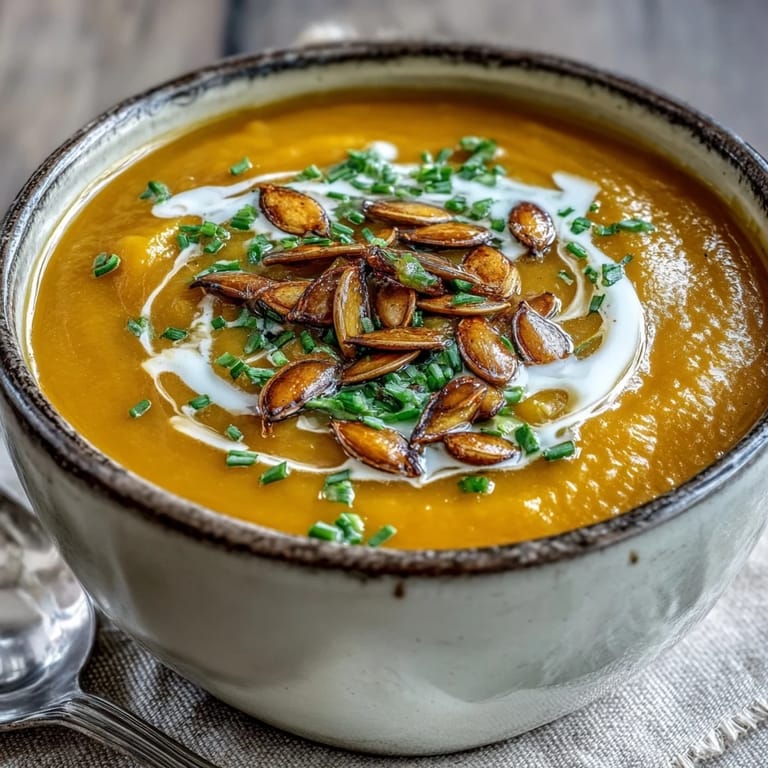
 This recipe has become my go-to when someone needs comfort but I want it to feel intentional, not just handed over. Theres something about the combination of roasting and blending that transforms a humble vegetable into something that feels like care.
Making It Your Own
Butternut squash works beautifully here if thats what you have on hand, though the flavor will be slightly sweeter and milder. A pinch of cayenne pepper adds just enough warmth to make things interesting without overwhelming the delicate balance.
Serving Suggestions
Crusty gluten-free bread turns this from a first course into a satisfying main, especially if you toast slices and rub them with garlic while still warm. A simple green salad with bright vinaigrette cuts through the richness nicely.
Make-Ahead Wisdom
This soup actually improves after a day in the refrigerator, as the spices have more time to meld. Store it in an airtight container for up to four days and reheat gently over low heat, stirring occasionally.
- Freeze individual portions in freezer-safe containers for up to three months
- Add the cream or coconut milk after reheating if you plan to freeze, as dairy can separate slightly
- A squeeze of fresh lemon juice right before serving brightens everything up beautifully
 Save to Pinterest
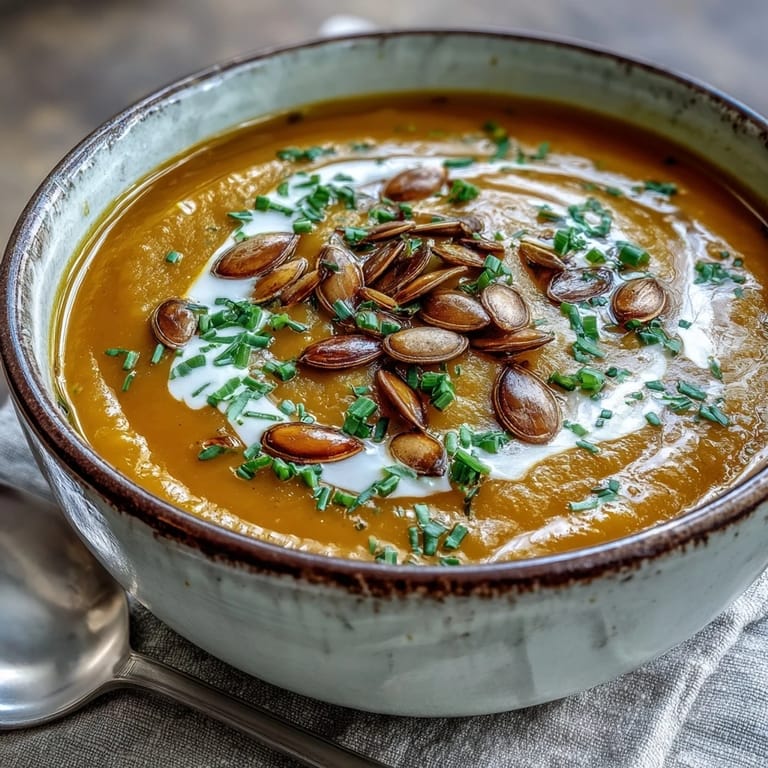
 Theres a quiet satisfaction in serving something so simple that people assume must be complicated. The truth is, good ingredients treated with a little patience usually taste like magic.
Recipe FAQs
- → How do I know when the acorn squash is fully roasted?
The squash is ready when the flesh feels tender when pierced with a fork and easily scoops away from the skin. This typically takes 30-35 minutes at 400°F. Let it cool slightly before handling for easier scooping.
- → Can I make this soup ahead of time?
Absolutely. The soup actually develops deeper flavor when made ahead. Store in an airtight container in the refrigerator for up to 4 days. Reheat gently over medium-low heat, adding a splash of broth or cream if it thickens too much.
- → What's the best way to achieve a smooth texture?
An immersion blender works wonderfully for this soup. If using a countertop blender, blend in batches and be cautious with hot liquids—vent the blender lid slightly. For extra silkiness, strain through a fine-mesh sieve after blending.
- → How can I add more protein to this soup?
Stir in white beans or lentils during the simmering stage, add shredded cooked chicken, or top with toasted pumpkin seeds and a dollop of Greek yogurt. Serving with crusty bread also makes the meal more substantial.
- → Can I freeze this soup?
Yes, freeze before adding the cream for best results. Let the soup cool completely, transfer to freezer-safe containers, and freeze for up to 3 months. Thaw overnight in the refrigerator, reheat, and stir in cream just before serving.
- → What other squashes work in this recipe?
Butternut squash, kabocha, or delicata squash all work beautifully. Each brings slightly different sweetness levels, so adjust seasoning to taste. The cooking time may vary slightly depending on the squash variety.