 Save to Pinterest
 My neighbor texted me three days before her housewarming asking if I could bring something that didn't require heating up. I'd just learned that the secret to an impressive spread isn't about cooking—it's about knowing how to arrange beautiful things so people feel welcome the moment they walk in. That afternoon, I started pulling items from my kitchen and realized a charcuterie board could be a conversation starter, a reason for guests to linger and actually talk to each other instead of disappearing into corners. Something about the permission to graze, to mix flavors, to discover combinations on your own plate—it changes how people relax in a new space.
When I arrived at Sarah's empty apartment with that board balanced on my lap, her eyes went wide. She'd been stressed about entertaining in unfamiliar rooms, worried the space felt cold. Within minutes, people were gathered around laughing, trading cheese recommendations, dipping cucumber into hummus, making jokes about the blue cheese being too bold or not bold enough. The board became less about the food and more about permission—permission to be casual, to try things, to ask a stranger what they're eating and suddenly have something to talk about.
Ingredients
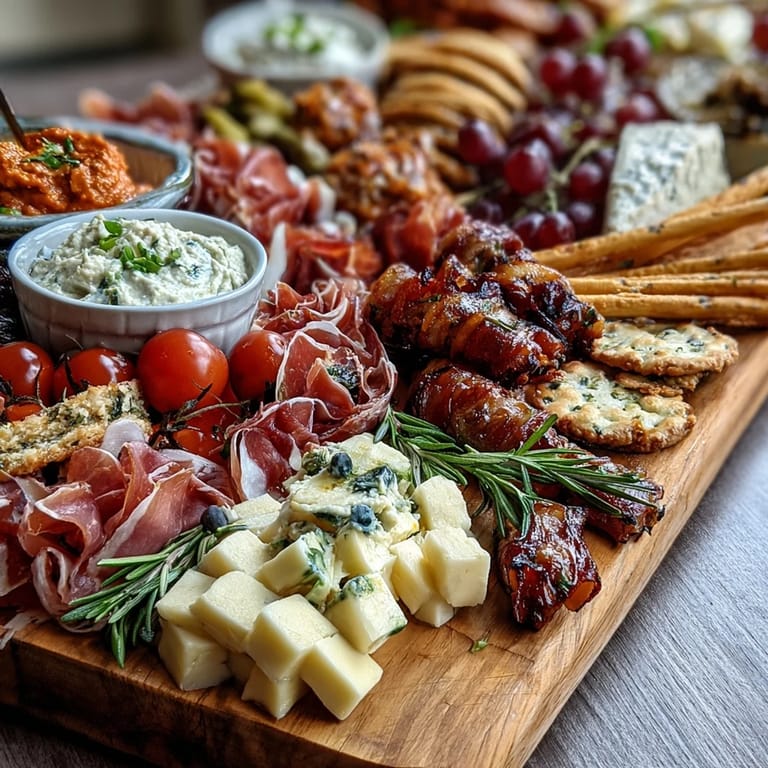
- Prosciutto, salami, and smoked ham (480 g total): Quality cured meats don't need to be expensive—look for those with simple ingredient lists, and always fold or roll them loosely so they look abundant without being wasteful.
- Chorizo slices (100 g): The spicy one that makes people pause and ask what it is, opening conversations about where everyone's traveled.
- Brie, aged cheddar, gouda, and blue cheese (520 g total): This mix gives you creamy, sharp, smoky, and bold—people gravitate toward different ones and that's the point.
- Hummus, tzatziki, and roasted red pepper dip (300 g): Three dips means everyone finds their flavor without fighting over the same bowl.
- Crackers, baguette, and breadsticks (350 g total): Different textures matter more than you'd think—some people want something sturdy, others want something delicate.
- Red and green grapes (2 cups total): They're the sweet interruption between savory bites and they look like jewels scattered across the board.
- Cherry tomatoes, cucumber, bell pepper, and carrots (approximately 4 cups total): Fresh vegetables aren't filler—they're the palate cleanser that lets people taste the next flavor properly.
- Mixed nuts, olives, dried apricots, and figs (1.5 cups total): These small treasures fill gaps and surprise people who dig deeper into the board looking for something unexpected.
- Fresh rosemary and thyme: A small handful arranged casually looks intentional and makes the whole thing smell like someone who knows what they're doing.
Tired of Takeout? 🥡
Get 10 meals you can make faster than delivery arrives. Seriously.
One email. No spam. Unsubscribe anytime.
Instructions
- Start with a clean, dry surface:
- Use a large wooden board, marble slab, or even a clean cutting board if that's what you have—moisture is the enemy of presentation, so wipe everything down first.
- Arrange the meats loosely:
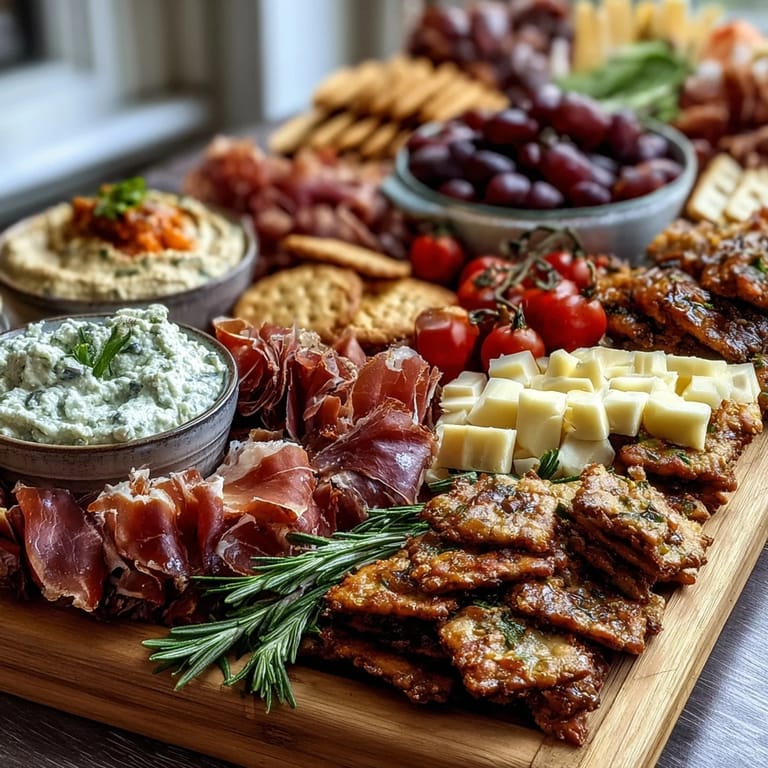
- Don't lay them flat and neat like you're in a deli—fold them, roll them, let them have dimension and air so they look generous and inviting. Think casual elegance, not rigid precision.
- Place cheeses with intention:
- Position them so people can access each one without having to reach awkwardly, and slice softer cheeses while leaving harder ones in chunks to show texture variation.
- Nestle the dips:
- Pour each dip into a small bowl—this prevents flavors from mixing and makes it easy to replenish without disturbing the board. If you're worried about spills, you can use shallow ramekins.
- Fan the crackers and bread:
- Create visual sections with different types—this makes the board feel organized but also gives people natural paths to follow as they build their plate.
- Fill the gaps with produce:
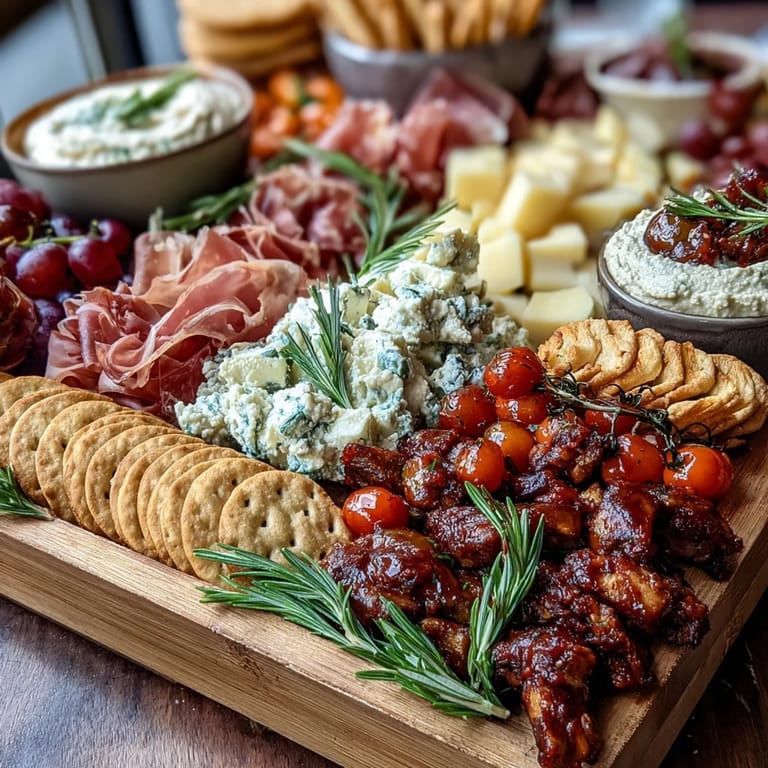
- Grapes, tomatoes, cucumber, and peppers go in the spaces between meats and cheeses—they add color and signal that the whole thing is edible from edge to edge.
- Scatter the small treasures:
- Nuts, olives, and dried fruit go in small clusters rather than spread thin, so people actually notice them and feel like they've discovered something.
- Garnish with herbs:
- A few sprigs of fresh rosemary or thyme laid casually on top doesn't just look beautiful—it smells like care and completeness.
 Save to Pinterest
 I watched my quiet coworker Marcus stand at that board for ten minutes, trying combinations. He ended up inventing something with blue cheese, fig, and prosciutto that he still talks about. That's when I realized a charcuterie board isn't really about the food—it's about giving people permission to play, to experiment, to make their own discoveries. It's one of the few foods that actually encourages conversation because you're eating slowly, trying things, comparing notes.
The Art of Arrangement
The secret nobody tells you is that people eat with their eyes first. A randomly scattered board looks thoughtful; a perfectly symmetrical one looks stiff. I learned this by accident when I ran out of time and just started placing things where they seemed to want to go—meat rolled here, cheese there, colors balancing almost naturally. It looked effortless in a way my previous perfectly-gridded attempts never did. The goal is organized chaos, where every item is accessible but nothing looks like it came from a corporate event.
Timing and Temperature
Once you place things on the board, time becomes your adversary. Cheese starts sweating, bread begins absorbing humidity from whatever's next to it, and dips dry out at the edges. I used to arrange everything an hour early and watch it decline in quality, becoming an sad memorial to my optimism. Now I aim for fifteen to twenty minutes before guests arrive, which means the board is at peak beauty during the window when people are actually eating it.
Making It Your Own
The ingredients I listed are a template, not a prison. Your board should reflect what's available where you live, what you actually like eating, and what your guests prefer. I've made versions with spicy additions for friends who love heat, versions with entirely different cheeses because what was available looked better, versions that lean vegetarian because that's the crowd. The structure stays the same—the spirit stays the same—but the details are always yours to adjust.
- Don't be afraid to add local specialties or unexpected items like honey, hot sauce, or spiced nuts because those become the talking points.
- If you have dietary restrictions in your group, swap meats for extra vegetables or add gluten-free crackers without announcing it—just let people discover they can eat everything.
- Taste as you arrange so you know which flavors go together and can subtly guide people toward combinations that actually work.
 Save to Pinterest
 A charcuterie board is less recipe and more permission—permission to gather, to try things, to be casual in a formal moment. It's one of those foods that makes hosting feel possible instead of impossible.
Recipe FAQs
- → What meats are suitable for this board?
Popular options include prosciutto, salami, smoked ham, and chorizo, which offer a balanced mix of flavors and textures.
- → Which cheeses work best for this spread?
Aged cheddar, brie, gouda, and blue cheese provide a creamy and sharp variety that pairs well with fruits and crackers.
- → How should dips be presented?
Serve dips such as hummus, tzatziki, and roasted red pepper in small bowls nestled among the other board items for easy access.
- → Can this board accommodate dietary restrictions?
Yes, meats and cheeses can be substituted, and gluten-free crackers can be included for guests with sensitivities.
- → What is the best way to arrange the board?
Arrange meats loosely in folds, space cheeses evenly, fan out crackers and breads, and fill gaps with fruits, nuts, and vegetables for a balanced look.
- → What drinks pair well with this spread?
Crisp white wines or light reds complement the flavors and enhance the overall enjoyment of the board.